Glencore comes to Australia. Will retail investors welcome the mining giant?

Henry Fisher
Market Analyst, ANZ
6 minute read
|16 Oct 2026
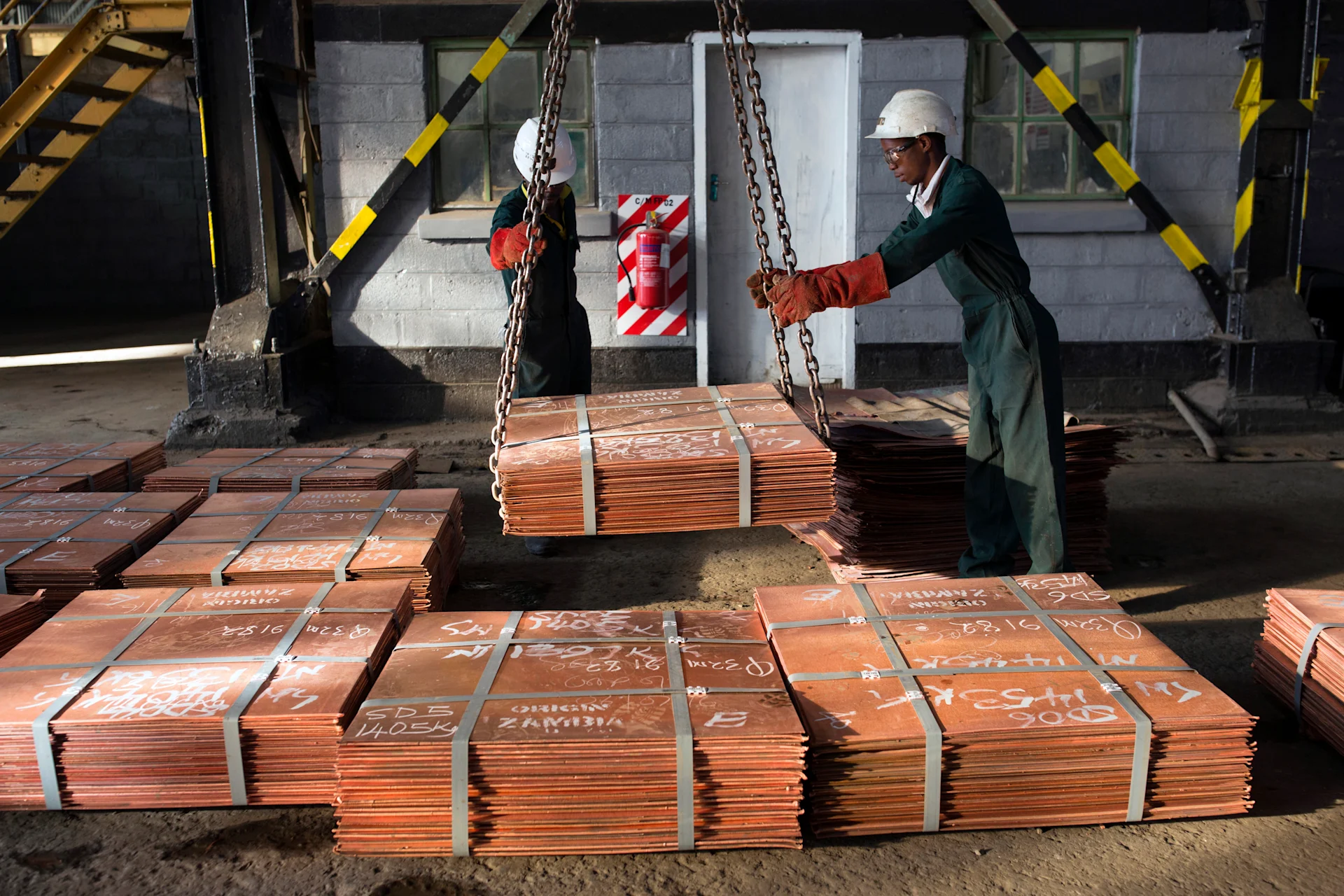
Workers move batches of copper sheets
Table of contents
  • 1.
    Why list in Australia?
  • 2.
    A miner with a trading desk
  • 3.
    Copper is the growth test
  • 4.
    Resource interest is selective

Glencore has just joined the ASX, adding an Australian listing to its existing listings in London and Johannesburg. It’s currently valued at about £78 billion, or roughly A$150 billion, which puts it at about half BHP’s market value. So why add another exchange? Glencore says Australia offers a large pool of resource-savvy investors and capital it wants to reach. For investors, the bigger question is what the company offers: a copper growth story, a coal producer, a global commodities trader, or an unusual combination of all three.

Glencore began trading under the ticker GLC in Australia on 14 October. Each CHESS Depositary Interest represents one Glencore ordinary share, as the company explains in its ASX debut announcement. This is a secondary listing, not an IPO: Glencore is not issuing new shares to raise capital.

Why list in Australia?

Glencore’s stated case is to broaden its shareholder base and make its shares more accessible to Australian investors. In its ASX listing presentation, the company points to Australia’s A$4.4 trillion superannuation pool, which it forecasts will grow to about A$12.4 trillion by 2045. It also sees a local listing as a route to index inclusion, greater trading liquidity and more flexibility for future corporate deals.

There is a resources-specific reason too. Glencore argues Australian investors have fewer listed copper options following years of industry consolidation. Its presentation says a local listing could provide more exposure to copper through the ASX. These are structural reasons to establish a local shareholder base.

CMC Invest clients could already access Glencore through its international listing, GLEN:GB. GLC adds an ASX route to the same underlying company. The new ticker may broaden access for other local investors, but it does not change Glencore’s operations or prospects.

A miner with a trading desk

Glencore is not a straightforward copper-growth story. It operates mines and processing businesses across commodities including copper, zinc, nickel and coal. It also has a large marketing division that sources and transports commodities and connects producers with industrial customers. That trading business is a much bigger part of Glencore’s identity than it is for miners whose earnings rely mainly on production.

The distinction can matter when supply chains are disrupted. Glencore’s marketing division reported US$3.3 billion in adjusted earnings before interest and tax in the first half of 2026, up 142% on a year earlier. The company linked the result to the "materially disrupted energy, freight and other markets during the period." That shows how the division can add to earnings in volatile conditions. It also makes one half-year a risky guide to what the business might earn in a more ordinary market. Glencore describes the work of its marketing business in more detail here.

Glencore’s peers offer different combinations. BHP’s portfolio is centred on iron ore, copper and steelmaking coal, with potash due to add another business. Rio Tinto has major iron ore operations and is expanding in copper, aluminium and lithium. Fortescue remains far more closely associated with iron ore. Glencore brings a broader mix of metals and coal, plus a global commodities trading operation. That may diversify its earnings drivers, but it also makes the business harder to compare with a more production-focused miner.

Copper is the growth test

Copper is one of the clearest parts of Glencore’s growth case. Demand for the metal is linked to electricity networks, electrification and data centre infrastructure. Glencore produced 851,600 tonnes in 2025, down 11% from the previous year. Production rose 15% year on year to 397,000 tonnes in the first half of 2026.

The company is targeting annualised production of about one million tonnes by the end of 2028 and 1.6 million tonnes by 2035. Those targets would make copper a larger part of the business, but they are not results. Glencore’s production reports give investors a baseline to track. The growth case depends on the company lifting output and managing the cost and timing of the projects needed to do it.

There is also a valuation question. The Financial Times has reported that Glencore traded at a discount to BHP and Rio Tinto. That may warrant a closer look, but a discount is not proof that a share is cheap. One possible explanation is that investors are weighing Glencore’s coal exposure, the variability of its marketing earnings and the complexity of valuing a business with both miners and traders. Those factors could persist even if copper production grows.

TipRanks data for Glencore’s international listing, GLEN:GB, available through the CMC Invest app, showed a Strong Buy consensus across 12 analyst ratings: 10 buys, one hold and one sell. Its 12-month consensus price target implied 18.2% upside from the share price at the time.

Resource interest is selective

October CMC Invest client activity shows different levels of buying across the sector. Buys made up about 89% of trades in Fortescue, 78% in Rio Tinto, 66% in BHP and 50% in South32. Lithium stocks were also buy-heavy, with buys accounting for 80% of Liontown trades and 76% of Pilbara Minerals trades. GLC’s buy share currently stands at 100%, but the observation is still very early and could change quickly.

For clients considering Glencore for the first time, the useful questions go beyond whether it produces copper or trades at a discount. Can it deliver its copper targets? What will its marketing earnings look like when markets are less disrupted? And do the company’s coal exposure and more complex earnings mix justify a lower valuation than its peers?

The ASX listing gives Glencore a new route to Australian capital. Whether investors welcome it will depend on whether its mix of copper growth, coal and commodity trading earns a place alongside the miners they already know.

Disclaimer: This article provides general information only. It has been prepared without taking account of your objectives, financial situation or needs. It is not to be construed as a solicitation or an offer to buy or sell any financial instruments, or as a recommendation and/or investment advice. It does not intend to support an investment decision, and it should not be relied upon by you in evaluating the merits of investing in any financial instruments. You should consider your objectives, financial situation and needs before acting on the information in this article. CMC Markets believes that the information in this article is correct, and any opinions and conclusions are reasonably held or made on information available at the time of its compilation, but no representation or warranty is made as to the accuracy, reliability or completeness of any statements made in this article. CMC Markets is under no obligation to, and does not, update or keep current the information contained in this article. Neither CMC Markets nor any of its affiliates or subsidiaries accepts liability for loss or damage arising out of the use of all or any part of this article. Any opinions or conclusions set forth in this article are subject to change without notice and may differ or be contrary to the opinions or conclusions expressed by any other members of CMC Markets.