What’s next for NEXTDC after the rebound?

Henry Fisher
Market Analyst, ANZ
5 minute read
|17 Nov 2026
server racks in a modern data center glowing with orange lights
Table of contents
  • 1.
    What the reversal tells us
  • 2.
    The next catalyst needs to reach the earnings
  • 3.
    Spending less is only part of the answer
  • 4.
    What might the new shareholders do?
  • 5.
    What comes after the rebound?

NEXTDC shares have rebounded from October’s sharp sell-off, with Goodman and Digital Realty joining the register. However, the power supply delays behind its earnings downgrade remain unresolved.

The question now is when NEXTDC can deliver its contracted capacity and begin billing customers. The new shareholders create potential for strategic developments, but their investment does not resolve those operational delays.

The company’s AGM on 20 November provides an opportunity for management to update investors on power supply, project delivery and the earnings outlook.

What the reversal tells us

CMC Invest clients have already demonstrated how differently they can respond to the same company at different prices.

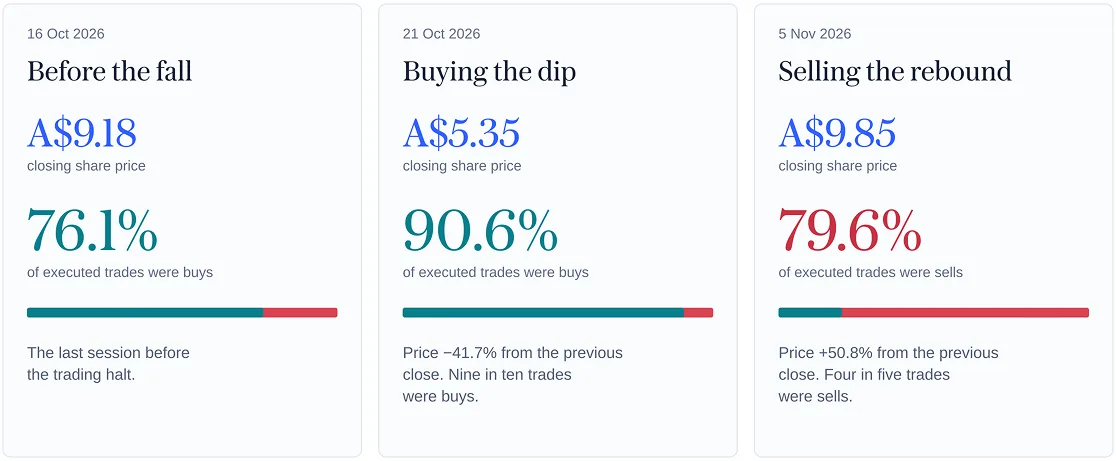
On 21 October, NEXTDC shares fell 41.7% to A$5.35 following its guidance downgrade. That day, 90.6% of executed NEXTDC trades on CMC Invest were buys.

On 5 November, after the institutional bookbuild, the shares jumped 50.8% to A$9.85. This time, 79.6% of client trades were sells.

The pattern is consistent with buying weakness and selling strength. It cannot establish that the same clients did both, or that those selling made a profit.

Anatomy of a rebound

How CMC Invest clients traded NEXTDC across three pivotal sessions:

Anatomy of a rebound - NextDC

Source: CMC Invest client data. Buy and sell percentages are shares of all executed NEXTDC trades on CMC Invest that day.

The next catalyst needs to reach the earnings

NEXTDC’s October downgrade followed delays to electricity network works serving its M3 Melbourne data centre. The next increase in grid supply was pushed into FY28, delaying the delivery and billing of contracted capacity.

The company reduced FY27 underlying EBITDA guidance to A$245 million–A$265 million, from A$385 million–A$410 million, excluding the affected M3 contracts.

For the recovery to gain firmer support, investors need more clarity on when that capacity can contribute.

A more credible power timetable, progress with the affected customer or greater certainty around billing could change earnings expectations. Further delays or additional costs could work in the opposite direction.

The distinction matters because demand alone does not settle the investment case. A full order book is encouraging, but shareholders still need to know when the company can deliver it and what it will earn doing so.

Spending less is only part of the answer

NEXTDC also reduced its FY27 capital expenditure guidance to A$4.5 billion–A$5.0 billion and said spending would focus on contracted customer capacity.

That creates another question for the next update: which expenditure is being deferred, and what does that mean for future revenue?

Reducing discretionary projects can preserve financial flexibility. Delaying capacity that customers are waiting for can also postpone earnings. The same reduction in spending can therefore look prudent or concerning depending on what sits underneath it.

Management’s explanation of project priorities, delivery dates and expected customer billing could matter more than the headline size of the revised budget.

What might the new shareholders do?

Goodman and Digital Realty confirmed a 9.9% stake, acquired through a jointly owned vehicle at an average A$9.22 per share. Their involvement introduces the possibility of collaboration or further strategic developments.

However, their statement said neither had a present intention of making a takeover offer. NEXTDC said it had received no proposal.

Any subsequent proposal or substantive collaboration could change the market’s assessment. Until then, expectations of what these shareholders might do remain distinct from anything they have committed to doing.

Their purchase price is also no guarantee of a floor beneath the shares. Investors entering at different prices, with different objectives and time horizons, need not reach the same conclusion.

ASX data-centre trade heatmap

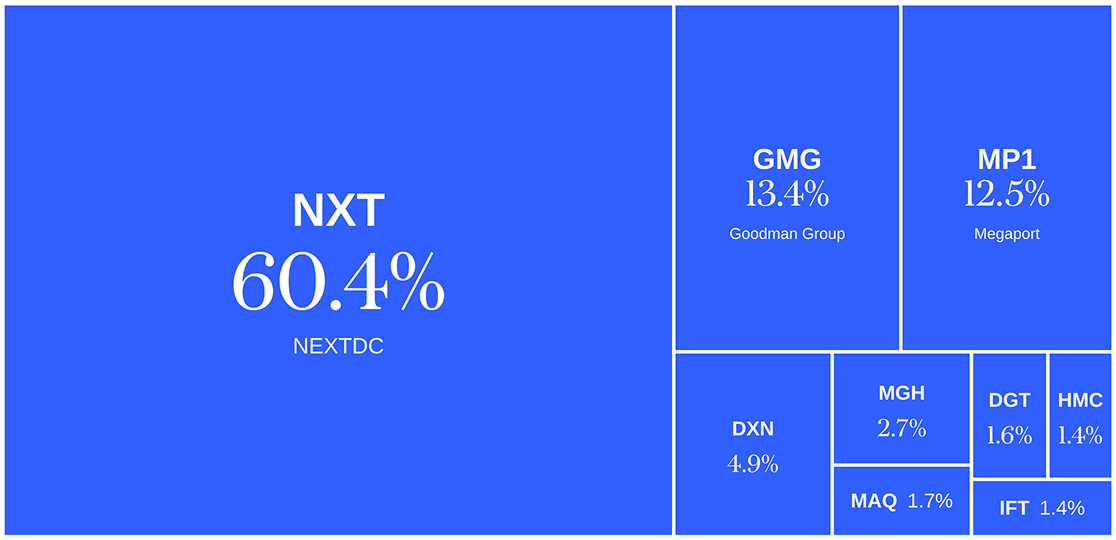
Most-traded Australian data-centre stocks by share of total trades:

ASX-data-centre-heatmap (2)

Source: CMC Invest client data, 1–16 November 2026. Each percentage is a stock’s share of executed trades across the nine-stock data-centre group.

What comes after the rebound?

CMC Invest clients bought heavily into NEXTDC’s October sell-off and sold heavily into its November rebound. Buying then recovered to 59.7% of trades on 13 November and 61.4% on 16 November.

The dip buyers got the rebound they were looking for, although a 50.8% single-day surge is an exceptional move. The scale of the reversal captures the volatility running through the data-centre and AI trade, where enthusiasm for demand is colliding with power constraints, huge spending commitments and delays to earnings.

Goodman and Digital Realty’s arrival helped change the mood around NEXTDC. The AGM on 20 November brings attention back to delivery: when power becomes available, when customers can be billed and how much further the recovery can run on the existing earnings outlook.

Disclaimer: This article provides general information only. It has been prepared without taking account of your objectives, financial situation or needs. It is not to be construed as a solicitation or an offer to buy or sell any financial instruments, or as a recommendation and/or investment advice. It does not intend to support an investment decision and it should not be relied upon by you in evaluating the merits of investing in any financial instruments. You should consider your objectives, financial situation and needs before acting on the information in this article. CMC Markets believes that the information in this article is correct, and any opinions and conclusions are reasonably held or made on information available at the time of its compilation, but no representation or warranty is made as to the accuracy, reliability or completeness of any statements made in this article. CMC Markets is under no obligation to, and does not, update or keep current the information contained in this article. Neither CMC Markets nor any of its affiliates or subsidiaries accepts liability for loss or damage arising out of the use of all or any part of this article. Any opinions or conclusions set forth in this article are subject to change without notice and may differ or be contrary to the opinions or conclusions expressed by any other members of CMC Markets.