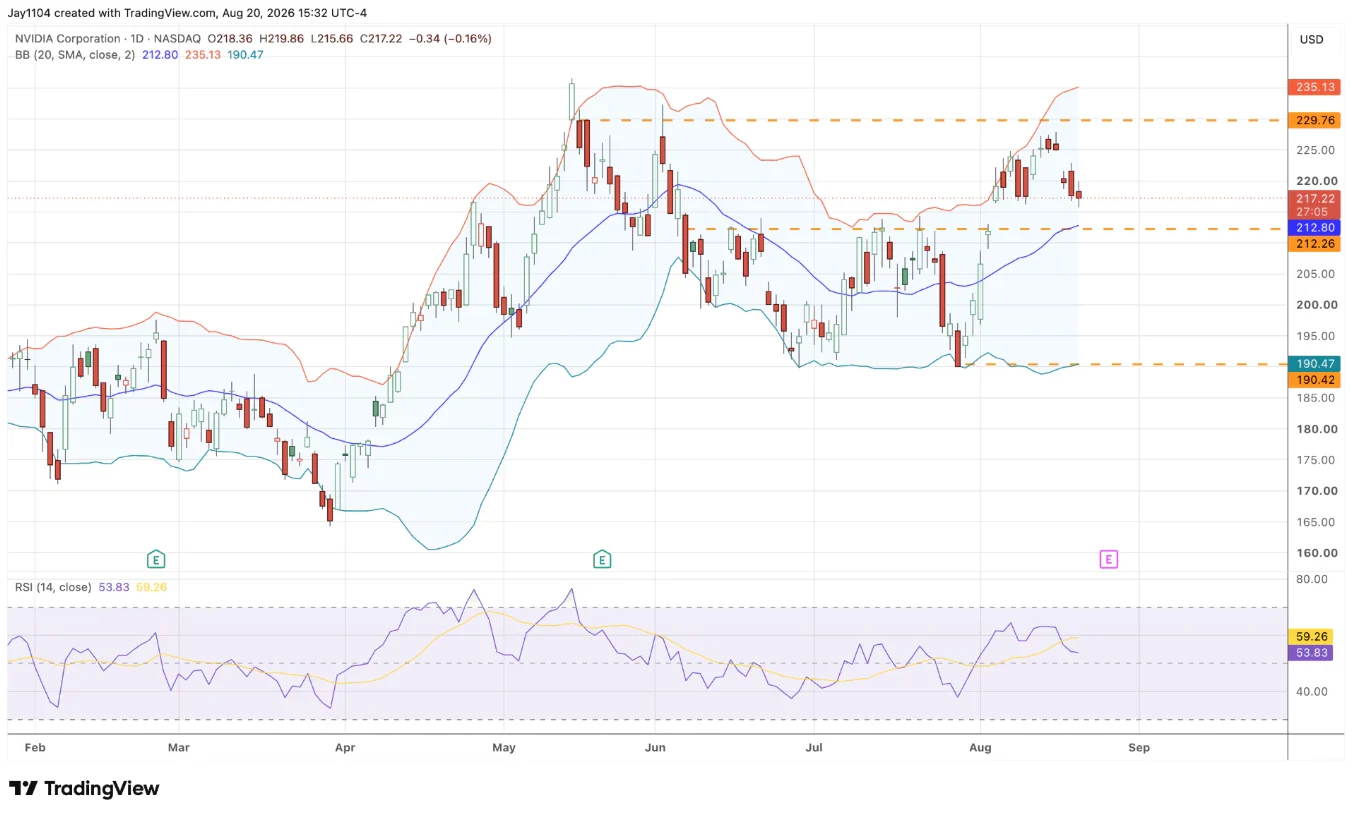
The final week of the summer season brings several major headline events. Whether they deliver a message loud enough to move markets into the autumn remains the question. Nvidia earnings and the US personal consumption expenditures (PCE) inflation report will take centre stage, while the Federal Reserve chair Kevin Warsh’s keynote speech at this year’s Jackson Hole economic policy symposium on Friday may reveal clues about the direction of US monetary policy into the final months of 2026. Markets will be listening closely.
US PCE
Wednesday 26 August
July’s headline PCE price index is expected to rise 0.1% month-on-month, following a 0.1% decline in June, while the annual rate is forecast to ease to 3.6% from 3.7%. Core PCE is expected to rise 0.2% month-on-month, up from 0.1% in June, while the annual rate is forecast to hold steady at 3.3%.
This PCE report may carry added weight because it will be the Fed’s final PCE reading before its September meeting. Market participants should also receive a relatively timely reaction when Fed chair Kevin Warsh speaks at the Jackson Hole Symposium, potentially offering clues about how policymakers view the latest data.
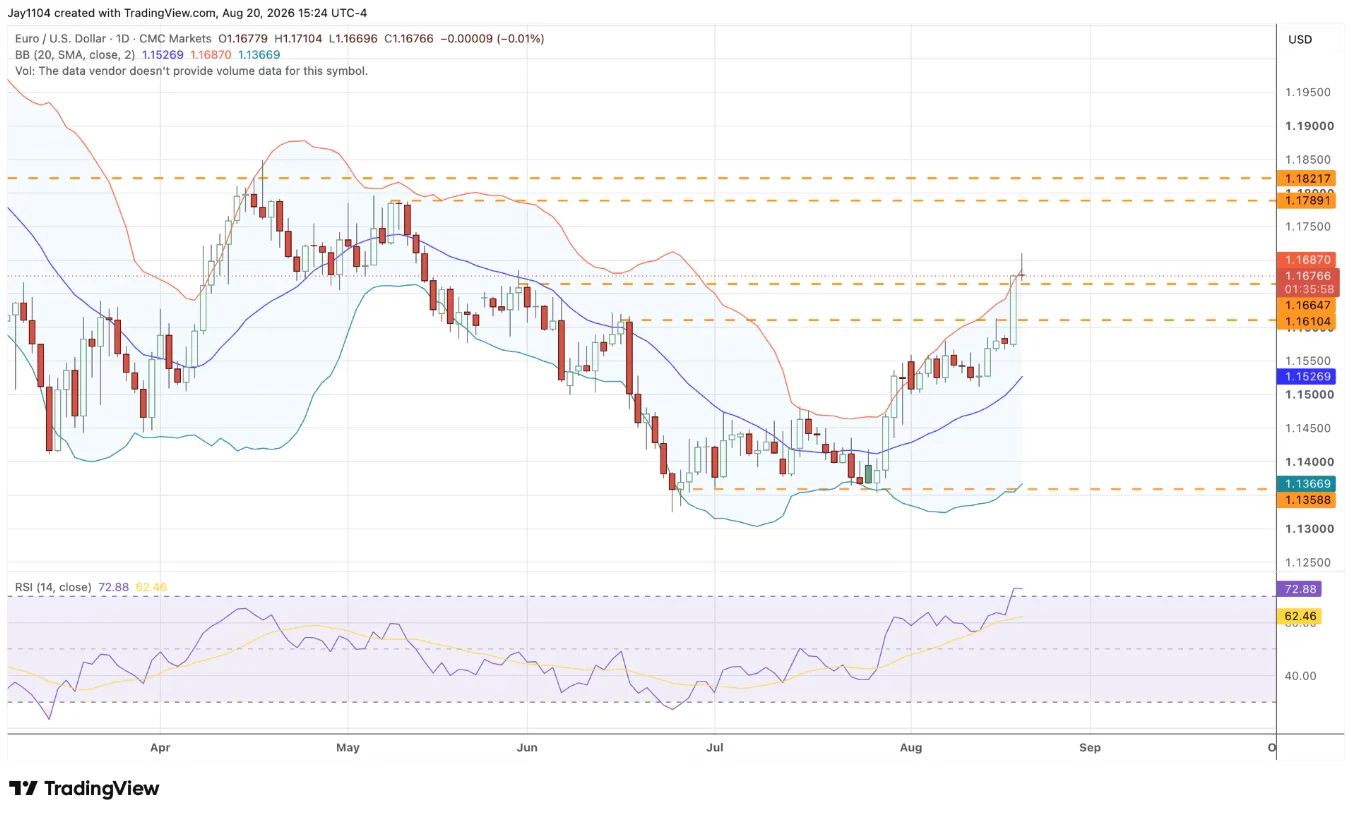
More importantly, inflation has remained sticky, and tensions in the Middle East have remained elevated, potentially adding to inflationary pressures in August and September. If the Fed has to reconsider the possibility of raising interest rates and markets begin to price in that possibility, the US dollar could benefit despite its material weakness over the past few weeks. The euro has been a major beneficiary of that decline, recently climbing towards $1.17.
However, EUR/USD now appears overbought. Its relative strength index (RSI) has risen above 70, and the exchange rate is trading above its upper Bollinger Band®. These conditions could point to a pullback towards the 20-day moving average and support near $1.155, or sideways consolidation between approximately $1.165 and $1.17. Consolidation would be the more bullish outcome, while a retreat towards the 20-day moving average could signal a shift in momentum.
EUR/USD, April 2026 – present