Bitcoin (BTC) halving is expected to occur during mid-2028. When Bitcoin has halved in the past, price fluctuations usually follow. Here, we explain what the halving is and explore its potential impact on crypto markets. We'll analyse BTC halving from a technical and fundamental perspective to give insight into what could happen and how to trade it.
Bitcoin halving 2028: What to expect and what it means for CFD traders

Table of contents
- 1.What is Bitcoin halving and how does it work?
- 2.When is the next Bitcoin halving?
- 3.Historical Bitcoin-halving dates
- 4.How traders use technical analysis for Bitcoin halving
- 5.How fundamental analysis explains Bitcoin halving
- 6.How to trade on 2028’s Bitcoin halving
- 7.Bitcoin halving: your questions answered
- 8.Bitcoin halving: summary and key takeaways
What is Bitcoin halving and how does it work?
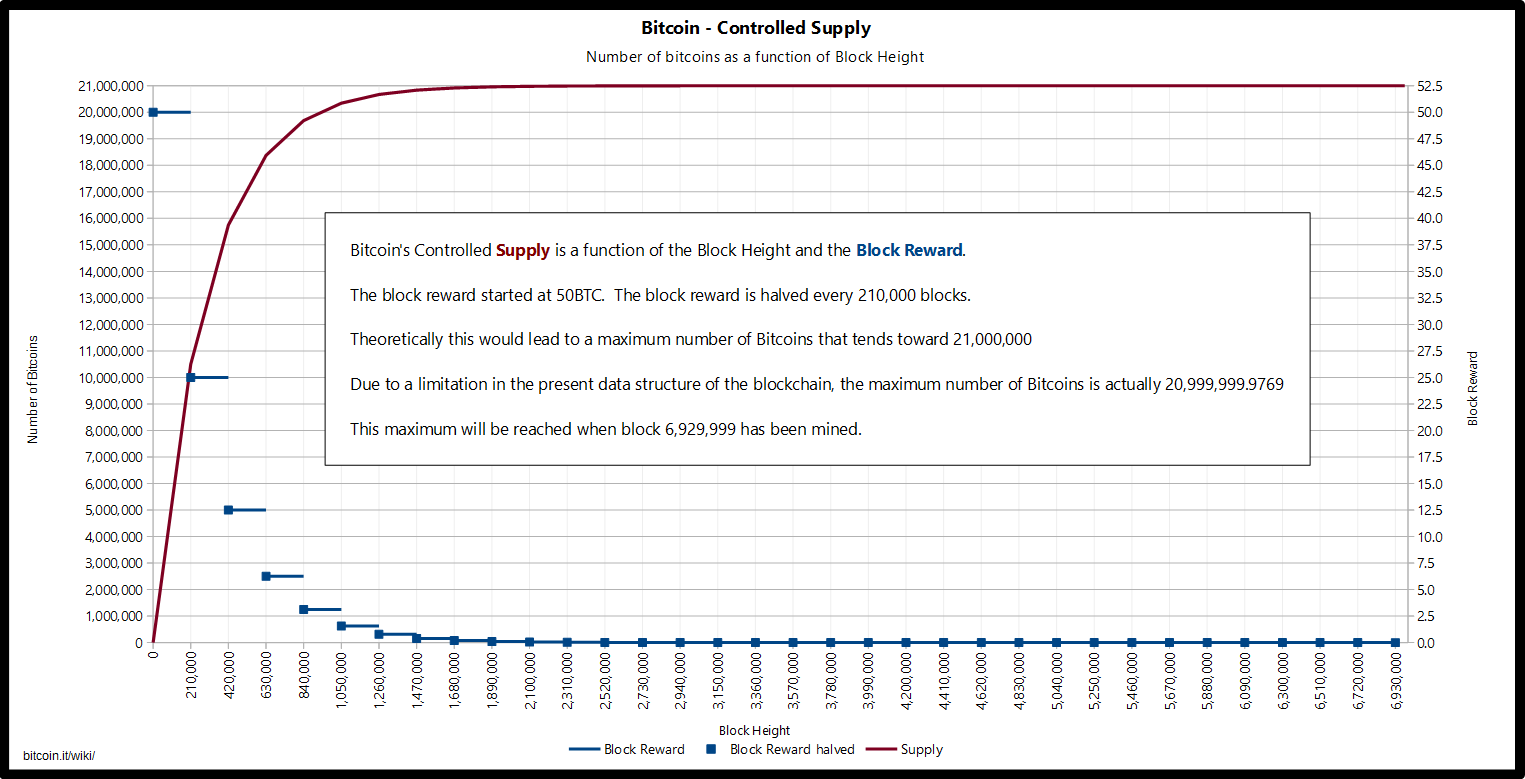
Bitcoin halving is an event where the block reward for mining new Bitcoin is halved, meaning that Bitcoin miners will receive 50% less Bitcoin for every transaction they verify. BTC halving occurs every 210,000 blocks, which equates to a halving occurring approximately every 4 years.
Although this can sound confusing with concepts such as ‘block reward’ and ‘verifying transactions’, bitcoin halving is a relatively simple process.
When a block of bitcoin is successfully mined, the bitcoin miner receives a block reward – essentially a BTC payment. However, the bitcoin halving process follows cryptocurrency economic theory. As bitcoin has a finite amount and its supply is reduced over time, the price of bitcoin can be kept ‘stable’ and deflationary by reducing the overall supply – this is why bitcoin halving exists.
When is the next Bitcoin halving?
The next Bitcoin halving is expected to occur around mid 2028. However, the exact timing may vary because the rate at which new blocks are generated can change over time. The halving event is programmed to occur when block 1,050,000 is mined.
Historical Bitcoin-halving dates
Bitcoin halving has occurred four times. First, in 2012, the reward per block dropped from 50 to 25 Bitcoins. Following this, another halving occurred in 2016, where the reward per block dropped from 25 to 12.5 Bitcoins. See below for a more detailed explanation of the history of Bitcoin halving and predictions for the future.
Halving | Date | Block | Block reward | Mined in period | % mined |
|---|---|---|---|---|---|
BTC launch | 3 January 2009 | 0 | 50 | 10,500,00 | 50 |
Halving 1 | 28 November 2012 | 210,000 | 25 | 5,250,000 | 75 |
Halving 2 | 9 July 2016 | 420,000 | 12.5 | 2,625,000 | 87.5 |
Halving 3 | 11 May 2020 | 630,000 | 6.25 | 1,312,500 | 93.75 |
Halving 4 | 20 April 2024 | 840,000 | 3.125 | 656,250 | 96.875 |
Halving 5 | Expected 2028 | 1,050,000 | 1.5625 | 328,125 | 98.4375 |
Halving 6 | Expected 2032 | 1,260,000 | 0.78125 | 164,062.5 | 99.21875 |
As you can see from the above table, the amount of bitcoin mined and the block reward drops by half at every halving event. By 2032, over 99% of bitcoin will have been mined and it is estimated to take up until 2140 until 100% of the total bitcoin is mined.
How traders use technical analysis for Bitcoin halving
Technical analysts can use an array of tools to forecast price movements in the bitcoin market before and after the next bitcoin halving. You can use our pattern recognition scanner to identify trading patterns that bitcoin traders often look for, such as ascending triangles, head and shoulders and Fibonacci retracements.
History of Bitcoin halving chart
Source: River Financial
How fundamental analysis explains Bitcoin halving
Bitcoin halving is a trading indicator for fundamental analysts, as it’s a direct force that will impact the supply and demand of Bitcoin. The halving process reduces the future supply of bitcoin by 50% for the next 210,000 blocks, and this process will repeat again. If demand stays constant, and this factor is not already priced into the market value of bitcoin, the value of bitcoin would rise. However, it's increasingly difficult to determine the intrinsic value of Bitcoin due to its complexity.
How to trade on 2028’s Bitcoin halving
Open a CMC trading account
You can trade Bitcoin with a demo account to practise new trading strategies with virtual funds. Or, you can open a live account if you are ready to trade with real money.
Research the Bitcoin market
Consider whether Bitcoin’s price could rise or fall based on a range of factors, such as news catalysts or adoption milestones. Technical analysis tools available on our platform may assist in identifying potential chart patterns.
Create a Bitcoin deal ticket
You could choose to ‘buy’ or ‘sell’ Bitcoin based on your own research. Position sizing and risk management tools, such as stop-loss or take-profit orders, may be used in line with your trading plan.
Place the Bitcoin trade
You can deposit just a percentage of the full trade value to open a position and control a larger sum. Please note that your profits and losses are magnified in line with your leverage ratio.
Close your position
You can close your position to exit the trade. After closing, you may choose to review the trade outcome in the context of your trading plan.
Bitcoin halving: your questions answered
What happened the last time a Bitcoin halving happened?
The last time Bitcoin halving happened on 20 April 2024, block 840,000 9 July 2016, block 420,000 was mined. This saw the mining reward drop from 6.25 25 Bitcoins per block to 3.125 6.25 Bitcoins per block. Bitcoin also experienced some price fluctuations before, during, and following its 2016 halving. The price of Bitcoin rose from around $450 in April 2016 to around $650 at the time of the halving. Following this, volatility ensued in the market, but Bitcoin’s price continued to steam ahead over the next year, hitting highs of nearly $20,000 before dropping down to around $10,000 at the start of 2018.
How will Bitcoin’s price change following the next Bitcoin halving?
It’s impossible to predict future Bitcoin price changes around halvings or attribute past ones solely to them (correlation ≠ causation; macro factors, adoption, etc., dominate). Still, historical inter-halving periods show notable gains in earlier cycles.
Past cycles had bull runs often peaking 12–18 months post-halving, but dynamics evolve (e.g., more institutional involvement now), and no guarantees exist for the future. The data illustrates patterns, not predictions.
Bitcoin halving: summary and key takeaways
Bitcoin halving is a fundamental event that changes how much bitcoin is supplied from mining. Although it should not be used in solitary as a trading indicator, it can be used alongside other fundamental or technical analysis factors to help determine bitcoin’s future price action.
Find out more about how to trade Bitcoin.