Private company. Public fund?
Before we begin, it is worth addressing a basic question.
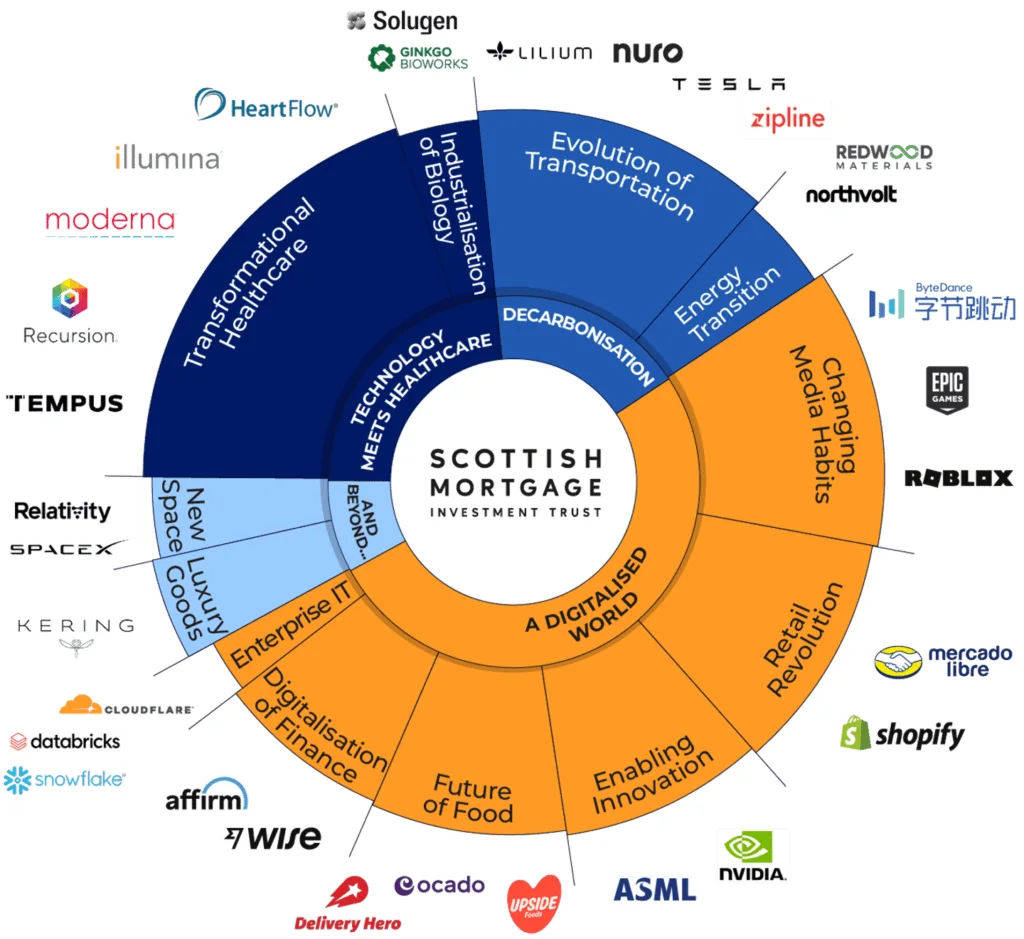
How can a private company like SpaceX sit inside an ETF or fund at all?
For many investors, ETFs are associated with broad sharemarket exposure. You buy an ETF such as the iShares Core S&P 500 ETF (IVV) and gain access to a basket of publicly listed companies that trade daily on an exchange.
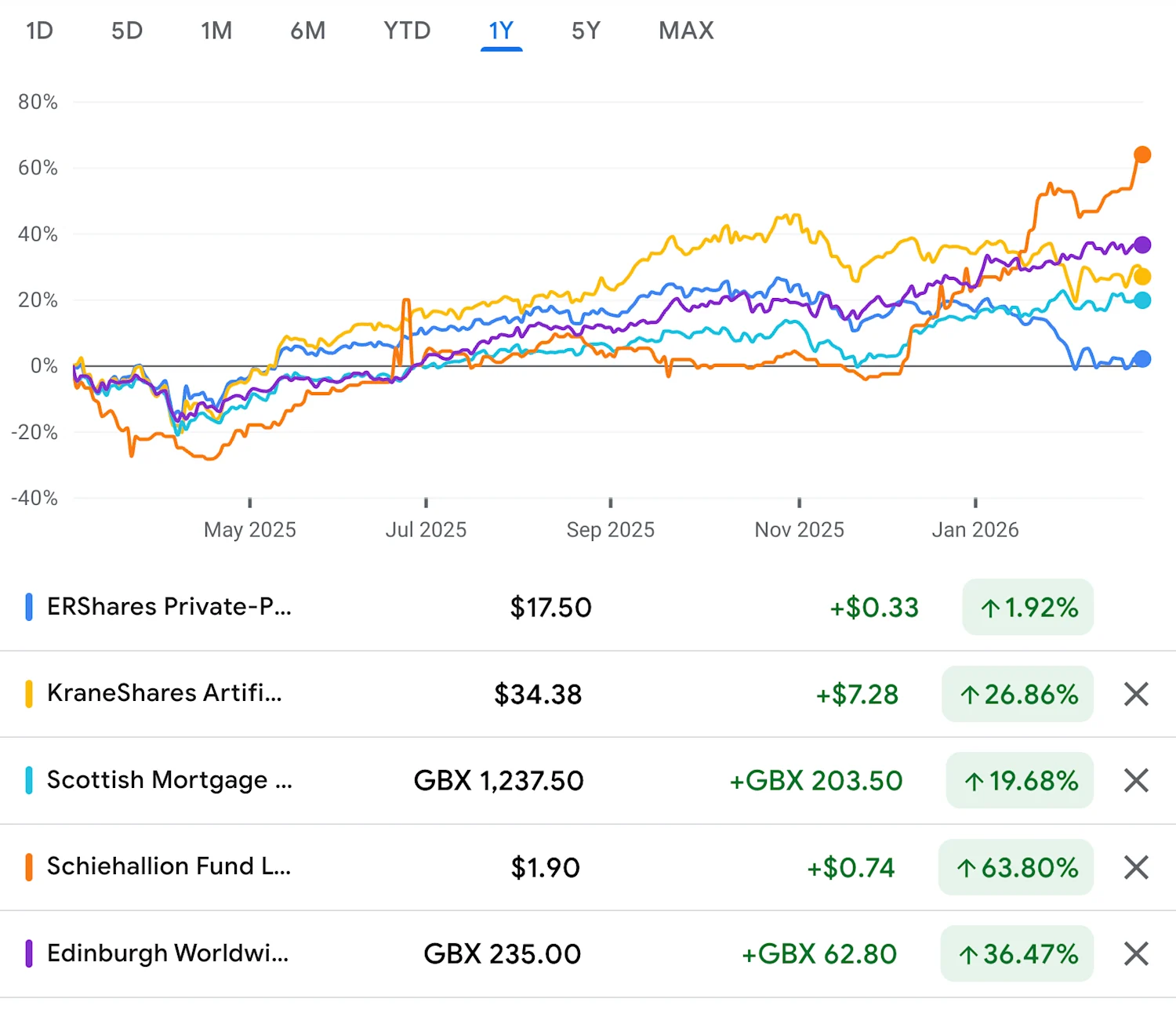
However, listed structures have not been limited to public markets alone. For decades, publicly listed investment trusts have provided investors with indirect access to private companies. Only in recent years has that model begun to surface within certain ETF structures as well.
How private companies sit inside funds
Private companies do not trade on an exchange. As a result, their valuations are not updated minute by minute like listed shares.
Instead, they are typically valued periodically, often around funding rounds, secondary transactions or other significant corporate events. Between those valuation points, the reported value may remain unchanged.
When a publicly listed fund holds a private company, that portion of the portfolio can therefore appear relatively stable for a period of time, before adjusting when new pricing information becomes available. The valuation process relies more on appraisal methods and transaction data than on continuous market trading.
The mechanics can differ between vehicles. In some cases, funds hold private companies directly. In others, exposure may be structured through special purpose vehicles or subsidiary entities designed to accommodate unlisted assets within a listed product.
ETFs versus listed investment trusts
It is also important to distinguish between ETFs and listed investment companies or trusts.
An ETF is generally “open-ended”, meaning the number of units on issue can expand or contract depending on investor demand. Units can be created (issued) or redeemed (cancelled), which helps keep the ETF’s trading price close to its NAV (net asset value, or the total value of the underlying holdings divided by the number of units).
While small premiums (trading above NAV) or discounts (trading below NAV) can occur, they are usually limited because this creation and redemption mechanism helps bring the price back towards the value of the assets inside the fund. ETFs are typically structured to track an index or strategy and reflect the value of their underlying holdings as closely as possible.
For a retail investor, the key takeaway is that changes in an ETF’s share price will usually be closely aligned with changes in the value of its underlying holdings.
A listed investment company or trust is “closed-end”, which means there is a fixed number of shares on issue. You can think of it as a listed company whose sole purpose is to own a portfolio of investments.
After those shares are issued, they simply trade between investors on the sharemarket. The trust does not automatically create new shares when demand rises, nor does it cancel shares when demand falls.
As a result, the share price is determined by supply and demand in the market.
If strong demand pushes the share price above the value of the investments it holds, the trust is said to be trading at a premium to its net asset value.
If selling pressure pushes the share price below the value of the underlying portfolio, it is trading at a discount.
In simple terms, the market price can drift away from the actual value of the assets inside the trust, sometimes meaningfully.
At a high level:
Understanding the risks
Private company exposure inside listed vehicles is still relatively novel. It introduces concepts such as periodic valuations, specialised structures and premium or discount dynamics that may not apply to traditional broad market ETFs.
Before allocating capital to any fund with private market exposure, it is worth taking the time to read the product disclosures carefully and ensure you are comfortable with how these mechanisms work.