Monthly Outlook: Earnings, AMD, Rare Earths

CMC Invest
8 minute read
|4 Aug 2025
Rare Earth Minerals
Table of contents
  • 1.
    Earnings preview: Aussie big four to report in August
  • 2.
    AMD stock: A challenger to Nvidia’s dominance?
  • 3.
    Lynas Rare Earths: Scarcity premium in a strategic market

The start of August saw trade war-related concerns reenter the fray after US President Donald Trump slapped steep tariffs on dozens of trading partners, including Canada, Brazil, India and Taiwan.

Beyond tariff developments, investors face a packed earnings calendar this month. In Australia, all eyes are on the influential ‘Big Four’ set to report their quarterly earnings amid growing concerns that one may be trading in bubble territory.

Meanwhile, a chip designer is making headlines as it challenges Nvidia’s [NVDA] dominance in the artificial intelligence (AI) sector. We also spotlight Australia’s Lynas Rare Earth [LYC] and the scarcity of fully operational rare earth minerals producers outside China.

Earnings preview: Aussie big four to report in August

The Australian equity market saw its fourth consecutive month of gains in July as the benchmark S&P/ASX 200 index [AXJO] rose 2.35% to close at 8,742 points. Healthcare (+9%), tech (+5.58%) and energy (+5.7%) stocks were the biggest winners.

August brings a wave of earnings reports, with the performance of the benchmark index likely to hinge on the earnings of the Big Four Australian banks: Commonwealth Bank of Australia [CBA], ANZ Group [ANZ], National Australia Bank [NAB] and Westpac [WBC].

CBA, Australia’s largest publicly listed company by market cap, which accounted for 11.3% of the S&P/ASX 200 index at the end of July, is the first to report among the banking heavyweights on August 13.

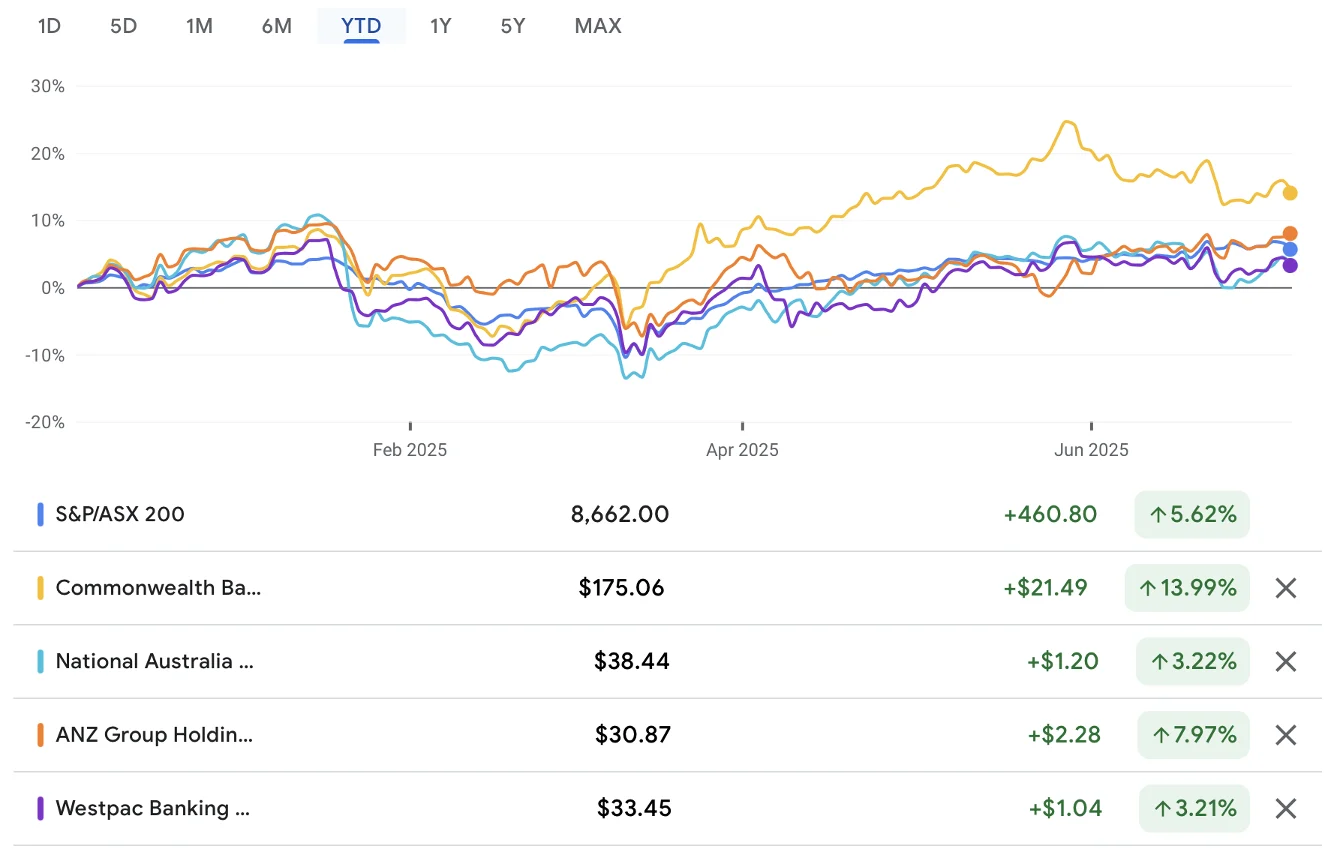
From January to July, CBA gained about 22%, driven by growing interest from international investors seeking to gain exposure to high-quality Australian equities.

ASX Banks Performance July 2025

Source: Google Finance, ASX Banks Performance YTD

CBA’s market performance has baffled fund managers in Australia, some of whom have even called it a bubble after seeing the stock trade at a P/E multiple of 30 times, nearly double the historic average of 16 times.

Any letdown on the earnings front could see CBA’s lofty valuations be reassessed by the market.

Investors will closely watch how the Reserve Bank of Australia’s rate cut cycle is impacting the bank’s net interest margins — that is, the difference between interest earned on loans and interest paid on deposits.

In addition, bad debt performance is likely to come under scrutiny for CBA, ANZ, NAB and Westpac as Australians continue to grapple with cost-of-living pressures and weakened purchasing power following a post-pandemic surge in inflation.

Westpac is scheduled to report quarterly earnings a day after CBA on August 14, followed by ANZ on August 15. NAB will report earnings the week after, on August 18.

Westpac, NAB and ANZ were trading at P/E multiples in the range of 13 to 17 at the end of July.

Earnings season is in full swing in the US as well. The last week of July saw Big Tech firms like Amazon [AMZN], Apple [AAPL], Microsoft [MSFT] and Meta Platforms [META] report their June quarter earnings.

Investors punished Amazon, sending its share price 8.3% lower, after the results showed that the company’s AI-focused cloud computing business was not growing at the same rate as rivals. In contrast, Microsoft saw its shares jump by nearly 4% after the computing giant reported strong growth in its cloud division.

Meta stole the spotlight, soaring over 11% after reporting better-than-expected earnings and unveiling plans to ramp up its AI-related capital expenditures.

Meanwhile, Apple allayed tariff-related fears by reporting its fastest quarterly revenue growth in more than three years. Elsewhere, Berkshire Hathaway [BRK-B] reported a decline in quarterly earnings driven by a $3.76bn writedown on its investment in Kraft Heinz [KHC].

Looking ahead, chip designer Nvidia is expected to report its June quarter earnings on August 27.

AMD stock: A challenger to Nvidia’s dominance?

Advanced Micro Devices [AMD] is emerging as a formidable challenger to Nvidia in the race to lead AI innovation.

In June, AMD unveiled its latest Instinct MI350 series of GPU chips, built specifically for generative AI and high-performance computing workloads. These chips are designed to compete directly with Nvidia’s A100 and H100 chips in powering data centres and hyperscalers.

At its 2025 Advancing AI event, AMD also previewed its Helios AI rack, which it sees as a crucial lever in unlocking the next frontier of AI: Agentic AI.

For context, an AI rack is a specialised server system that connects multiple GPU and CPU chips to function as a single, high-performance computing unit.

“Agentic AI is driving higher demands across the stack, requiring not just powerful GPUs, but also high-performance CPUs and secure, efficient networking. To support these multi-agent workflows, optimised coordination between AMD Instinct GPUs, AMD EPYC CPUs and Pensando NICs is essential for performance, scalability and security,” said AMD.

Nvidia, too, is developing its own next-generation solutions for agentic AI. But the two companies are taking different paths.

AMD is championing an open AI infrastructure that supports common standards and a broader ecosystem of vendors to allow faster adoption and user flexibility. This philosophy is reflected in AMD’s upcoming Helios rack, its open-source ROCm software stack and the UALink open standard for AI scaling.

In contrast, Nvidia looks to control the entire AI stack by implementing an end-to-end approach. This allows the company to offer industry-leading performance and proprietary features at the expense of flexibility — and often at a price premium.

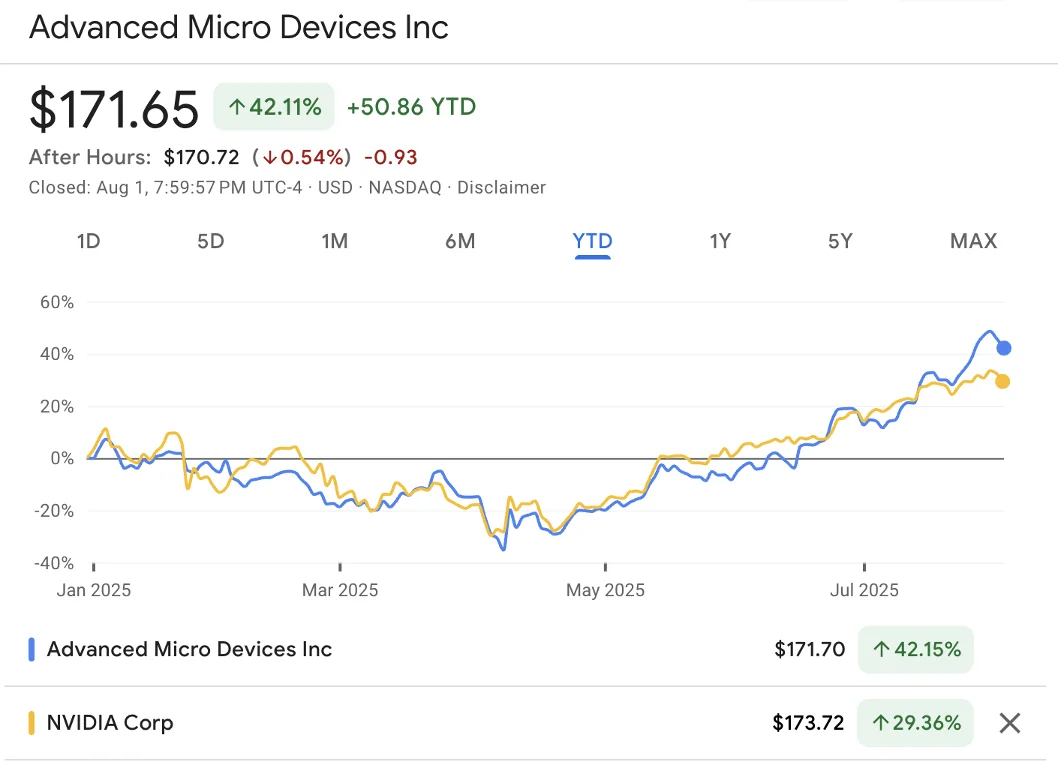
AMD has been on a tear of late. The stock has surged over 42% year-to-date, comfortably outperforming the broader US benchmark index S&P 500, which has gained only 6% in the same period.

AMD has also outpaced its larger rival, Nvidia, whose share price has risen by 29.36% in 2025. The PHLX Semiconductor Sector Index [SOX] was up about 10% year-to-date, as of August 1 close.

While both companies are seen as vanguards of the AI revolution, AMD’s recent momentum reflects growing investor confidence in the company’s expanding product lineup and competitive positioning in AI-related computing workloads.

AMD vs NVIDIA Stock Chart YTD

Source: Google Finance, AMD vs NVIDIA YTD

Lynas Rare Earths: Scarcity premium in a strategic market

Rare earth minerals reemerged as a topic of geo-political tension after China imposed export restrictions on seven rare earth elements used to make permanent magnets for defence, energy, automotive and consumer electronics use cases. The move came in response to tariffs imposed by the Trump administration on Asia’s largest economy.

The US and its allies have long sought to establish independent sources of these critical minerals, but their efforts have fallen short of matching China’s output largely due to the technical challenges and environmental concerns associated with rare earth refining.

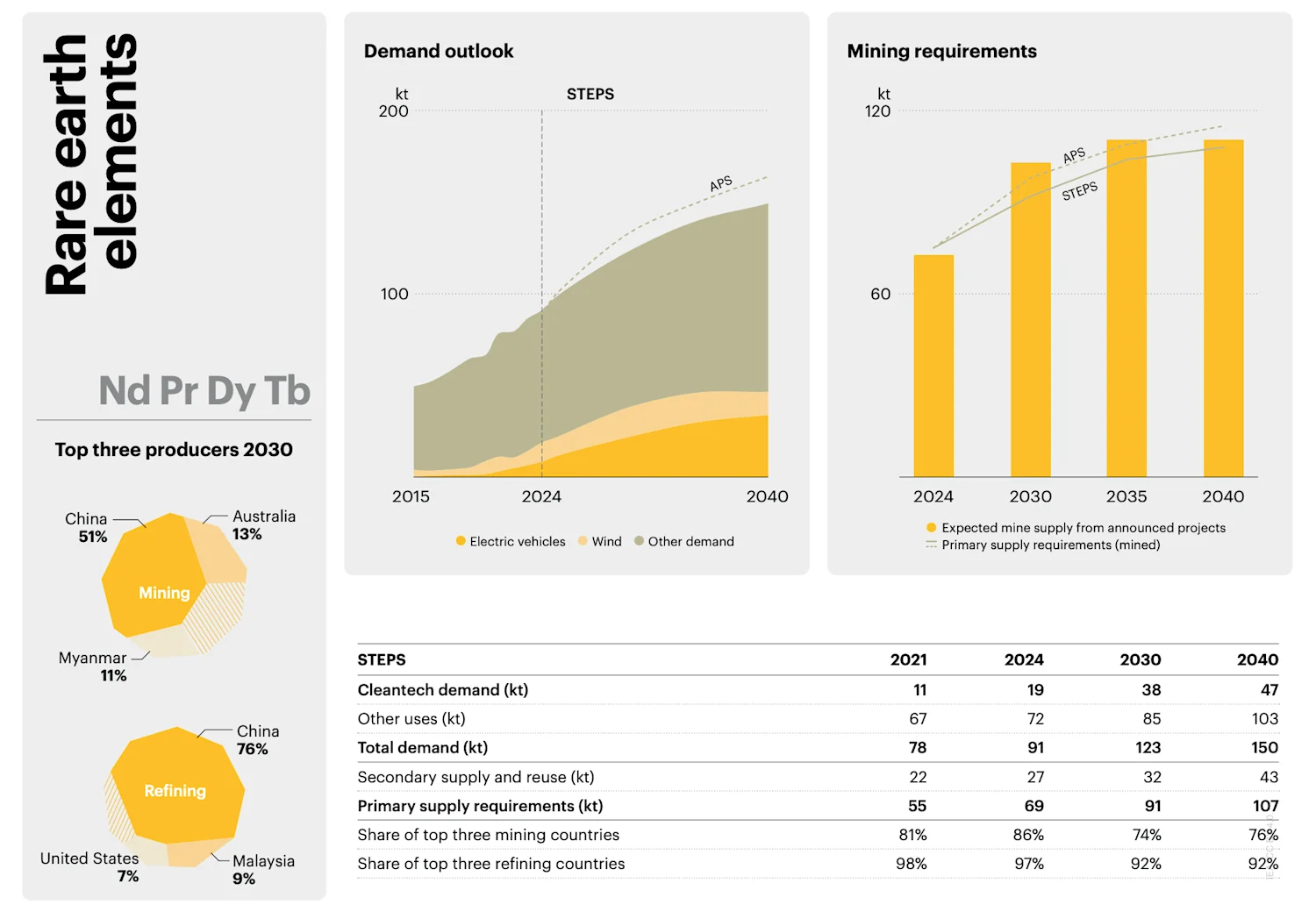
The International Energy Agency (IEA) noted that China accounted for 60% of the global mined production of magnet rare earth elements. Chinese dominance is even greater in rare earth refining, where it held a staggering 91% share in global refined output in 2024.

With very few non-Chinese companies contributing to global supply, Australia’s Lynas Rare Earths [LYC] is a unicorn. According to the IEA, Lynas is “one of the only major players outside China,” representing 4% of global refined production in 2024 from its operations in Malaysia.

Rare Earths Outlook Diagram

In 2024, Lynas celebrated a major milestone by opening Australia’s first rare earth processing facility. The company is also currently developing a facility to separate light and heavy rare earths in Texas, supported by $378m in funding from the Department of Defense (DoD).

Another beneficiary of US government support is Las Vegas-headquartered rare earth producer MP Materials [MP]. Earlier in July, the company signed a public-private partnership deal with the US government that saw the DoD become MP Material’s largest shareholder.

The DoD also agreed to establish a floor price of $110/kg for MP Materials’ magnet rare earths output, which is nearly triple the average selling price of A$60.2/kg reported by Lynas in Q2 2025.

The scarcity of fully operational rare earth minerals producers outside China has led both Lynas and MP Minerals to command valuation premiums in the stock market.

At the time of writing, Lynas was trading at a P/E multiple of 199.82, after seeing its share price surge by 68.12% in 2025. Meanwhile, MP Materials, the largest rare earth minerals producer in the western hemisphere, was up 308% year-to-date.

Investor optimism has spilled over to the broader rare earths mining sector, with the VanEck Rare Earth and Strategic Metals ETF [REMX] seeing its value rise by 25.41% year-to-date. New York-listed Albemarle [ALB] and Australia’s Iluka Resources [ILU] are among the constituents on the VanEck Rare Earth and Strategic Metals ETF.

Disclaimer: This article provides general information only. It has been prepared without taking account of your objectives, financial situation or needs. It is not to be construed as a solicitation or an offer to buy or sell any financial instruments, or as a recommendation and/or investment advice. It does not intend to support an investment decision and it should not be relied upon by you in evaluating the merits of investing in any financial instruments. You should consider your objectives, financial situation and needs before acting on the information in this article. CMC Markets believes that the information in this article is correct, and any opinions and conclusions are reasonably held or made on information available at the time of its compilation, but no representation or warranty is made as to the accuracy, reliability or completeness of any statements made in this article. CMC Markets is under no obligation to, and does not, update or keep current the information contained in this article. Neither CMC Markets nor any of its affiliates or subsidiaries accepts liability for loss or damage arising out of the use of all or any part of this article. Any opinions or conclusions set forth in this article are subject to change without notice and may differ or be contrary to the opinions or conclusions expressed by any other members of CMC Markets.

Support
Support
x

Welcome to CMC Markets Support!

To begin, please select the product your query is related to.