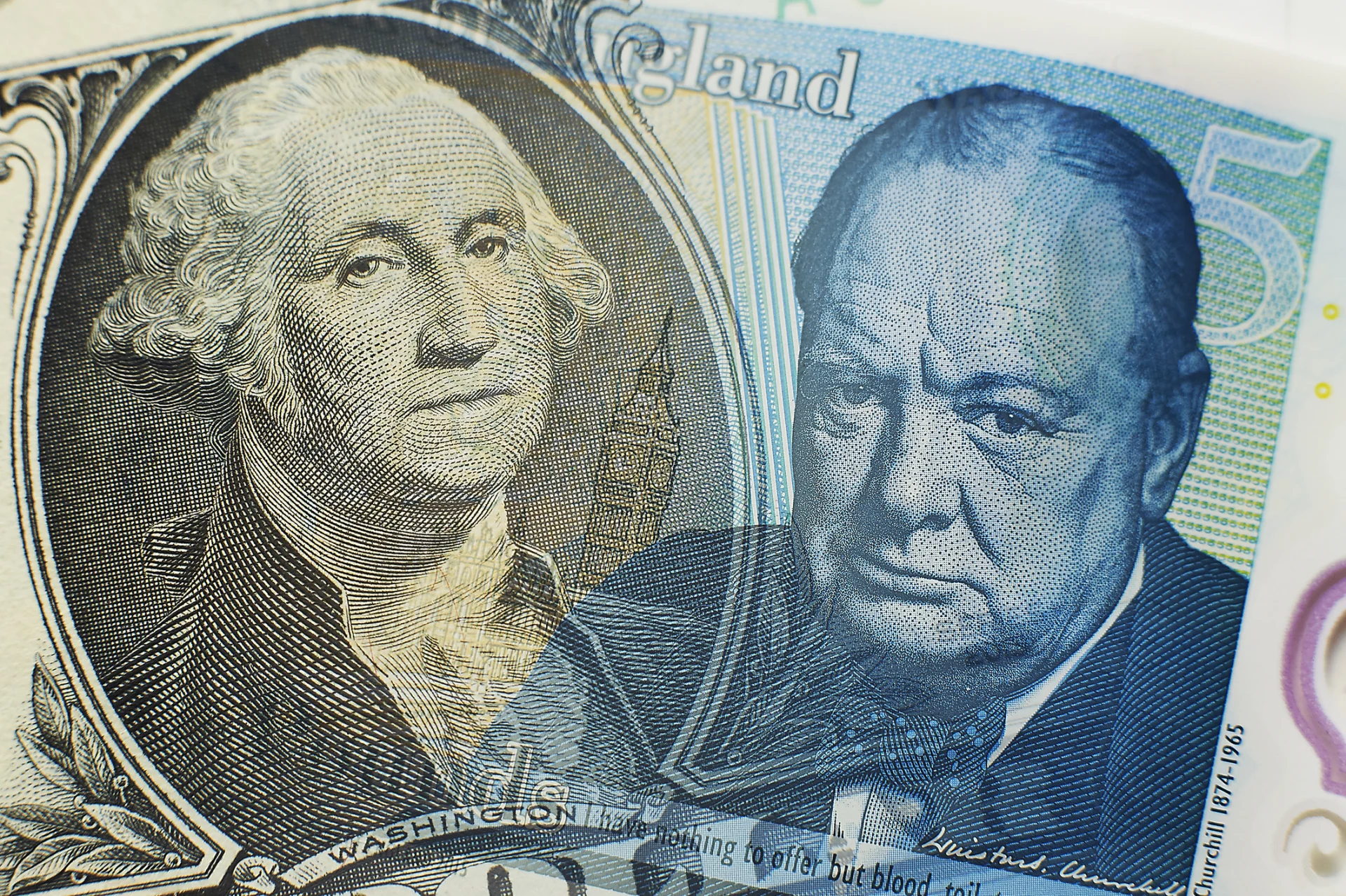
Mastering the art of forex currency pairs is useful for anyone new to forex trading. Every forex trade involves two currencies, so learning how these pairs work is a must before getting started. Now’s the perfect time to find out what currency pairs are, the different types and what factors can move their prices.
If you need the basics, we’ve also got a simple "What is forex” guide, or you can explore the full range of pairs available on our forex trading page.
What is a currency pair?
Foreign exchange trading is the act of buying one currency while simultaneously selling another. In simple terms, you are trading a forex pair such as EUR/USD.
Every currency pair has two components:
Base currency: The first currency listed (e.g. EUR in EUR/USD), which is the currency you’re buying.
Quote currency: The second currency (e.g. USD in EUR/USD), which is the currency you’re selling.
The quoted price tells you how much of the quote currency is needed to buy one unit of the base currency. So if EUR/USD is quoted at 1.10, it means one euro buys 1.10 US dollars. If the price rises to 1.12, the euro has strengthened relative to the US dollar. If it falls to 1.08, the euro has weakened.
Currency pairs are the basis of forex CFD trading. When you’re trading forex CFDs, you can speculate on currency price movements without owning the underlying currency. If you believe the base currency will strengthen against the quote currency, you might open a buy (long) position, whereas if you think it will weaken, then you could open a sell (short) position.
It’s worth noting that currency prices are influenced by the relative strength of the two economies involved. A currency pair is always a comparison, so even if one economy is doing well, the pair’s price depends on how the other economy is doing as well. If you want to learn more about currencies and their current value, read our article on the 15 strongest currencies in the world.
Different types of forex pairs
Forex pairs are grouped into three categories based on liquidity and how much they are traded.
Major forex pairs
Major forex pairs include the US dollar paired with another major world currency. Majors are the most liquid and the most widely traded pairs, accounting for up to 75% of all daily foreign exchange trading volume. Some top examples are:
EUR/USD (euro / US dollar): The most traded currency pair in the world.
GBP/USD (British pound / US dollar): Colloquially known as the cable.
USD/JPY (US dollar / Japanese yen): One of the most liquid pairs during the Asian session.AUD/USD (Australian dollar / US dollar): Popular with Australian traders because it reflects the Australian economy’s performance against the US dollar.
Minor forex pairs
Forex minor pairs (also known as cross-currency pairs or ‘crosses’) combine two major currencies but don’t include the US dollar. They tend to have wider spreads than majors and account for a meaningful share of total global forex trading volume. Minor pairs can still bring some strong trading opportunities, especially when economic developments impact one of the currencies. Here are some examples:
EUR/GBP (euro / British pound): One of the top crosses, heavily influenced by European and UK economic data.
EUR/AUD (euro / Australian dollar): Relevant for Aussie traders looking to trade the euro without any US dollar exposure.
GBP/JPY (British pound / Japanese yen): Has relatively higher volatility among minor pairs.
Exotic forex pairs
Exotic pairs combine one major currency with the currency of a smaller or emerging economy, which means they’re less liquid with wider spreads and more price volatility. Exotic pairs make up a small share of total daily forex turnover. Because of their lower liquidity, price movements can be less predictable and trading costs, through wider spreads, are usually higher. A few examples:
USD/SGD (US dollar / Singapore dollar)
EUR/TRY (euro / Turkish lira)
USD/ZAR (US dollar / South African rand)
Exotic pairs may appeal to traders seeking exposure to emerging market economies. That being said, they come with their own set of risks that should be carefully considered.
What are the most traded currency pairs?
The most traded forex pairs are generally major pairs, as they have the deepest liquidity and the highest trading volumes. EUR/USD is consistently among the most traded currency pairs in the world, followed by USD/JPY and GBP/USD.
If you’re a local trader, AUD/USD may be one of your preferred pairs, as it reflects the value of the Australian dollar against the US dollar. And it’s a pair that’s impacted by commodity prices, RBA monetary policy, the relative economic performance of Australia and the United States, and many other factors.
Choosing which pairs to trade is a personal decision that depends on your trading strategy, risk appetite, current market conditions, and how much you want to invest in forex. Many traders start with major pairs before exploring minor and exotic pairs as their experience improves. These are often considered suitable pairs for those beginning their forex journey because of the depth of information and analysis available.
What are the benefits of trading major currency pairs?
High liquidity: Large trading volumes make it easier to enter and exit positions, even in larger trade sizes.
Tighter spreads: The difference between buy and sell prices is narrower than for minor or exotic pairs, which can help you manage trading costs.
More available market data and analysis: Major pairs are very closely followed by financial media, central banks and research firms. As such, traders have a wealth of information to draw upon.
Greater price transparency: Due to volume and market depth, as well as having more participants trading these pairs, price discovery tends to be easier.
What moves forex currency pairs?
Interest rate decisions: Central banks like the Reserve Bank of Australia (RBA), the US Federal Reserve and the European Central Bank set benchmark interest rates that influence currency values. Higher interest rates can attract foreign investment, which may strengthen a currency, while lower rates can weaken it.
Inflation data and economic indicators: Figures like GDP growth, employment data and consumer price indices can provide insight into the relative strength of an economy. Stronger-than-expected data usually strengthens a currency, whereas weaker data has the opposite effect.
Political events and geopolitical developments: Elections, trade disputes, conflicts and changes in governmental policy can all generate uncertainty and drive currency movements.
Market sentiment and risk appetite: In times of uncertainty, traders will move towards perceived safe-haven currencies such as the US dollar, Japanese yen or Swiss franc. When confidence is high, riskier currencies can be attractive.
Trade balances: Import and export data between countries can affect supply and demand for a given currency. A country with a trade surplus may see its currency strengthen, while a deficit may weaken it.
Access over 300 forex pairs with CMC Markets
At CMC Markets, we offer CFD prices on over 300 forex pairs, including all the major currency crosses. Our spreads for AUD/USD and EUR/USD start from 0.5 points, while our GBP/USD and EUR/GBP spreads start from just 0.9 points.
We offer consistently low spreads on a number of popular currency pairs, and our typical forex spreads are a reflection of our pricing consistency throughout the day.
Forex spreads and margins
View the spreads, margins and trading hours for some of the most popular CFD trading forex pairs:
For product trading hours, check the CMC Markets trading platform.