Understanding the real drivers of crypto prices

11 minute read
|13 Mar 2026
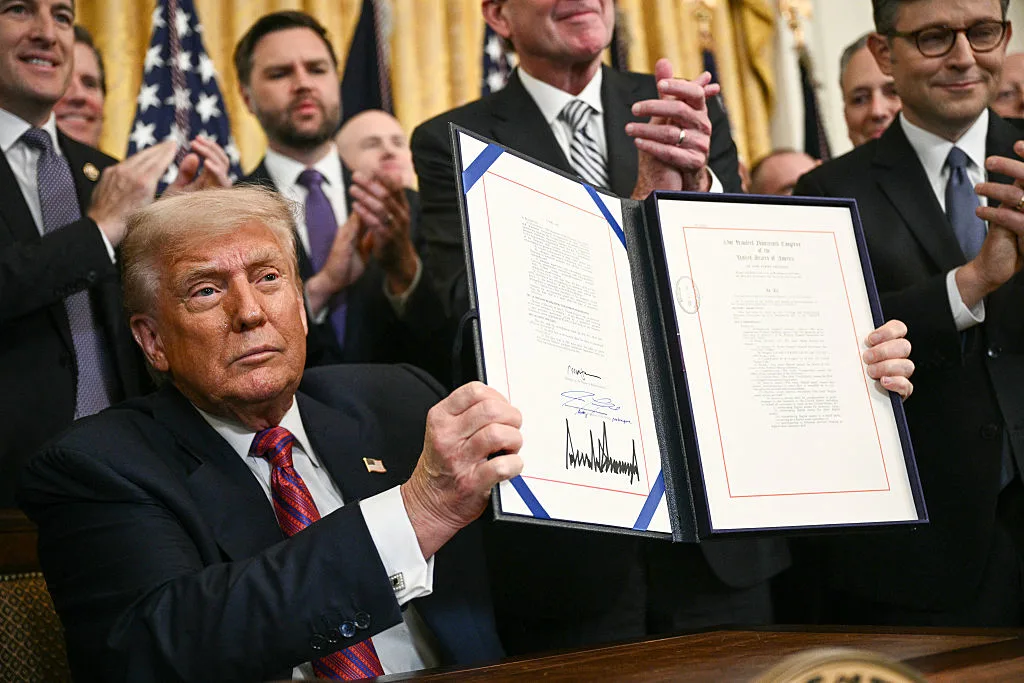
US President Donald Trump displays the GENIUS Act after signing it in the East Room of the White House in Washington
Table of contents
  • 1.
    What are crypto CFDs and how do their prices work? 
  • 2.
    A short-term driver: Market sentiment in crypto CFDs 
  • 3.
    A longer-term driver: Regulation and its impact on crypto CFD prices 
  • 4.
    Practical tips for monitoring these drivers in crypto CFD trading 

Crypto prices can often appear chaotic. A coin may rise on a headline, fall on a rumour, and then move again when new information emerges. While unpredictability is a constant in markets, understanding some of the factors that influence crypto prices may help provide a better context for how the market behaves. 

When you trade crypto via CFDs (contracts for difference), those forces can look even more dramatic. Crypto CFDs are derivatives that let you speculate on crypto prices without owning the underlying coin. They’re also very commonly traded on margin, which means you can take exposure with a smaller deposit, but your profit or loss is still based on the full position size. In other words, leverage can amplify the impact of real-world factors on crypto prices, potentially increasing both gains and losses. 

Here we look at short term sentiment in crypto markets as well as how regulatory developments may influence the market over time. We’ll also cover how the two interact and how to stay on top of them so you can always be risk-aware. To see the markets available right now, you can start to explore CMC Markets’ crypto CFD offering

What are crypto CFDs and how do their prices work? 

A crypto CFD is an agreement to exchange the difference in price of a cryptocurrency between the time you open a trade and when you close it. If the price rises and you’re long, you profit. If it falls, then you lose. If you’re short, you can potentially benefit from falling prices. Ultimately, you’re trading price movement, not sending coins to a wallet. 

Crypto CFD prices track the underlying crypto market, but the trading experience itself can feel different from what you might be used to because of three things: 

  1. Leverage and margin dynamics: As CFDs are mostly traded on margin, a relatively small price move can translate into a larger percentage gain or loss on the funds you’ve put up. If the market moves against you, losses cut into your equity. If you don’t hold the required margin, positions can be closed. 

  1. No real ‘ownership’: Spot markets are full of traders who buy and hold for a long time. CFD traders are more interested in short- to medium-term price moves. The result is that it can make moves much more sensitive to headlines and crowd positioning. 

  1. Trading costs: Spreads are a big trading cost and can blow out when volatility spikes. If you hold your positions overnight, you might pay or receive an overnight funding adjustment. 

These mechanics help explain exactly why what drives cryptocurrency prices can look different through a CFD lens. After all, price action is usually dominated by news and sentiment, with leverage intensifying the reaction. You can see this most obviously in popular markets like Bitcoin USD trading and Ethereum USD trading, where major headlines can make a big impact fast. 

A short-term driver: Market sentiment in crypto CFDs 

If regulation is the rulebook, sentiment is the ‘mood’. And with crypto, the mood can change in an instant. 

Crypto market sentiment is the market’s collective psychology: confidence against fear, optimism against panic. It’s influenced by headlines, social media, influencer commentary and the basic fact that crypto trades non-stop. When prices start trending, sentiment can become self-reinforcing. Rising prices attract attention and buying (FOMO), while falling prices can trigger fear and forced selling. When products are leveraged, that feedback loop can be even stronger because stop-losses and margin close-outs can hasten moves. 

A useful way to frame sentiment is to separate: 

  • Catalyst: The trigger. A headline, data release, hack, policy rumour, etc. 

  • Positioning: Who is already long or short, as well as how crowded the trade is. 

  • Reaction: Whether price confirms the news or does the opposite. 

Sometimes the reaction matters more than the catalyst itself. Good news that fails to improve price can be a sign that optimism was already priced in. Likewise, bad news that doesn’t push price down could mean sellers are exhausted. 

Some traders watch broad mood indicators like the Crypto Fear and Greed Index, which measures things like volatility and momentum into a single fear-to-greed snapshot. It’s not a prediction tool, but it can help you recognise extremes and steer you away from chasing the crowd. 

Real-world examples show how quickly sentiment can drive markets. In early 2024, anticipation around US spot Bitcoin ETF approvals became a major narrative, and after the SEC approved spot Bitcoin ETPs on 10 January 2024, the story shifted from “Will it happen?” to “What does it mean for adoption?” Those turns can move price even when the underlying fundamentals haven’t changed overnight. 

Another sentiment-driven burst came during the last US election, when Bitcoin rallied on expectations that the policy environment could become more supportive. Reuters reported on the wave of optimism that followed the election and the market rally that accompanied it. Over time, however, much of that move was reversed amid major liquidations in the crypto market and broader shifts in sentiment around AI-related assets. It’s a good example of how the long-term reality doesn’t always match the initial enthusiasm, but the short-term lesson holds true: sentiment and positioning can move first, with details catching up much further down the road. 

You can also see sentiment rotate across coins. Large caps like Bitcoin and Ether tend to lead, but ‘higher beta’ assets can swing harder when attention shifts. That’s why it’s normal to see hard moves in markets like Solana USD trading during ecosystem hype cycles, or in older large-cap alts like Litecoin USD trading when narratives swing back to legacy coins. 

The main opportunity in sentiment-driven trading is that volatility can create setups. But the downside is whipsaw – sudden reversals that stop you out, followed by a move back the other way. With CFDs, position sizing and risk controls tend to matter much more than being ‘right’. 

A longer-term driver: Regulation and its impact on crypto CFD prices 

Sentiment can light a fire, but regulation can change the climate. Crypto regulation impact tends to work through a few different channels: 

  • Legitimacy: Better rules can boost trust and participation from institutions. 

  • Broader scope: Regulation can widen or restrict how people trade or onboard. 

  • Structure of the market: Frameworks can reshape exchanges and financial products. 

Several developments over recent years show exactly how regulation can change the story. 

US market structure shifts 

A major milestone in the US was the approval of spot Bitcoin exchange-traded products in January 2024, confirmed by the SEC’s own announcement. A few months later, multiple spot Ether ETFs began trading. Such decisions mattered beyond the products themselves; they strengthened the idea of it being more mainstream and helped reshape expectations about liquidity and institutional involvement. 

Framework regulation in Europe 

The EU’s MiCA (Markets in Crypto-Assets) Regulation has been another structural shift. EU authorities have communicated phased application dates, including regulatory compliance by 2026. Having more clarity can make things less uncertain, but it can also raise compliance costs and change how providers operate, which, in turn, can influence liquidity and behaviour across markets over time. 

Banking and capital standards 

Regulation also influences crypto through bank capital rules. The Basel Committee has published standards for banks’ cryptoasset exposures, including as part of the Basel III international regulatory framework for banks. Even for non-banks, these standards can affect how bigger institutions think about risk and involvement. 

Policy direction in Australia 

Australia has been moving towards a more formal framework as well. The Australian Government introduced a Corporations Amendment (Digital Assets Framework) Bill 2025 in late 2025 as part of a broader effort to regulate cryptoasset services and stablecoins. More recently, the Bill was introduced into parliament. The trajectory of a framework can influence confidence – even before all details are finalised – because it shows how the market could be supervised in the future. 

Enforcement actions and legal risk 

Regulation isn’t always positive, however. Enforcement actions can generate plenty of uncertainty or even reprice legal risk. XRP is a well-known example of regulatory sensitivity.  In 2025, the SEC announced a settlement with Ripple Labs, including a civil penalty of $125 million. In markets like XRP USD trading, legal headlines can quickly redirect sentiment and longer-term perceptions of risk. 

For CFD traders, regulatory developments can also influence the trading environment more directly. For example, changes to product availability, margin requirements, or broker rules may occur across different regions. As a result, regulation can sometimes affect markets over both the longer term and in the short term. How sentiment and regulation interact – plus other influences 

Sentiment and regulation are often closely linked rather than separate influences. Market sentiment can react quickly to expectations or discussion around potential regulatory developments. Positive policy signals may coincide with stronger market sentiment, while concerns about tighter rules can coincide with more cautious behaviour. As regulatory outcomes become clearer, confirmed policy changes may influence how market participants assess factors such as market structure, access, and liquidity. One way to think about it is that sentiment can shape early reactions, while regulation may influence how the market environment evolves over time. Other forces can play a role too, especially when they reinforce or clash with sentiment and policy: 

  • Macroeconomics: Crypto tends to behave like a ‘risk asset’. Rate surprises or a stronger US dollar can pressure prices. Easier liquidity can support rallies. 

  • Supply events: Bitcoin’s fourth halving cut down new supply, which shows that the scarcity narrative can feed into crypto market sentiment even though the event is known about well in advance. 

  • Adoption and technology: Upgrades and real-world use cases can strengthen longer-term confidence, but the path isn’t always steady. 

As CFDs are leveraged, every driver can feel bigger. That’s why education on risk is so important for beginners, including understanding crypto risks in CFD trading. 

Practical tips for monitoring these drivers in crypto CFD trading 

If you are following real world drivers of crypto prices, the aim is not to predict every outcome. Instead, it can be useful to develop a consistent routine that helps monitor developments and manage risk exposure appropriately.Use sentiment tools as a temperature check. Watch for extremes in fear/greed and for sudden changes in narrative. 

  • Follow good sources for regulation. Pay attention to official releases and reputable financial reporting over social media summaries. 

  • Keep an eye on important dates. Policy votes, court decisions, major approvals and central-bank events can all kickstart volatility. 

  • Decide on what would prove your view wrong and plan your exits before you enter. 

  • Crypto can move quickly in short windows, so try to avoid over-leverage and leave room for normal fluctuations. 

  • Practice makes ‘perfect’. A demo account can help you learn how order types and volatility behave in the real world. 

If you want to build on your foundations even more, it’s a good idea to learn more about crypto CFDs before jumping in with more advanced strategies. 

Conclusion

Cryptocurrency prices can be influenced by a wide range of factors. Among these, crypto market sentiment and crypto regulation impacts are two influences that market participants often monitor. Sentiment can shift quickly in response to headlines, while regulatory developments may influence how participants view the market environment over time. Understanding how these factors interact can provide additional context when considering what drives cryptocurrency prices, including in markets such as crypto CFDs. 

To explore markets and helpful educational resources, you can explore CMC Markets’ crypto CFD offering. If you’re thinking about diversified exposure, you might also want to consider cryptocurrency index trading. And for a more serious look into narratives that can influence both sentiment and policy expectations, learn about the Bitcoin fundamentals

Disclaimer: This article provides general information only. Past performance is not a reliable indicator of future results. It has been prepared without taking account of your objectives, financial situation or needs. It is not to be construed as a solicitation or an offer to buy or sell any financial instruments, or as a recommendation and/or investment advice. It does not intend to support an investment decision and it should not be relied upon by you in evaluating the merits of investing in any financial instruments.  You should consider your objectives, financial situation and needs before acting on the information in this document. CMC Markets believes that the information in this article is correct, and any opinions and conclusions are reasonably held or made on information available at the time of its compilation, but no representation or warranty is made as to the accuracy, reliability or completeness of any statements made in this document. CMC Markets is under no obligation to, and does not, update or keep current the information contained in this document. Neither CMC Markets nor any of its affiliates or subsidiaries accepts liability for loss or damage arising out of the use of all or any part of this document. Any opinions or conclusions set forth in this article are subject to change without notice and may differ or be contrary to the opinions or conclusions expressed by any other members of CMC Markets. Investing in CMC Markets derivative products carries significant risks and is not suitable for all investors.  You do not own, or have any interest in, the underlying assets. We recommend that you seek independent advice and ensure you fully understand the risks involved before trading. Spreads may widen dependent on liquidity and market volatility. It's important for you to consider the relevant Product Disclosure Statement ('PDS') or Information  Memorandum (for CMC Pro accounts) and any other relevant CMC Markets documents before you decide whether or not to acquire any of the financial products. Please visit our site to view the PDS, Information Memorandum, our Target Market Determination for CFD products and our Financial Services Guide (FSG) containing information about our services, including our fees and charges. CMC Markets Asia Pacific Pty Ltd ABN 11 100 058 213 AFSL No. 238054

Join an award winning CFD provider
Practise CFD trading with $10,000 of virtual funds on a risk-free demo account.
Access 12,000+ instruments on our award-winning CMC Markets Platform. Including indices, forex and shares.
Enhance your CFD trading on MetaTrader4 with CMC Markets and access 175+ forex pairs.
Tight spreads and low margin rates.
Support
Support
x

Welcome to CMC Markets Support!

To begin, please select the product your query is related to.