
Currencies and bonds in focus during central bank week
The coming week in financial markets will be dominated by key central bank decisions, as policymakers confront a new and challenging reality following a sharp surge in energy prices.

CMC Markets Poland
Central banks face an energy-driven reality shift
The coming week in financial markets will be dominated by key central bank decisions, as policymakers confront a new and challenging reality following a sharp surge in energy prices. Investors are watching nervously how decision-makers will respond to the effects of the conflict in the Middle East, which has pushed oil prices above $100 per barrel. The main focus is on the US Federal Reserve, which will announce its decision on Wednesday. While interest rates are widely expected to remain unchanged at 3.50%–3.75%, forward guidance will be key.
Until recently, markets had been pricing in a series of rate cuts, but the energy shock has led investors to sharply revise these expectations. They now allow for only one reduction by year-end, and some analysts are even beginning to speculate about the need to return to rate hikes if inflation gets out of control.
Source: own calculations, as of 16 March 2026.
Global policymakers reconsider easing paths
Policymakers in other parts of the world face similar dilemmas. The Bank of Canada, the Bank of England and Sweden’s Riksbank are also making decisions this week, and in most cases the scenario of rapid monetary easing has been called into question.
In Europe, the situation is particularly tense, as prior to the outbreak of hostilities with Iran, the UK economy had been counting on immediate support in the form of lower rates. Analysts at Nordea and Citi now warn that cuts have dropped off the agenda, with the priority shifting to tackling fuel and energy costs, which are hitting consumers’ wallets and pushing up inflation expectations.
The bond market is already reacting to these changes – yields are rising, and investors are preparing for US Treasury auctions that will test demand for safe-haven assets.
JP Morgan signals rising systemic caution
In this context, the stance of the largest player, JP Morgan, is particularly telling. While some banks are still trying to remain optimistic, Jamie Dimon and his team are preparing for more difficult times.
JP Morgan’s response to the growing “sludge” in the financial system, resulting from the combination of high interest rates and expensive energy, is clear – the bank has begun adjusting valuations of riskier assets and is warning against excessive exposure to private credit.
The bank is clearly distancing itself from risks that are beginning to spill over from the US to Europe, pointing out that the lack of transparency in the non-bank sector, combined with the oil shock, creates a potentially explosive mix. The situation is becoming increasingly global. After the US and Europe, only a stronger shock to Asian debt markets is missing before it could be described as a full-scale crisis in the banking sector.
The weekend brought some calm, but Monday’s market open will show whether central banks’ determination is sufficient to stabilise sentiment in the face of the most serious energy shock in years.
Summary of the session in Europe and the US
Last week on European stock exchanges was marked by concerns over energy security and the resulting impact on inflation and economic growth. After Tuesday’s bullish move, sellers regained control.
The key question is whether investors have come to terms with the prospect of a deeper correction, or whether bullish sentiment will return to trading floors. All major indices declined, from 0.31% (FTSE MIB) to 0.91% (CAC 40).
Sentiment on Wall Street is also tense. The likelihood of Fed rate cuts has fallen almost to zero. The conflict with Iran is fuelling fears of stagflation.
The Dow Jones fell by 0.26%, the S&P 500 declined by 0.61%, and the Nasdaq 100 closed down 0.93%.
Asia sees partial rebound after weekly losses
Today, most Asian markets are following gains in US index futures. This is likely only a speculative rebound, as there is still a lack of a clear impulse from Wall Street.
The Nikkei 225 is down 0.23%. Australia’s S&P/ASX 200 is falling by 0.4%. South Korea’s KOSPI is up 1.13%.
Other markets: Hong Kong (1.31%), Shanghai (-0.46%), Sensex (0.09%), Singapore (0.26%). The Asia Dow index is up 0.89%.
Summary of the session on the Warsaw Stock Exchange (GPW)
No breakthrough on the Warsaw Stock Exchange. The market is coming off a nervous and strongly negative week, and investors are returning after the weekend with elevated concerns.
Friday confirmed the “fear” that spread not only in Warsaw but globally. When markets are under heavy selling pressure, emerging markets tend to face intensified outflows. Throughout the past week, declines dominated in Europe and, consequently, in Warsaw.
Rising US bond yields amplified concerns about inflation, which in turn could lead to higher interest rates later in the year and increased financing costs. Market sentiment has shifted by 180 degrees in just a few weeks.
The situation on the Warsaw trading floor remains highly dynamic, with signs of a correction emerging. Demand, which had been driving the market, has given way to strong selling pressure.
Deteriorating sentiment across major European exchanges and Wall Street has had a clear impact. The bearish camp, which argued that optimism on the GPW was quietly fading, appears to be right, and profit-taking on long positions may further support a pullback.
The Polish market is not detached from global trends, and if scepticism persists globally, a correction should be expected, especially after such a strong rally. However, only a sustained drop below the 4 December 2025 low would pose a serious threat and could trigger a deeper move towards the 2,378-point level.
After a weak opening, the WIG20 attempted to recover losses and even moved into positive territory before the start of Wall Street trading, but continued weakness in US sentiment pushed the index back into negative territory.
Turnover on the broad market reached PLN 2.13 bn. The WIG fell by 0.41%. The blue-chip index declined by 0.51%. WIG20 futures dropped by 0.24%, closing at 3,279 points. Mid-cap stocks performed best, with the mWIG40 up 0.04%, while the sWIG80 ended the day down 0.38%.
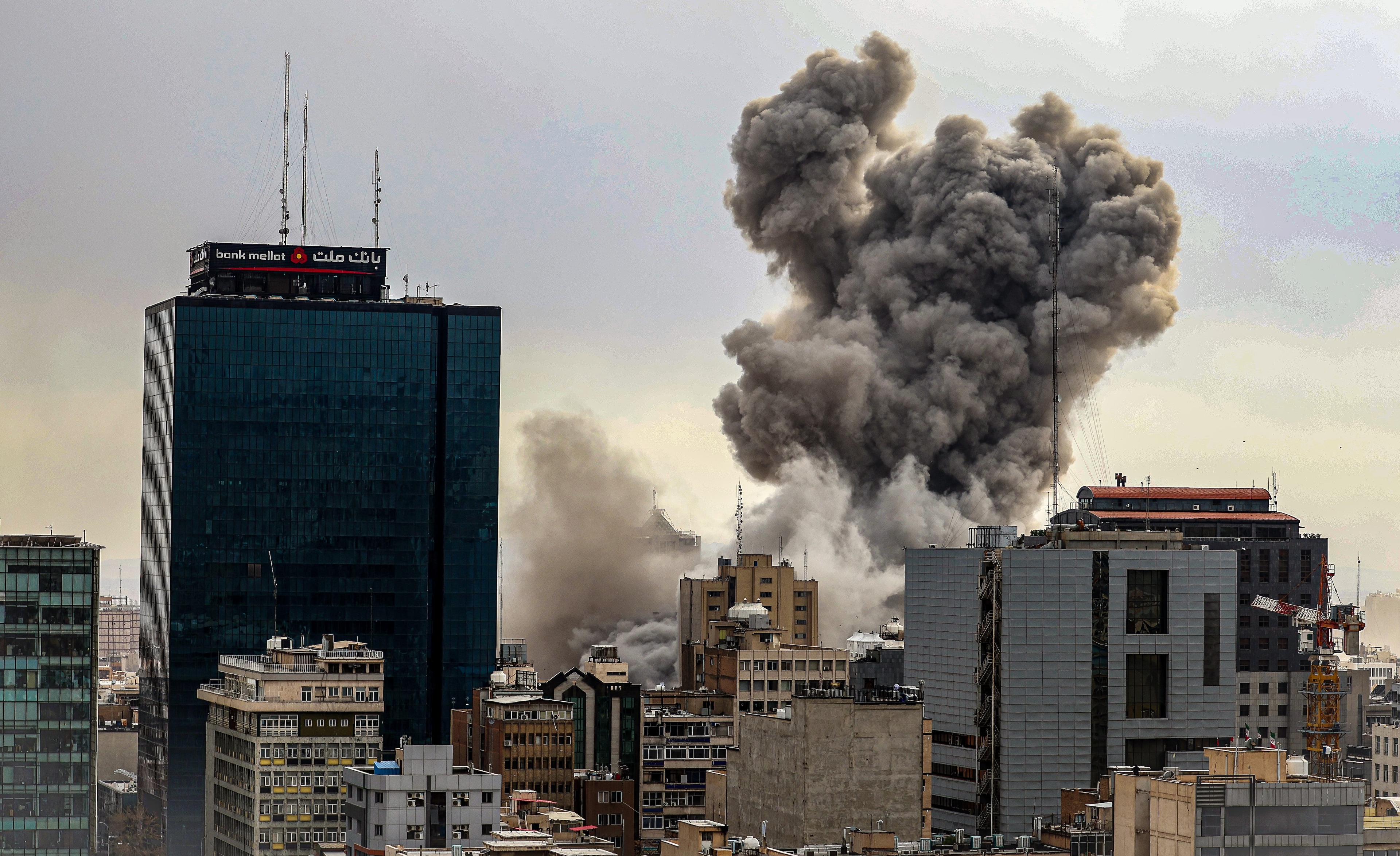
Iran war among the biggest geopolitical shocks in 50 years
The conflict involving Iran has pushed the Geopolitical Risk Index (GPR) to levels only seen during the most severe geopolitical crises of the past half century. While equities have remained resilient so far, the duration of the conflict will likely determine whether markets can maintain that strength.