Many people start investing by putting money into something they understand, or something they heard about from someone else. The issue starts when one holding ends up carrying most of your money.
If a single position drives most of your outcome, one bad event can drive most of your losses. Portfolio diversification is about spreading exposure so that no single holding can do outsized damage.
If you have £5,000 and all of it sits in shares of one company, your entire position rises or falls with that single business. A profit warning, a failed product launch or a sector downturn can hit your whole pot. That is concentration risk, and beginners can end up carrying more of it than they realise.
Diversification addresses this by spreading your exposure. When your money sits across holdings that do not all move the same way, a fall in one does not automatically become a fall in everything. The value of investments can fall as well as rise, and you may get back less than you put in. Diversification can help limit the damage from a single setback, but it cannot remove risk.
A diversified portfolio holds a range of investments that behave differently from one another. When one falls, others may hold steady or rise. The aim is not to find the single best performer. It is to avoid having your entire outcome tied to one result.
What is a diversified portfolio? In simple terms, it is a collection of holdings chosen so that their fortunes are not all linked. That could mean mixing different sectors, regions or different types of investment.
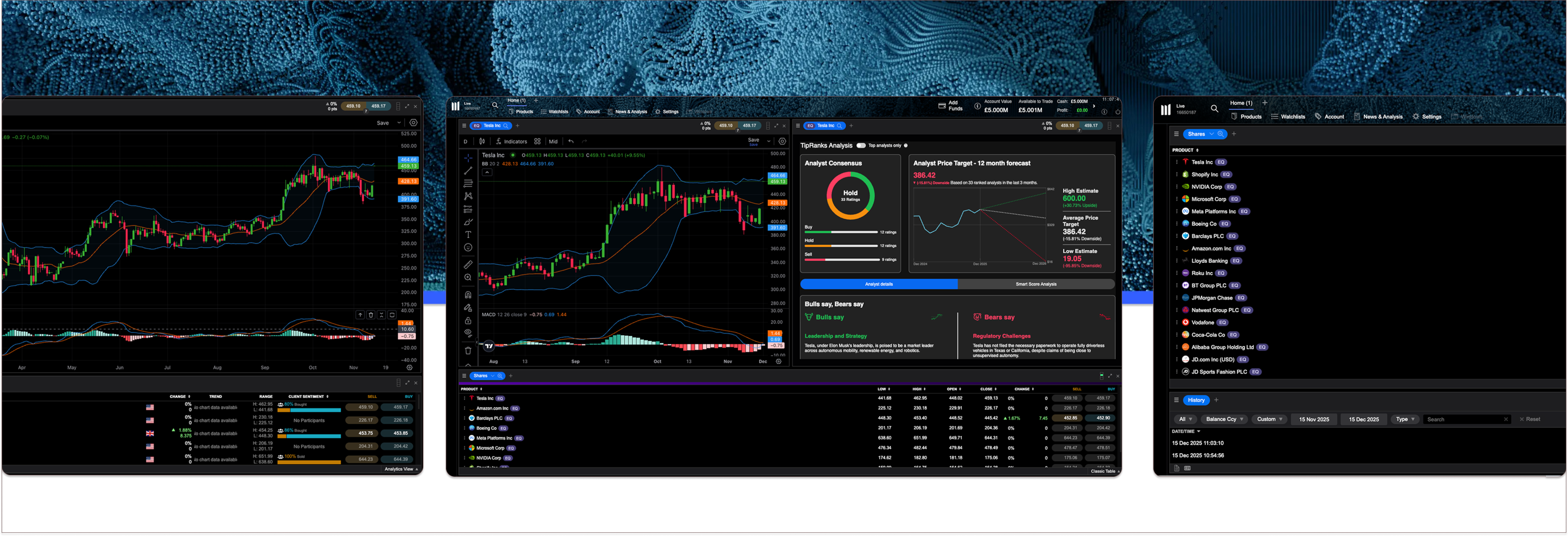
Diversification has a clear boundary. It reduces the risk attached to any single holding. It does not remove market-wide risk. If the whole market falls, a diversified portfolio can still fall too, as demonstrated in the graph below.
When creating a portfolio, it is important to weigh the advantages of concentration versus spread. Concentration means most of your money, and therefore most of your risk, sits in one place. Portfolio diversification spreads that risk across holdings that behave differently, so that no single outcome can dominate your results.
Correlation matters more than count. Owning more investments does not automatically mean you are diversified. If your holdings move together, they offer limited protection against each other. Nine technology shares that react similarly to the same news can behave like one big bet. Investment diversification depends on how independently your holdings behave, not just on how many you own. Correlations can rise in a crisis, so diversification may help less than expected during market-wide shocks.
Asset allocation is the main lever. Asset allocation is the deliberate mix of asset types in your portfolio, such as shares, bonds and cash. Different asset types can respond differently to economic conditions, so your asset allocation is a major driver of how diversified your portfolio really is.
Imagine two beginner portfolios, each worth £10,000.
Portfolio A holds all £10,000 in shares of a single company.
Portfolio B holds £7,000 in a broad global equity fund and £3,000 in a government bond fund.
Now suppose the company in Portfolio A issues a profit warning and its share price drops 40%. Portfolio A falls by £4,000. The entire portfolio takes the hit.
Portfolio B holds diversified investments. It has no direct exposure to that company. The broad equity fund might hold a small amount of it, and may dip slightly on the news. The bond fund is not tied to that company in the same way. The overall move in Portfolio B could be smaller.
This is not a guarantee. Portfolio B could lag if that single company rises sharply. The point is that Portfolio A is exposed to one outcome, while Portfolio B spreads the impact of any one event. Bond funds can also fall and may not protect in all scenarios (such as rising rates or inflation shocks). Outcomes depend on bond maturity/duration and market conditions.
These figures are illustrative and hypothetical.
Before adding money or changing your holdings, it can help to do a quick exposure check.
First, look at concentration. Ask what share of your money sits in any single holding or theme. If one position dominates, one piece of bad news can dominate your result.
Second, consider whether your holdings would likely fall together. If you own several investments but they are all in the same sector, country or theme, they may behave similarly in a downturn.
Asset allocation can help you think about this in a practical way. Instead of only counting holdings, look at your mix across shares, bonds and cash, and how much of your risk sits in one area.
Broad funds that track large indices are one common way beginners spread risk without picking individual shares. Some ‘global’ equity funds can still be concentrated in certain regions/sectors and may involve currency risk; always check what the fund holds and the risks/charges. This is not a recommendation for any specific product. It is a general way diversification is often achieved.
This is general information, not personal advice. Consider your objectives, time horizon and risk tolerance, and consider consulting a regulated advisor if unsure.
Owning many holdings that all move together: Buying shares in 10 different oil companies does not diversify your exposure to oil prices. If the oil sector falls, all 10 can fall. Quantity is not the same as diversification.
Treating diversification as a return booster: Diversification is mainly about limiting downside from any single position. It may also mean you benefit less when one holding surges, because you own less of it.
Over-spreading into too many holdings: Adding more positions can increase complexity and make a portfolio harder to follow, without adding much extra protection.
Assuming diversification protects against all losses: A diversified portfolio can still fall in a broad market downturn. Diversification is about reducing single-holding risk, not eliminating market-wide risk.
Diversification limits how much a single bad outcome can cost you.
Spreading across holdings that move differently matters more than owning a large number of them.
Asset allocation is the main driver of how diversified you really are.
Diversification reduces single-holding risk but does not remove market-wide risk.
Check your concentration before your next contribution, not after a fall.