
Committed savers on course to lose nearly £90,000 to frozen ISA limit
Savers who use their full ISA allowance every year are could on course to lose almost £90,000 in tax-free wealth by 2030/31.

Potential ISA wealth gap by 2030/31
Calculate how much you could be missing out on due to the frozen ISA allowance
The loss is the predictable result of a £20,000 allowance that has been frozen since 2017, and warns that the savers doing exactly what the system encourages are the ones being penalised most, without any headline tax rise to signal what is happening.
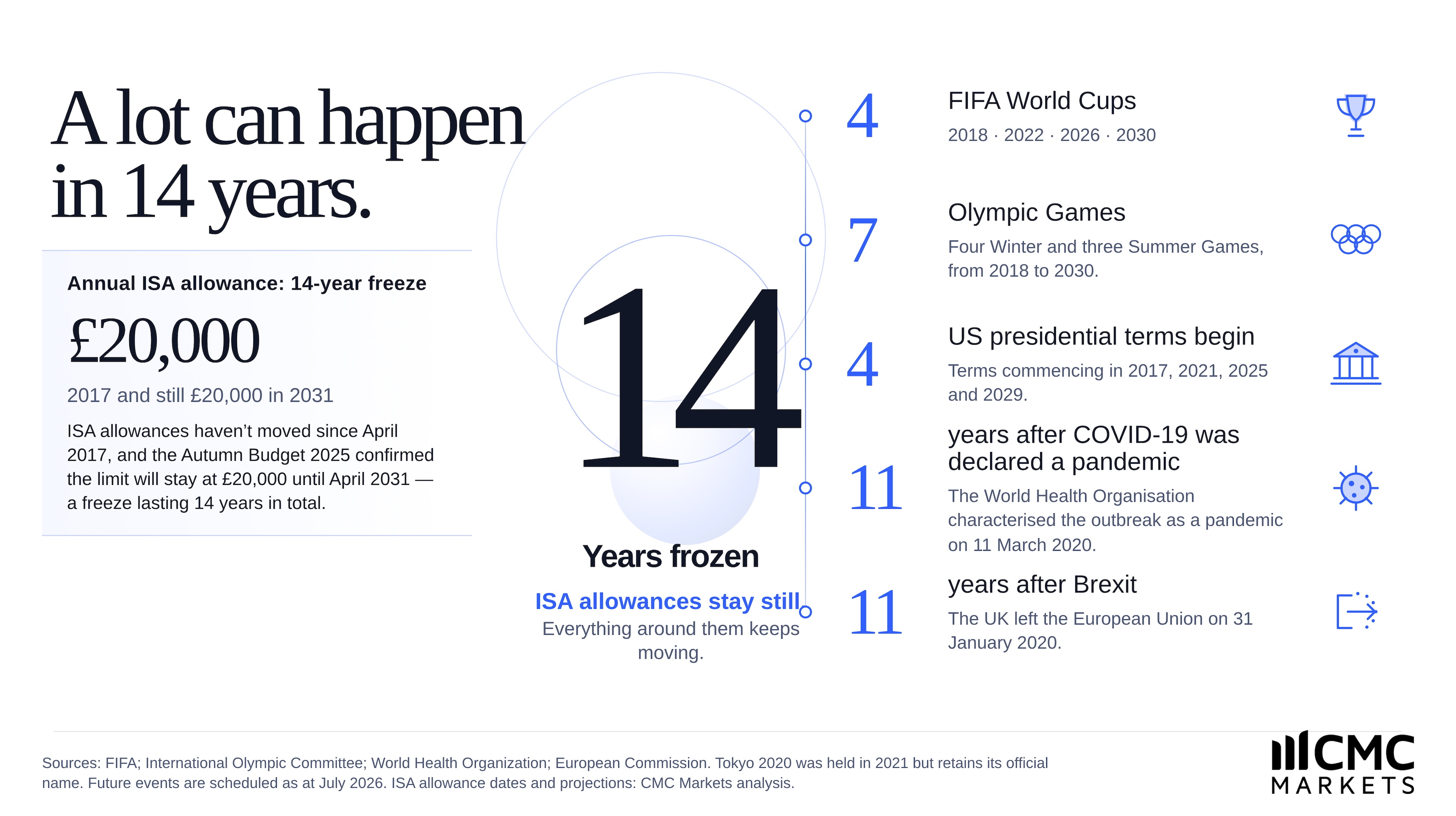
The allowance has not moved since April 2017, and the Autumn Budget 2025 confirmed it will stay at £20,000 until April 2031, a freeze lasting 14 years in total.
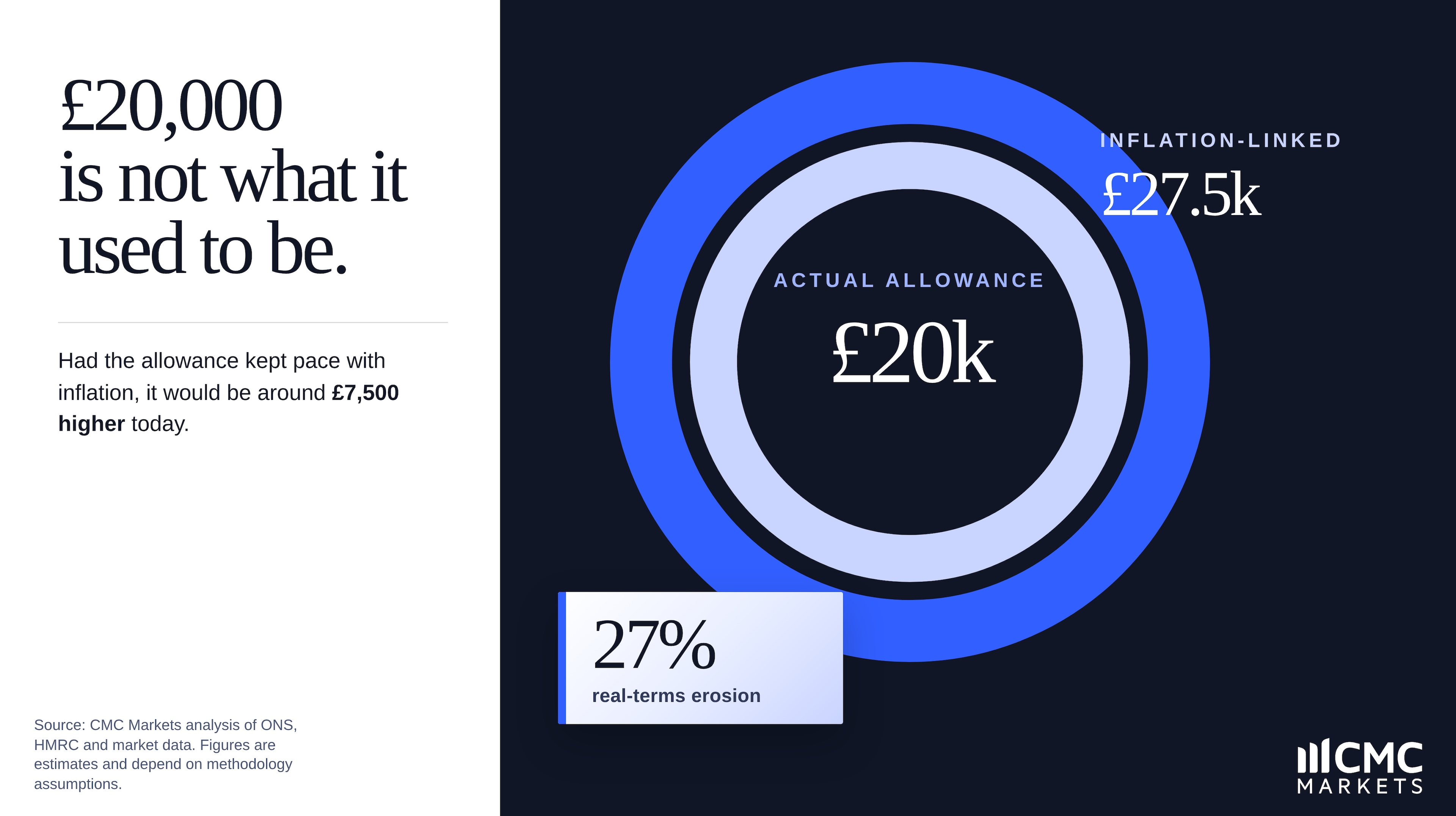
Had the limit risen in line with inflation over that period the annual ISA allowance would stand at around £27,500 today. In practice that means the ISA allowance has seen its value eroded by around 27% in real terms since 2017, even though the headline ISA allowance figure hasn’t changed.
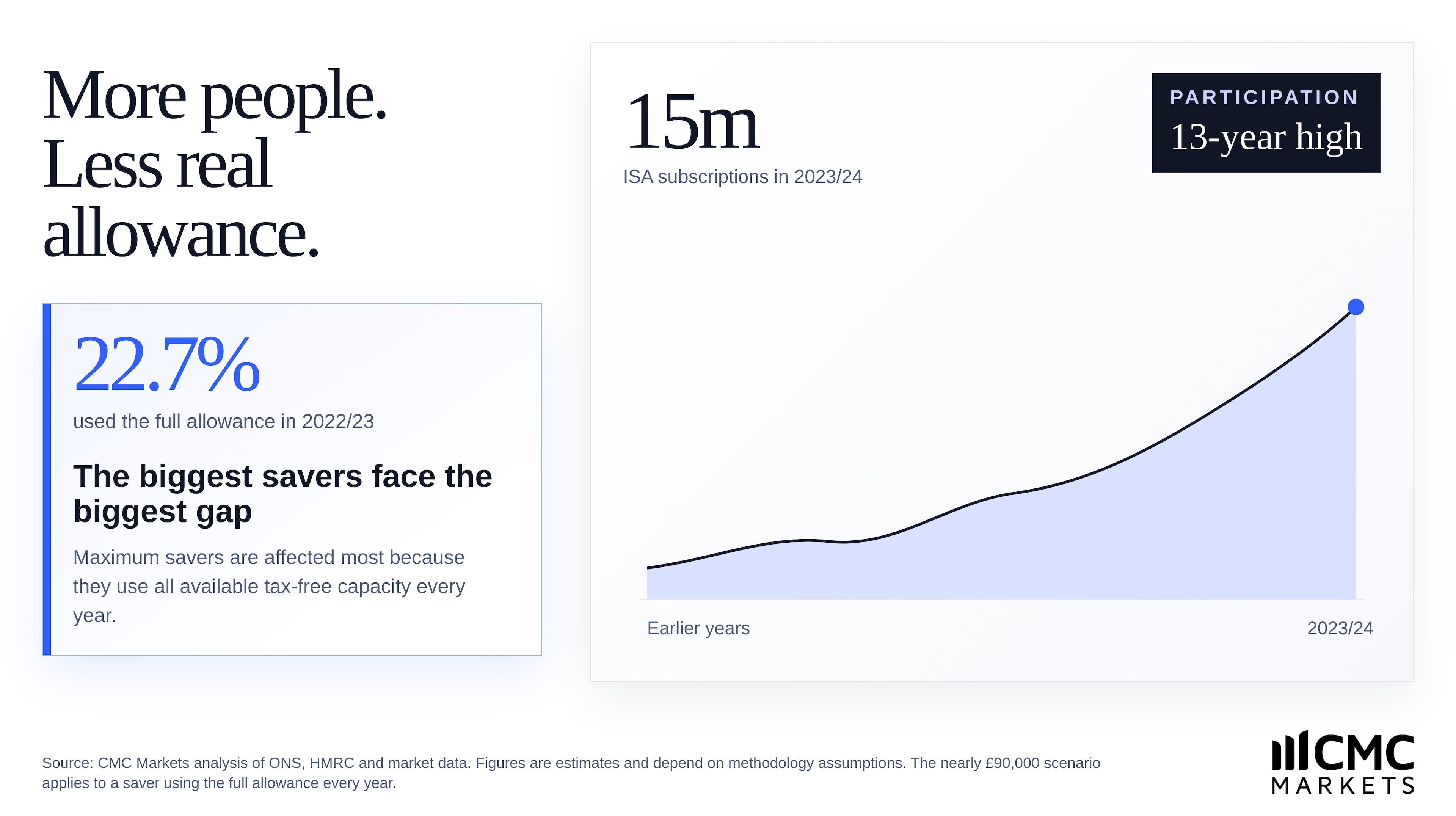
The effect is akin to a “stealth tax” on higher ISA deposits. Because the annual allowance stays the same on paper while inflation reduces its real value each year, the erosion of tax-free wealth goes unnoticed and lands hardest on the most disciplined savers. Around 15 million UK adults subscribed to an ISA in 2023/24, the highest annual participation in 13 years, and roughly 22.7% of subscribers used the full £20,000 allowance in 2022/23. It is this group, the ones who consistently use every tax-free allowance available to them, that carries the largest loss.
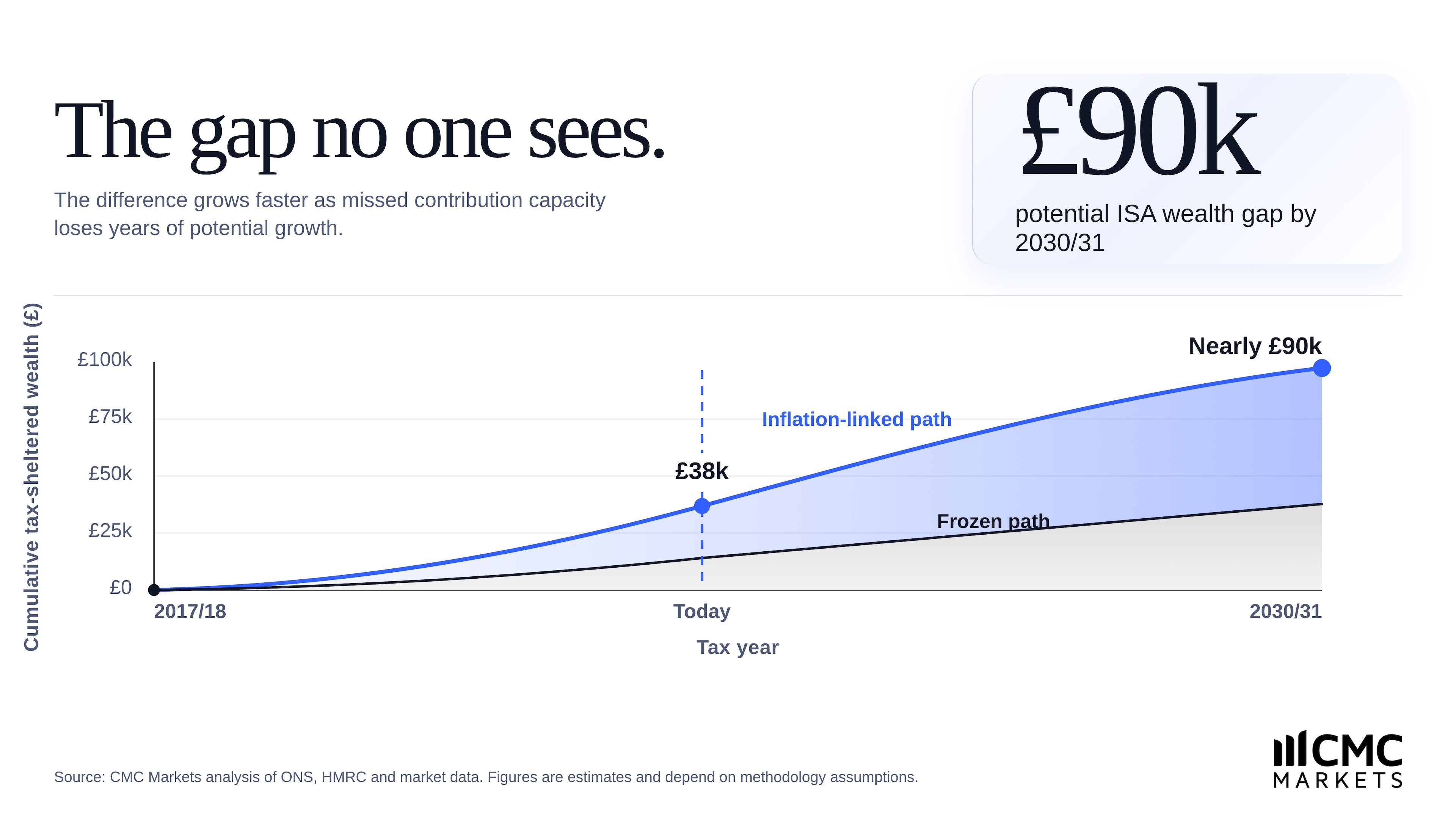
The scale of that loss is already substantial. For a saver who has used the full allowance every year, the freeze has cost around £38,000 in tax-free wealth to date, made up of roughly £33,000 in lost contribution capacity and a further £5,000 in growth that money could have earned had it been sheltered from tax. By the time the freeze ends in 2030/31 that figure is projected to reach nearly £90,000, equating to around £70,000 in missed contributions plus a further £20,000 in lost compound growth.
The wider ISA regime is tightening at the same time. Alongside confirming the ongoing freeze to the overall allowance, the Autumn Budget 2025 announced that the amount under-65s can hold in a cash ISA will be reduced to £12,000 a year from April 2027, the first cut to the cash ISA limit since 2017. Taken together, the measures point to an environment in which the tax-free space available to ordinary savers is narrowing rather than keeping pace with the cost of living, with the cumulative impact falling on long-term savers building wealth over a working lifetime.
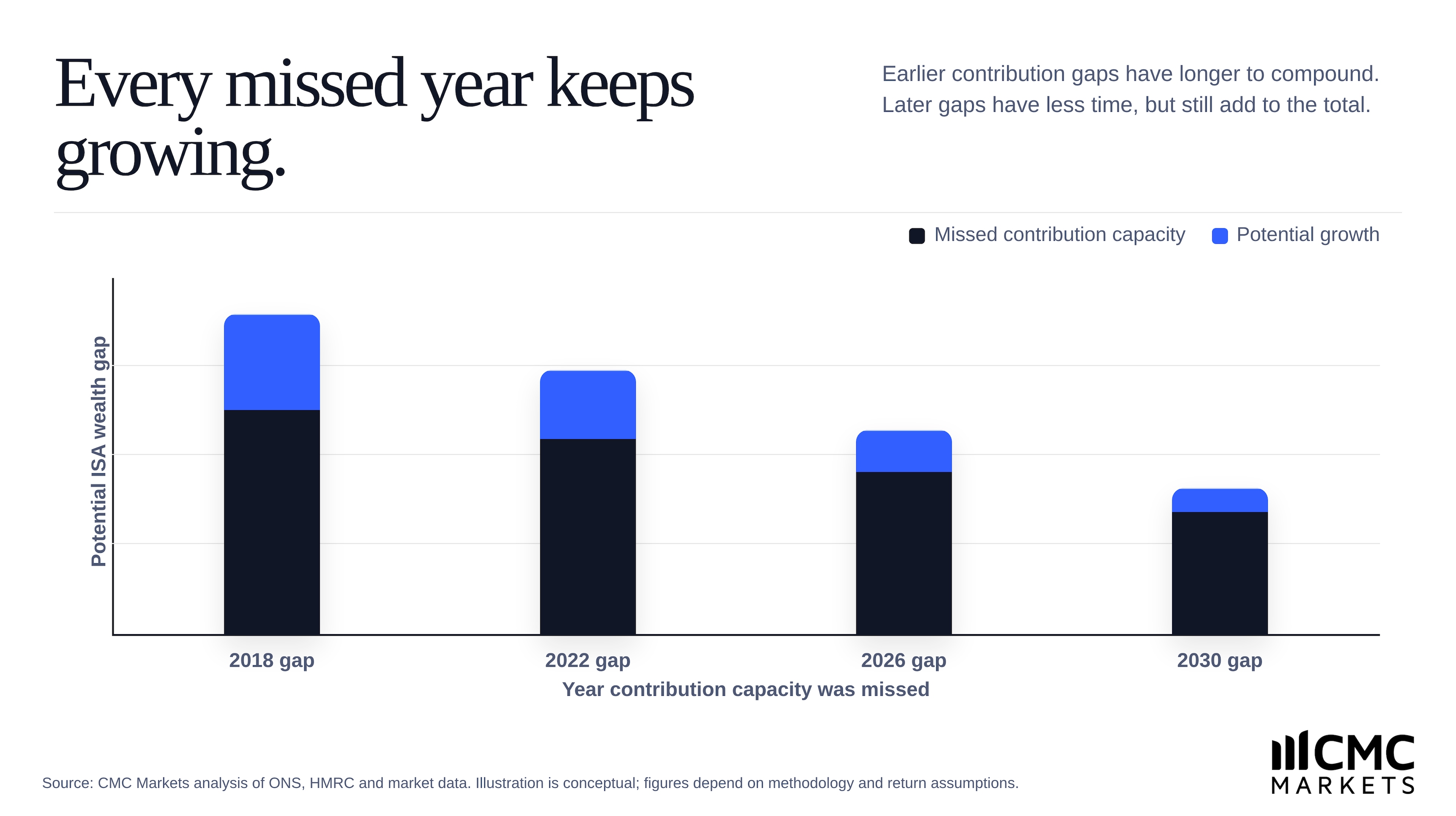
The reason the number climbs so steeply is compounding. Each year of lost contribution capacity also loses the years of growth that would have followed it, so the gap widens faster the longer the freeze is in place. This is the figure savers should be paying attention to, because it captures a cost that never appears on a payslip or a tax return.


Ready to get started?
Open an account and start building wealth today.
When you invest, your capital is at risk.