

How CFD trading works
With a CFD, you don’t own the asset or instrument you're trading, but you can still benefit if the market moves in your favour, or make a loss should the market move against you.
When you open a CFD position, you agree to exchange the difference in an asset's price between open and close. If you think the market will rise, you go long. If you think it will fall, you go short. You never own the underlying asset.
CFDs are traded on margin, which means you only need to deposit a percentage of the full trade value to open a position. While this can increase potential returns, it also increases potential losses because your profit or loss is based on the full size of the position
What CFDs can you trade?
You can trade CFDs across a wide range of asset classes from one platform, including forex, indices, commodities, shares, and bonds.
NAME | MIN SPREAD | PRICE | DAY | WEEK | TREND |
|---|---|---|---|---|---|
CFD trading costs and fees
When trading CFDs, the main costs can include the spread, overnight holding costs, and any applicable commissions. The spread is the difference between the buy and sell price, and this is one of the core costs of opening and closing a trade.
Costs will vary depending on the asset class and how long you hold the position.
Pricing is displayed in full on the platform before you open any position.
Why open a CFD trading account with us?


How we support our traders
CMC Markets has been operating since 1989 and is listed on the London Stock Exchange. As a self-directed trading platform, we serve a large global base of traders and investors worldwide.



Trade on our award-winning platforms⁴
To trade with us, you choose a CFD account that suits the platform you want to use.
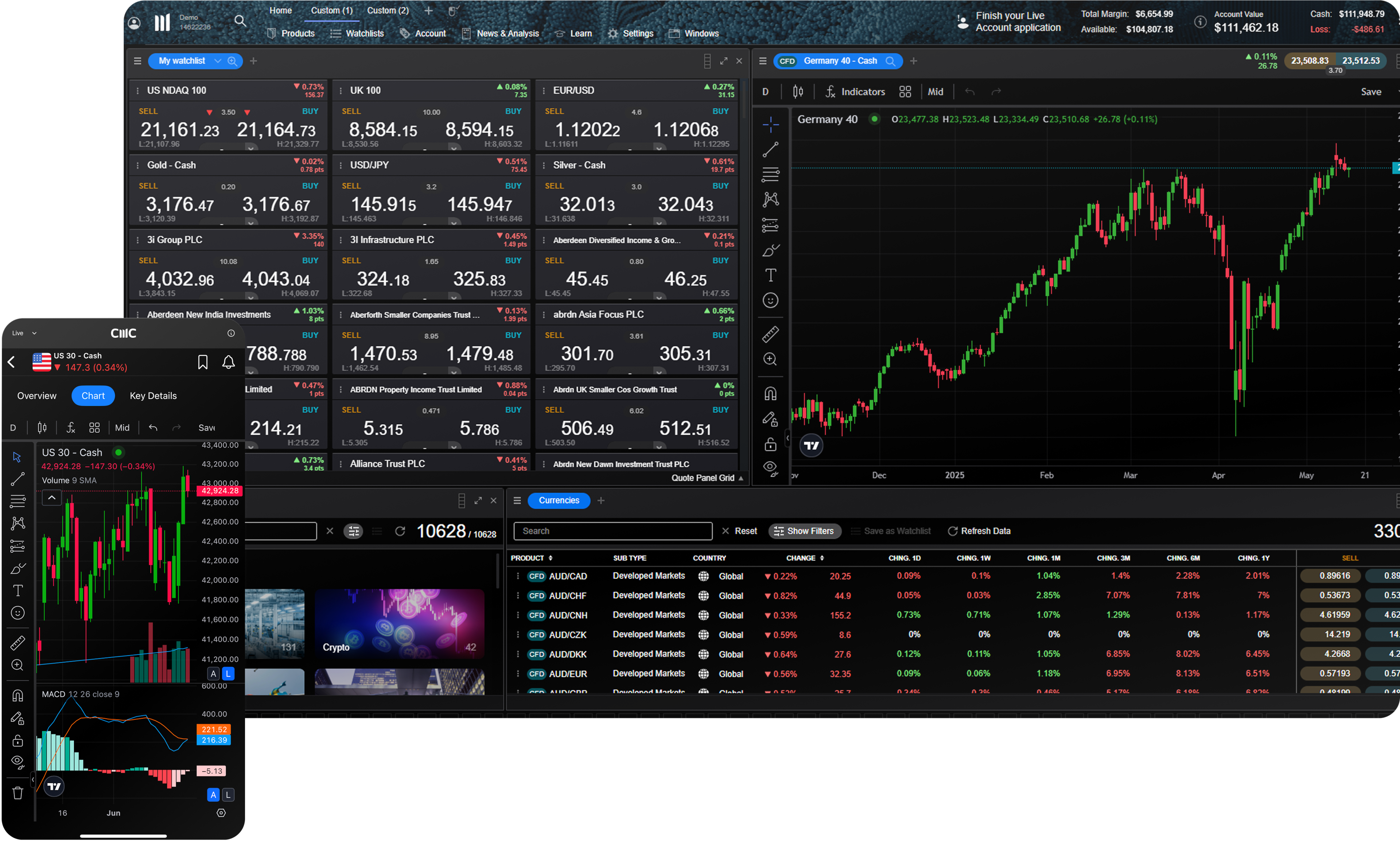
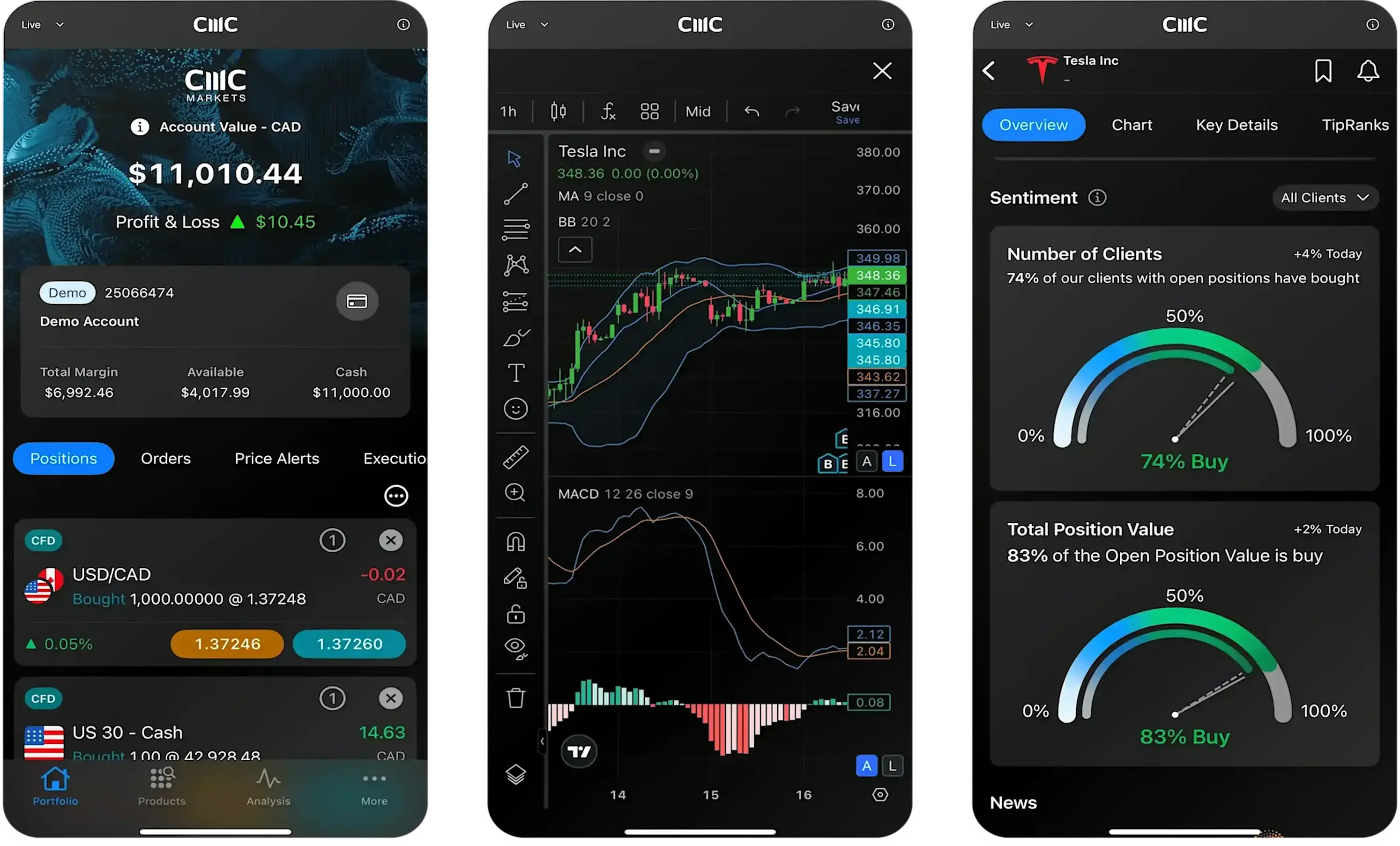
The standard or FXActive CFD accounts provide access to our proprietary and award-winning CMC platform, available on PC and mobile. This account can also be linked to TradingView.
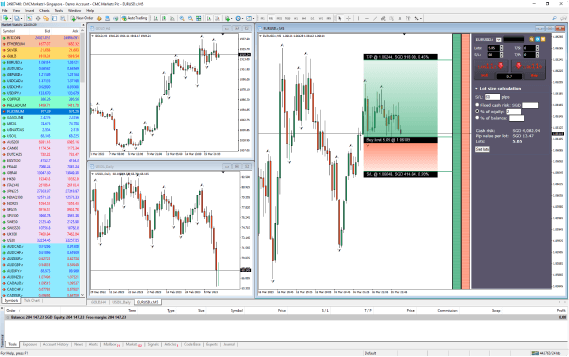
To trade on Metatrader 4 or Metatrader 5, you must create a separate standard or FXActive account.
Read more below about the platforms we offer and find out which one best suits your trading style.
Award-winning CFD broker
How to open a CFD trading account in Canada
Opening an account is straightforward and costs nothing. You'll need proof of ID and address, standard for any regulated Canadian broker.
Not ready? Open a demo account and practice with $10,000 of virtual funds.
CFDs vs. other trading methods
Unlike buying shares outright, CFDs don't give you ownership, but they do give you leverage and the ability to short markets. They also differ from futures, as there's no fixed expiry, and from ETFs, as you can go short without borrowing stock.
CFDs allow traders to gain leveraged exposure to a range of markets, including shares, indices, forex and commodities.
CFDs | Shares (Direct) | Futures | ETFs | |
|---|---|---|---|---|
| Own the asset? | No | Yes | No | Yes |
| Go short? | Yes, easily | Only by borrowing stock | Yes | Limited |
| Leverage? | Yes | No (or limited margin) | Yes | No |
| Fixed expiry? | No | No | Yes | No |
| Trade 24hrs? | Some markets | TSX/NYSE hours only | Some markets | TSX/NYSE hours only |
| TFSA/RRSP eligible? | No | Yes | No | Yes |
| Common uses | Active traders wanting leveraged, flexible market access | Long-term investors building registered accounts | Institutional hedging and fixed-term speculation | Passive, tax-advantaged diversified exposure |
Dive deeper




Open a demo account
Start trading with a live account today or try a demo with $10,000 of virtual funds.
Do you have any questions?
Our client services team is here whenever the markets are open.
Email us at clientmanagement@cmcmarkets.ca or call us on 1-866-884-2608.