
ETF trading in Canada: Trade ETFs as CFDs
- Trade on 5,000+ exchange-traded funds on our award-winning platform¹
Enjoy $0 commission on all global ETFs (including US)
Access lightning-fast execution² and experienced customer service
Free access to Morningstar's quantitative equity analysis³

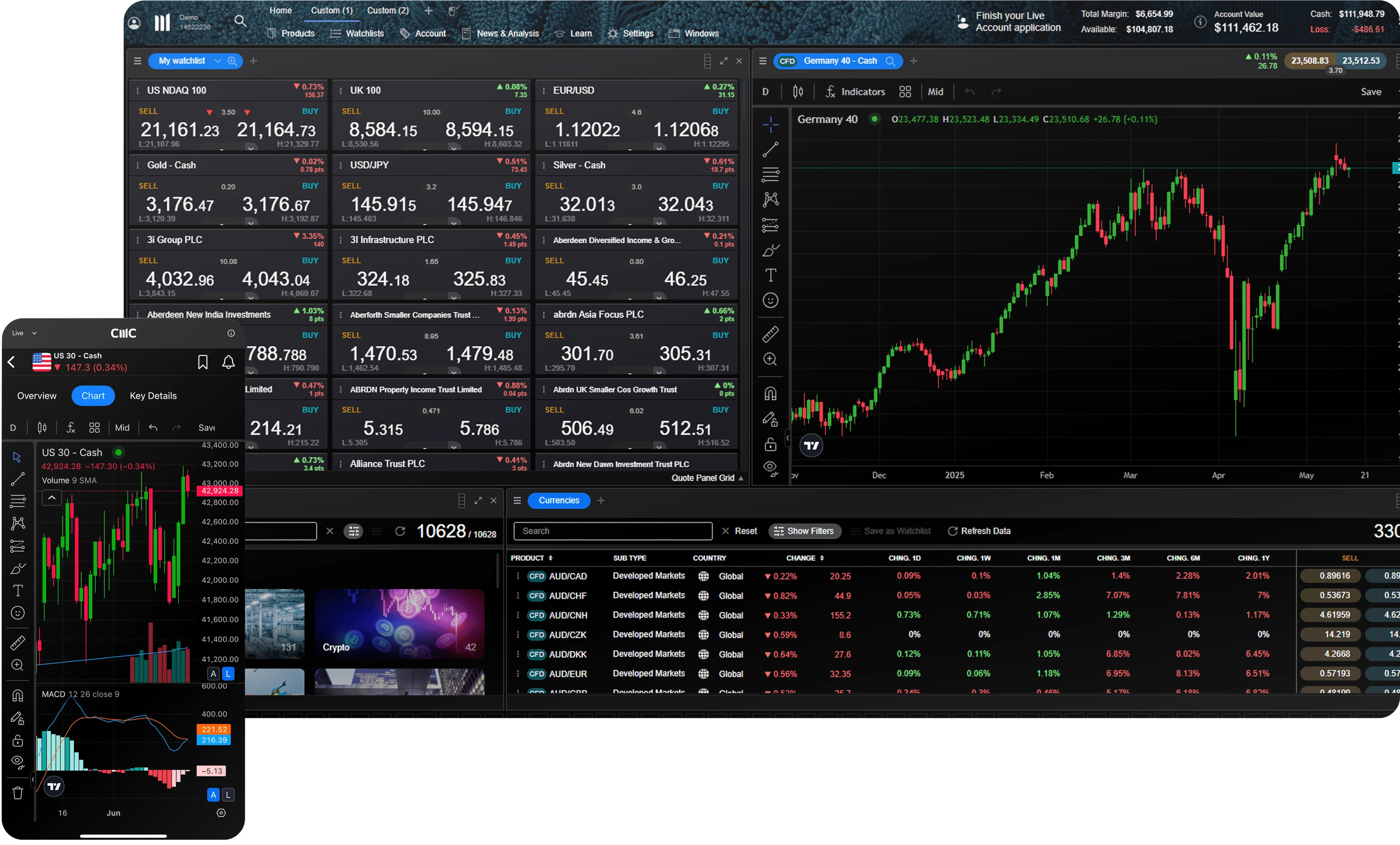
What are ETFs?
An exchange-traded fund (ETF) is an investment fund that tracks the performance of a collection of underlying assets, such as shares, commodities or bonds. Trading throughout the day on an exchange, an ETF lets you follow the performance of a whole sector, theme, or index through a single instrument.
With CMC Markets Canada, you trade ETFs as contracts for difference (CFDs). This means you speculate on whether an ETF’s price will rise or fall. You don't buy the ETF, and you don't own any shares in the fund or the assets it holds.
How to trade ETFs with CMC Markets
ETF trading with us means trading contracts for difference on the price of an ETF, rather than buying and owning shares in the fund itself. A CFD is an agreement to exchange the difference in an ETF's price between when you open your position and when you close it.
This has a few practical implications worth understanding before you trade:
You can trade in both directions.
You can open a long position if you think an ETF's price will rise, or a short position if you think it will fall. Both directions carry risk.
You trade on margin.
You only put down a percentage of the full position value, but your profit or loss is based on the full value, which means it's possible that losses could exceed your initial deposit.
You don't own the shares in the ETF.
Trading an ETF CFD doesn’t give you ownership of the shares in that exchange-traded fund, its underlying assets, or any rights such as voting or distributions.
Costs apply.
ETF CFDs are commission-free with us, but you’ll pay the spread, and holding costs may apply if you keep a position open overnight.
How ETF CFDs and leverage work
ETF CFDs are leveraged products, and it's important to understand how this leverage works and what it means for your risk exposure.
Leverage lets you gain exposure to the full value of an ETF position while putting down only a fraction of that value as margin. For example, if an ETF CFD has a 20% margin rate, you'd need to deposit 20% of the position's value to open the trade.
Leverage can make your capital go further when you're trading ETF CFDs, but it cuts both ways. Your profit or loss is calculated on the full position size, not just the margin you put down, so losses can build quickly and could end up exceeding your initial deposit. If the market moves against you, you may need to add funds to keep a position open, which is known as a margin call.
It's also worth distinguishing two things that sound similar. A 'leveraged ETF' is a type of fund that itself uses leverage to aim for a multiple of an index's daily return.
What markets can ETFs give me exposure to?
One reason many traders trade ETFs is the breadth of exposure a single instrument can offer. With CMC, you can trade CFDs on ETFs covering a wide range of sectors and investment themes, including:
Broad market indices, tracking benchmarks such as the S&P 500 or a national index.
Sectors and themes, such as technology, biotech and pharma, or consumer discretionary.
Commodities, such as gold, silver or crude oil, through commodity-focused ETFs.
Regions, giving exposure to specific countries or areas of the world.
The ETF trading costs section below shows a selection of ETFs across popular themes, with live pricing and costs. The full range available to trade is shown on the platform, and it can change over time.
Benefits and risks of trading ETFs
Trading ETF CFDs has potential benefits, but each benefit comes with a corresponding risk. It's important to weigh both up before taking any positions.
CFDs are complex instruments and carry a high degree of risk. Consider whether you understand how ETF CFDs work and whether you can afford to take on the risk of losing your money.
Why trade ETFs with us?


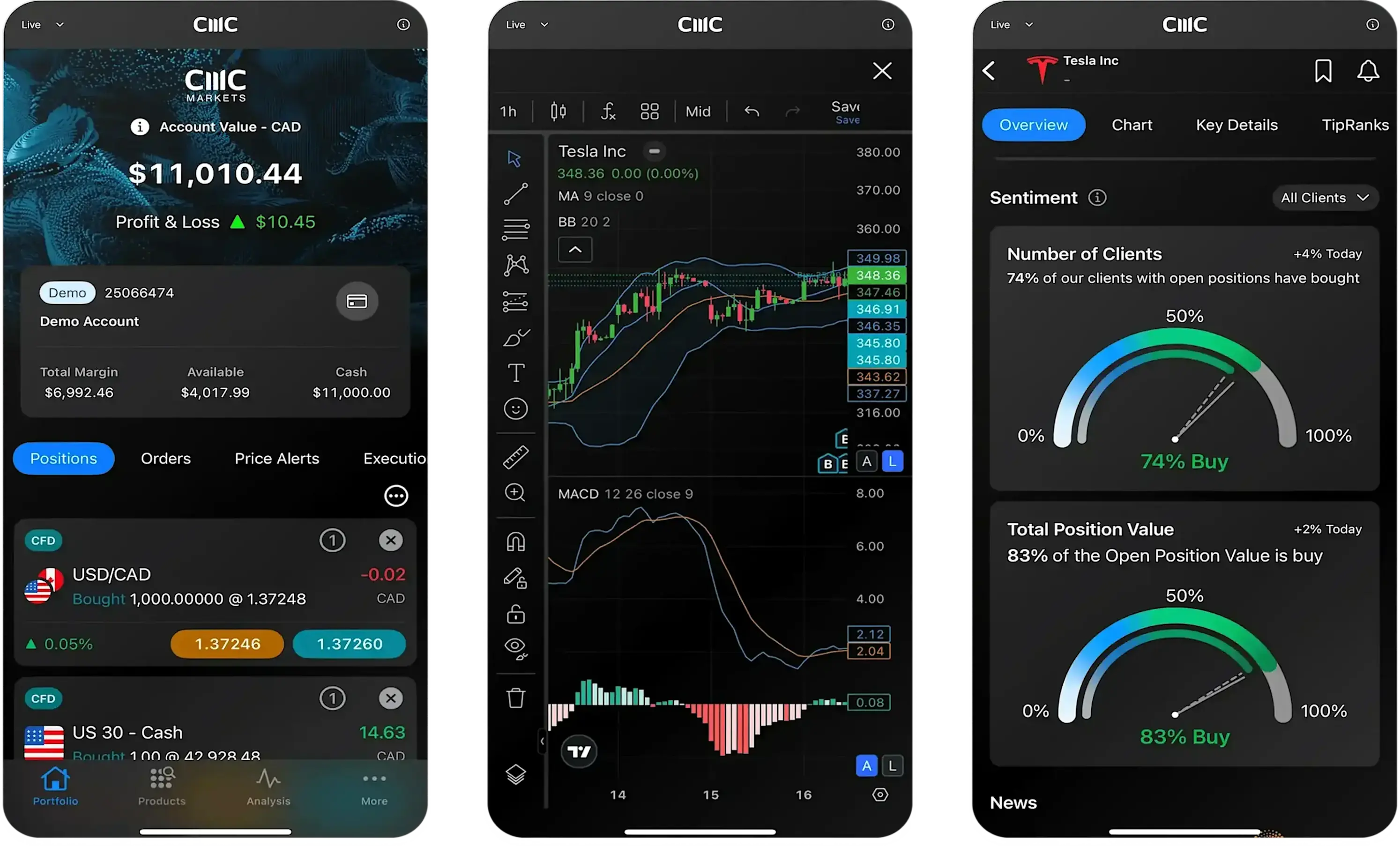
Trade on our award-winning platforms⁶
To trade with us, you choose a CFD account that suits the platform you want to use.
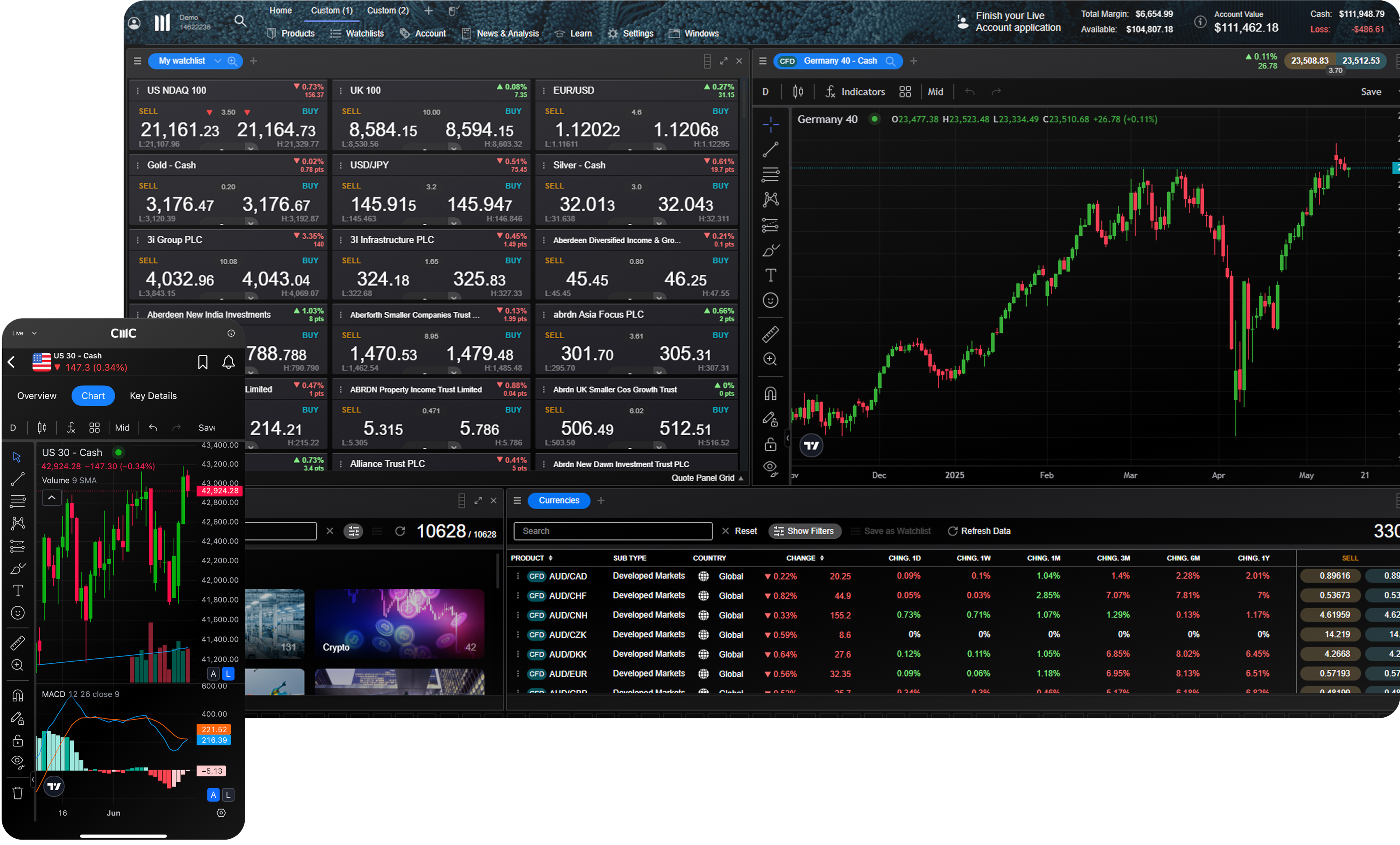
The standard or FXActive CFD accounts provide access to our proprietary and award-winning CMC platform, available on PC and mobile. This account can also be linked to TradingView.
To trade on Metatrader 4 or Metatrader 5, you must create a separate standard or FXActive account.
Read more below about the platforms we offer and find out which one best suits your trading style.


Open a demo account
Start trading with a live account today or try a demo with $10,000 of virtual funds.
Do you have any questions?
Our client services team is here whenever the markets are open.
Email us at clientmanagement@cmcmarkets.ca or call us on 1-866-884-2608.