How to trade shares with CMC Markets
Share trading, also known as stock trading, is the process of speculating on the price movements of publicly listed companies. Traders aim to profit from changes in a company's share price, whether it rises or falls.
With CMC Markets Canada, you trade shares as contracts for difference (CFDs). This means you can go long if you think a share price will rise, or go short if you think it'll fall, without taking ownership of the underlying stock. You're trading on the price movement, not buying the share itself.
How to use CFDs for share trading in Canada
Share CFD trading means trading a contract for difference on the price of a share, rather than buying and owning the share. A CFD is an agreement to exchange the difference in a share's price between when you open and close your position.
A few practical points are worth understanding before you trade:
Trading share CFDs vs buying shares
Trading share CFDs and buying shares both give you exposure to a company's share price, but they work very differently. The table below sets out the main differences to help you understand what you are, and aren't, getting when you trade share CFDs.
Trading share CFDs (with CMC) | Buying shares (traditional) | |
Ownership | You don't own the share. You trade on its price movement only. | You own the share and become a shareholder in the company. |
Direction | Go long or short - you can trade on prices falling as well as rising. | Typically long only - you profit if the price rises. |
Leverage | Traded on margin. You put down a fraction of the position value, and losses can exceed your deposit. | Usually paid in full. You commit the full value of the shares up front. |
Dividends | You don't receive dividends as an owner. A dividend adjustment may apply - long positions may receive one and short positions may pay one. | You may receive dividends directly as a shareholder, if the company pays them. |
Shareholder rights | None. No voting rights or other shareholder entitlements. | Yes, including voting rights at company meetings. |
Costs | Commission-free with us; you pay the spread, and holding costs may apply overnight. | May involve brokerage commissions and, in some cases, custody or account fees. |
Registered accounts | Can't be held in a TFSA or RRSP - CFDs aren't qualified investments. | Shares and ETFs may be eligible to be held in registered accounts. |
Typical time horizon | Often used for shorter-term trading; overnight holding costs make long holds more expensive. | Can be held long term without overnight holding costs. |
Neither approach removes risk. Share CFDs add leverage, which magnifies both gains and losses. Consider which approach suits your goals, and remember that CMC offers share CFDs only - not share ownership.
How share CFDs and leverage work
Share CFDs are leveraged products. Leverage lets you gain exposure to the full value of a share position while putting down only a fraction of that value as margin. For example, if a share CFD has a 20% margin rate, you'd need to deposit 20% of the position's value to open the trade.
Leverage can make your capital go further, but it cuts both ways. Your profit or loss is calculated on the full position size, not just the margin you put down, so losses can build quickly and may exceed your initial deposit. If the market moves against you, you may need to add funds to keep a position open, or your position may be closed.
Margin requirements vary by share and can change with market conditions. Individual shares can be volatile, particularly around company news such as earnings reports, so it's important to understand how much you could lose before you open a position.
What shares can you trade?
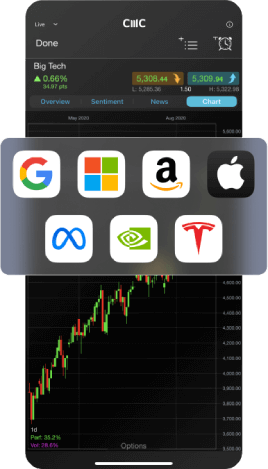
With CMC Markets Canada, you can trade CFDs on 9,000+ shares from companies listed around the world, including:
Of these, 5,000+ US shares can be traded during extended hours (see below). The full range available to trade, along with live pricing and costs, is shown on the platform, and it can change over time. We don't recommend specific shares - which shares you trade is your decision.
Benefits and risks of trading share CFDs
Trading share CFDs has potential benefits, but each comes with a corresponding risk. It's important to weigh both.
CFDs are complex instruments and carry a high degree of risk. Consider whether you understand how share CFDs work and whether you can afford to take on the risk of losing your money.
Why trade shares with us?


Trade share CFDs on our award-winning platform³
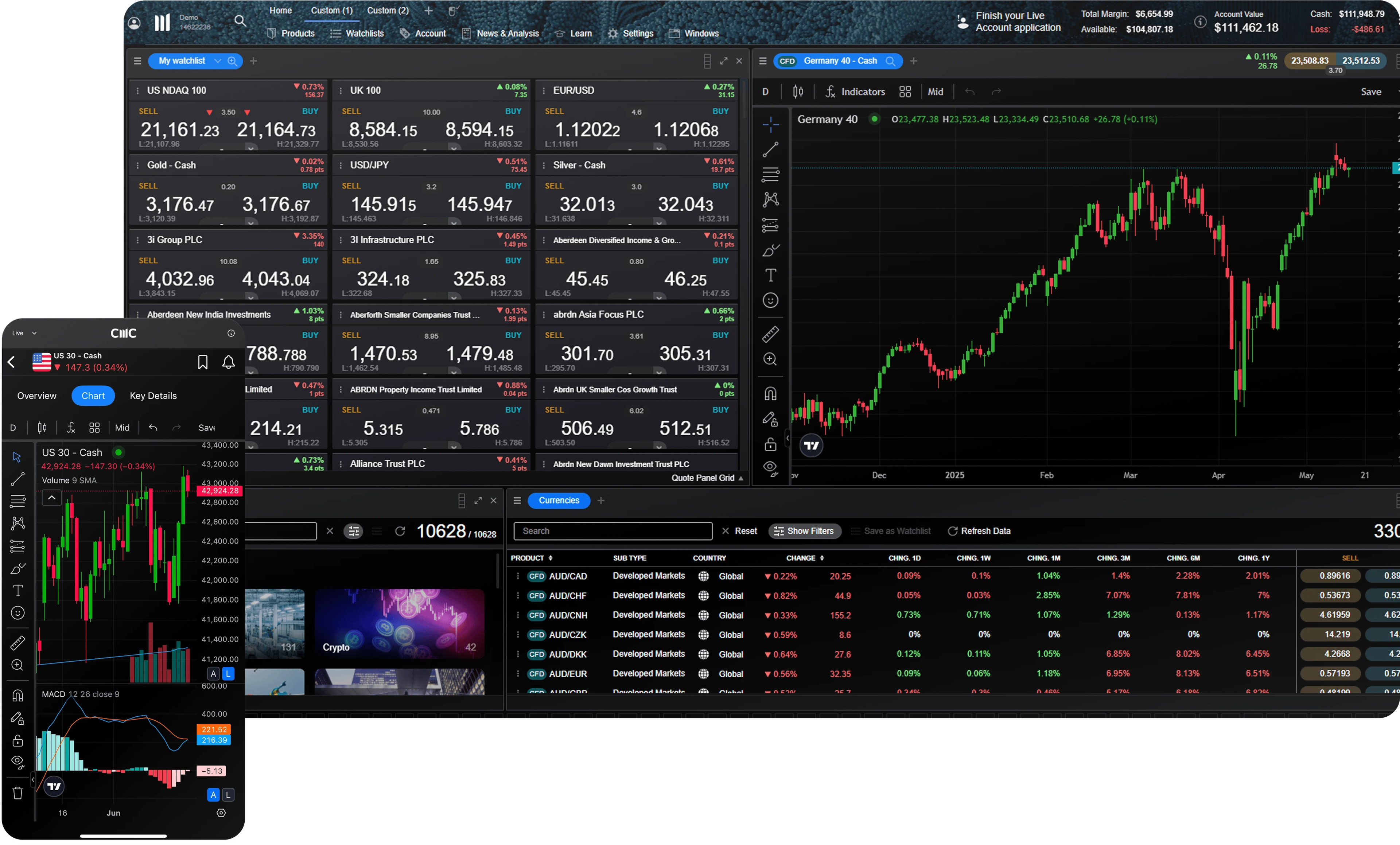
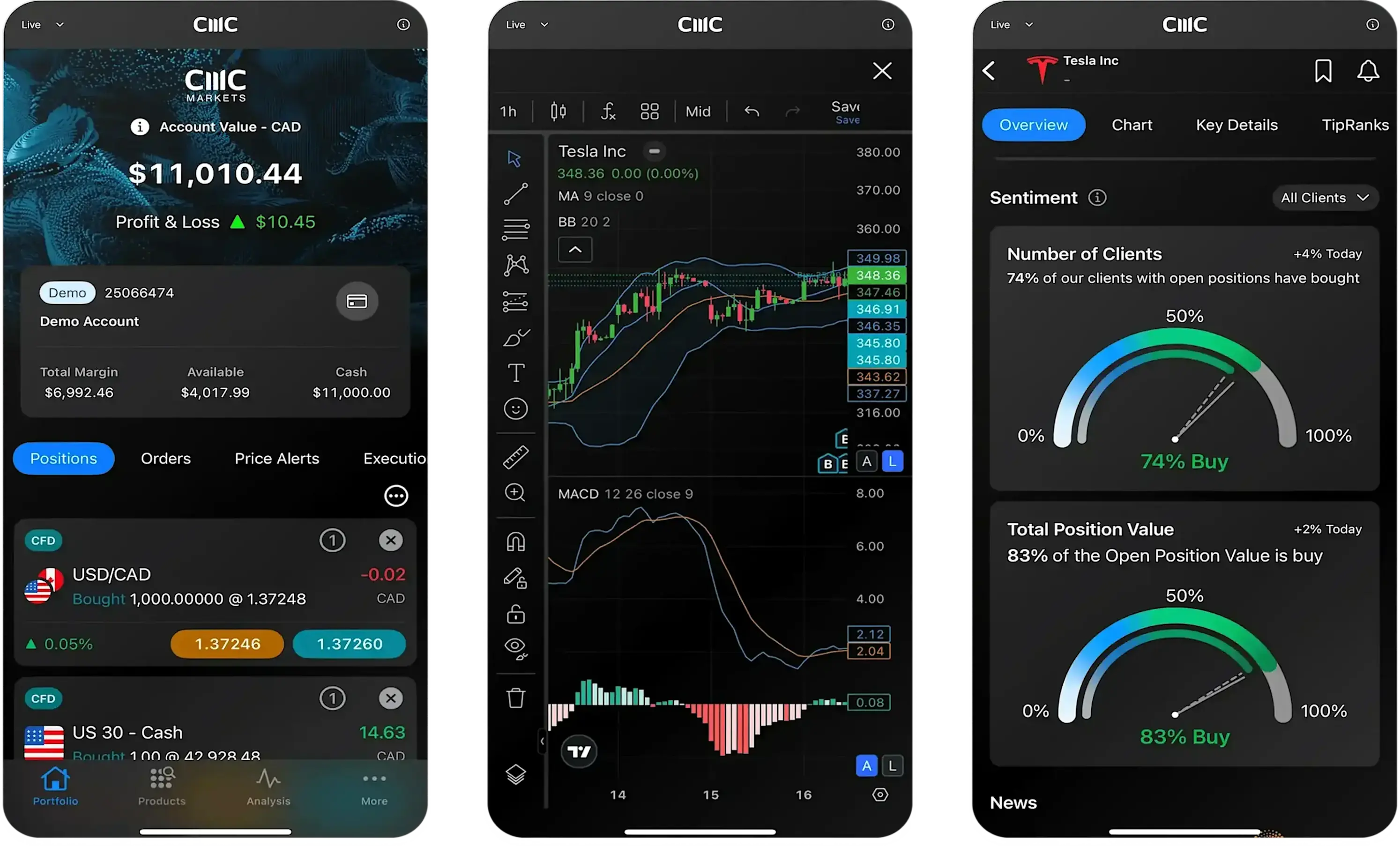
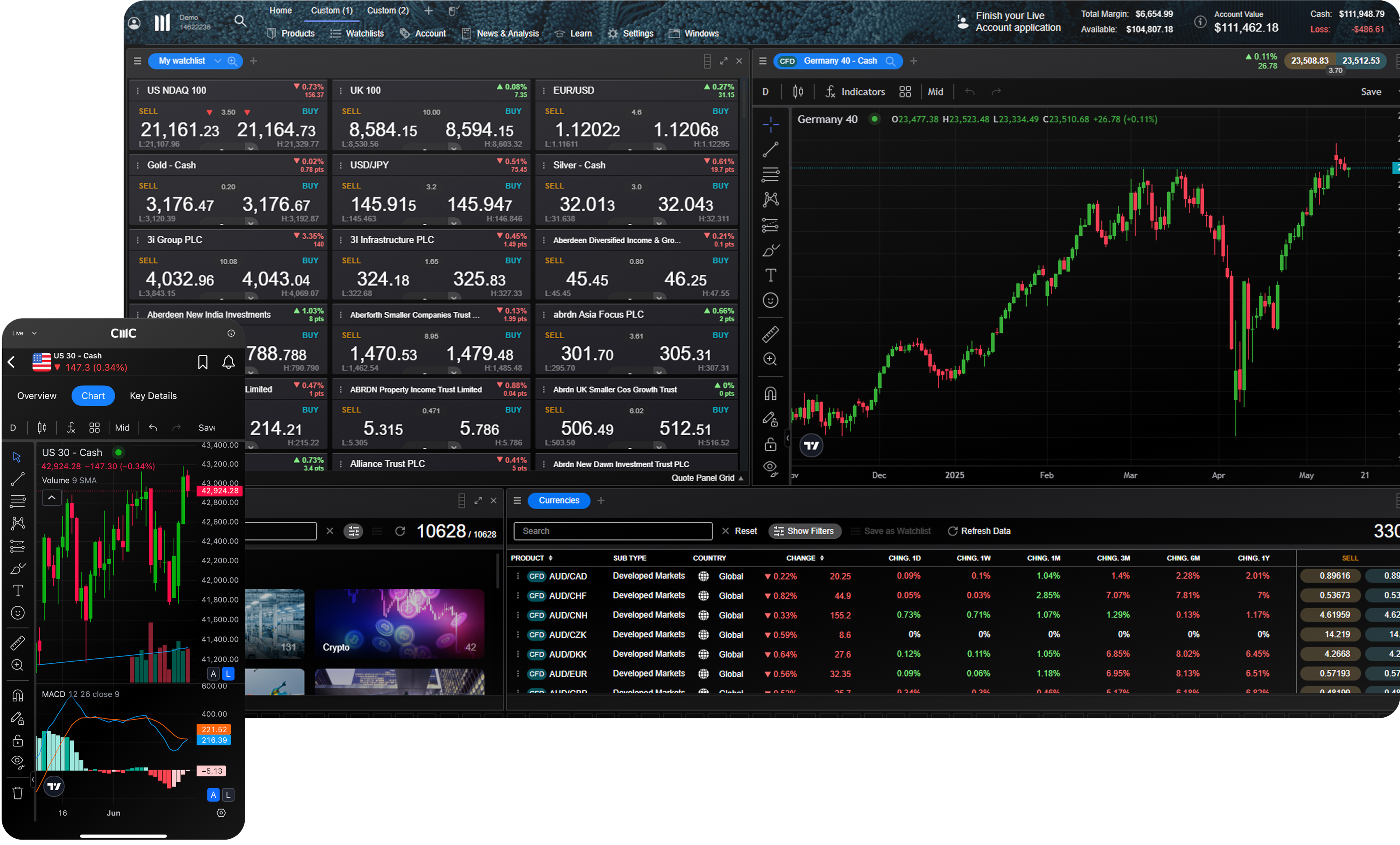
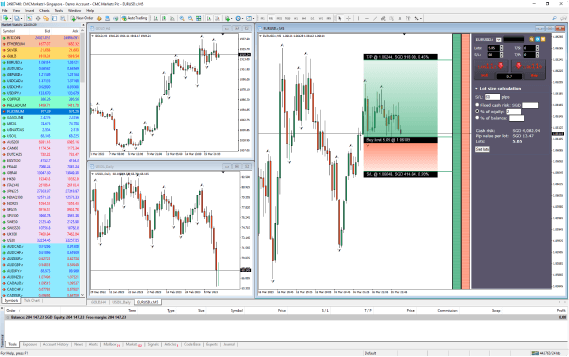
Access global share opportunities on our award-winning³ CMC platform, available on web and mobile.
Built for performance and flexibility, our platform offers powerful charting, advanced order types and real-time alerts, helping you stay on top of the markets wherever you trade.
Prefer using TradingView? You can connect to analyze charts and explore trade ideas in a familiar interface.

Dive deeper



Open a demo account
Start trading with a live account today or try a demo with $10,000 of virtual funds.
Do you have any questions?
Our client services team is here whenever the markets are open.
Email us at clientmanagement@cmcmarkets.ca or call us on 1-866-884-2608.
2Reuters news ticker is a registered trademark of Thomson Reuters®. Refinitiv® Morningstar is a registered trademark of Morningstar Inc.