
The trillions missing from company reports
A large share of Big Tech’s future AI costs sits outside quarterly balance sheets, as data-centre leases and long-term power contracts lock companies into years of infrastructure spending.
Each quarter, the largest technology companies disclose to investors their massive capital expenditures on AI-related infrastructure, covering everything from advanced integrated circuits to modern data centres. It turns out, however, that these impressive, currently reported figures do not even approximately reflect the actual scale of future outlays already committed to by companies such as Alphabet, Meta Platforms, Oracle and many other Silicon Valley giants. This is because a huge portion of their upcoming financial liabilities is cleverly "hidden" outside standard quarterly balance sheets. This refers primarily to multi-year lease agreements for giant server farms and long-term contracts for the purchase of electricity, which are absolutely essential to power the electricity-hungry language models and computing centres of the coming decade.
According to some analyses, these behind-the-scenes liabilities total a staggering $3 trillion more than would appear from dry stock exchange reports. From an accounting and image standpoint, this strategy allows corporations to spread out enormous costs over time and avoid frightening investors with sharp declines in free cash flow in a given quarter. In reality, however, this means that the technology industry has taken on a massive, multi-year infrastructure debt. These companies are no longer building merely to meet current demand, but are betting on the future, locking up trillions of dollars in irreversible operating contracts. Even if the current enthusiasm of consumers and businesses for artificial intelligence were to cool in the coming years, these pre-signed, multi-billion-dollar contracts for power supply or cooling services would remain binding. This creates enormous pressure on tech giants, forcing them to find effective ways to monetise AI as quickly as possible in order to cover the costs of these astronomical, though currently not immediately visible, investments in the future.
Source: own analysis, as of 19.08.2026.
The mechanism of shifting AI infrastructure spending into long-term contracts, such as for energy supply, has a colossal impact on the physical world around us. Tech giants are now the world's largest corporate buyers of electricity. When Microsoft or Google build a data centre in a given region, they can purchase 100% of the power from a newly built wind farm, solar farm, or even a nuclear power plant for 15 years in advance. On the one hand, this greatly stimulates the construction of new energy sources, but on the other hand, it raises significant systemic concerns. Technology corporations are literally draining available power from the market. This means that the rest of the economy (traditional industry, urban infrastructure or ordinary households) may face power shortages.
Summary of the session in Europe and the US
Yesterday's session on the main exchanges of the Old Continent again ended with a supply advantage. Apart from the FTSE MIB (0.07%), all leading indices closed in negative territory, losing between 0.24% (IBEX 35) and 1.06% (FTSE MIB).
On Wall Street, too, the week began with a sell-off in indices, and this continuation was visible yesterday. The Dow Jones lost 0.22%. The S&P 500 fell by 0.69%. The tech-heavy Nasdaq lost 1.33%.
Asian exchanges dominated by supply
Over the previous six weeks, mixed sentiment prevailed on Asian exchanges. The current week may bring a correction to the markets. Today, sentiment is decidedly worse, following the declines on Wall Street. The Nikkei is losing 3.1%. The Australian S&P/ASX 200 is down 0.2%. The South Korean KOSPI is falling by 5%. On other exchanges: Hong Kong (-0.1%), Shanghai (-2.4%), Sensex (-0.4%), Singapore (-0.3%).
Summary of the WSE session
Already on Monday, the Warsaw Stock Exchange showed tentative signs of a possible correction, which continued during yesterday's session. The 4000-point level on the WIG20, after several days of defence, was broken, and a head-and-shoulders pattern appeared on the chart. The uptrend that began in July now appears threatened by profit-taking. Nevertheless, there is still considerable optimism on our exchange. On the WIG20, the June declines were halted at local support around 3553 points, from where a solid buying reaction was visible. Yesterday's session ended with a solid increase in index values. June brought a sell-off in indices, which became an opportunity to buy at a discounted price. So far, no fear is visible. However, uncertainty is emerging in the quotations of European indices as well as the S&P 500 and Nasdaq 100. The situation in the global risk asset market is highly dynamic and tense. The biggest problem for markets and directly for Wall Street in the short term is not the spectre of interest rate hikes, but rapidly shrinking financial liquidity, as the Treasury Department has halved the scale of bond purchases. Combined with accelerating credit growth, this creates a drain of capital from the system. Much will depend on the US bond market. Rising yields will intensify concerns about rising inflation, which could in turn lead to higher interest rates later in the year, and this, in turn, to higher financing costs for businesses. However, feelings of uncertainty are currently being ignored by investors. Our market is not detached from the rest of the world, and if scepticism returns to global markets, a correction should be taken into account.
Broad market turnover amounted to PLN 2.1 billion. The WIG lost 0.65%. The blue-chip index lost 0.74%. WIG20 futures fell by 0.43%. Medium and small companies also reflected the market picture. The mWIG40 fell by 0.71%. The sWIG80 ended the day down 0.39%.
The zloty, recently under pressure, is trying to recover losses
GBPPLN – the pair is currently trading at 5.05.
EURPLN – today the euro is valued at 4.32.
USDPLN – the dollar is trading today at 3.73.
CHFPLN – currently, one franc costs 4.60.
PLNJPY – the pair is trading at 42.64.

The EUR/USD may be close to breaking out
EUR/USD is trading above its 200-day moving average and approaching resistance near $1.1660, with a breakout potentially opening the way for further gains.
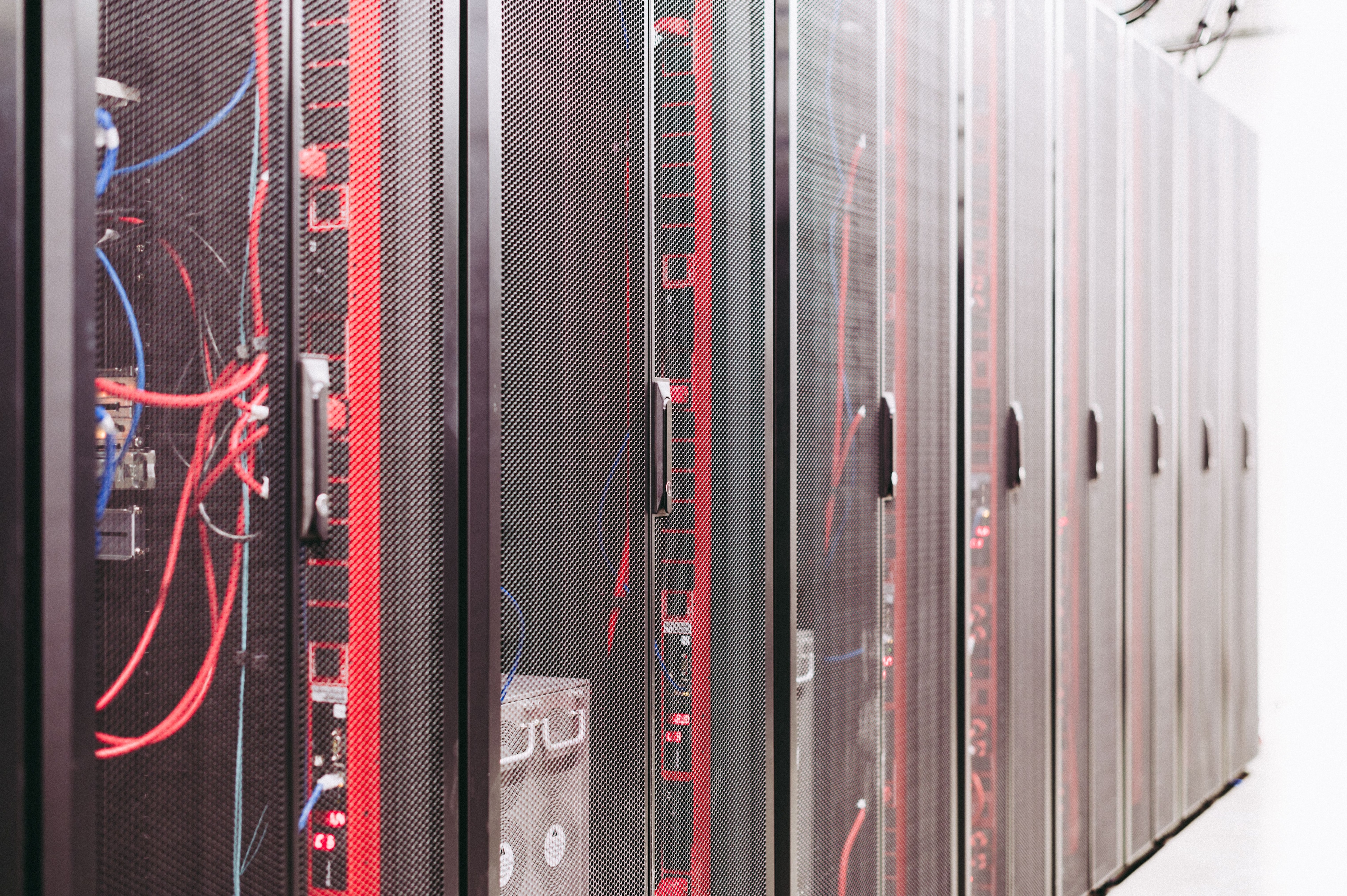
Is AI driving inflation? The artificial intelligence boom adds pressure on the Fed
The artificial intelligence boom was expected to lift productivity and help contain costs, but in the short term it may be having the opposite effect. Heavy investment in data centres, chips and infrastructure is increasing demand for scarce resources, potentially adding to US inflation and complicating the Federal Reserve’s path towards rate cuts.