Nvidia earnings could test Wall Street's AI rally
Nvidia reports after the US close on 20 May with the stock near record highs and carrying huge weight in the Nasdaq 100 and S&P 500. Expectations are demanding, options are pricing only a limited move, and that leaves an asymmetric risk if the chipmaker merely meets consensus rather than delivers another major upside surprise.

Market Analyst
Nvidia's results have become a market-wide event
Nvidia is due to report after the US cash close on Wednesday 20 May, and the results now matter well beyond a single stock. With a market capitalisation of about $5.4tn, the company is one of the biggest drivers of US equity indices and a key reference point for the AI trade.
The scale of that influence is striking. Nvidia has a weighting of roughly 13.75% in the Nasdaq 100 and about 8.0% in the S&P 500, so a sharp move in the shares can quickly become an index-level event. That is why this earnings release may be treated by traders almost like a major macro data point, alongside releases such as US CPI or non-farm payrolls.
Semiconductor stocks have also concentrated a large share of this year's equity gains. The SPDR Semiconductor ETF has risen more than 70%, leaving the sector in one of its most overbought positions for years. That does not end the rally by itself, but it raises the bar for Nvidia to keep the momentum intact.
SPDR Semiconductor ETF and Nasdaq 100, daily
Sources: TradingView, Luis Francisco Ruiz.
The technical setup still looks bullish, but $207.81 matters
Nvidia remains in a broad uptrend and is still trading close to record territory after its recent high around $236.54. The first area of support sits near the previous highs at $216.83 and $212.19, where a correction could still look like a pullback within the wider advance.
The latest move has not been entirely clean, though. The recent impulse has come with less convincing volume and some short-term bearish divergence, which suggests that buyers may need a strong earnings catalyst to extend the move.
The key level to watch is $207.81. That area sits close to the medium-term uptrend line, and a break below it would make the current bullish structure look much more vulnerable.
Nvidia, daily
Sources: TradingView, Luis Francisco Ruiz.
Options suggest confidence rather than fear
The options market is not pricing an especially extreme move around the release. The implied range for this week is roughly plus or minus $12, which would leave the stock inside the most important technical boundaries.
A $12 move to the upside would not be enough on its own to take Nvidia above the $236.54 high and restart a clear free-rise move. A similar move to the downside would also leave the medium-term trend line near $207.81 intact.
That makes the setup unusually dependent on the quality of the surprise. A decisive breakout or breakdown may require a clear beat or disappointment rather than a merely respectable set of numbers.
Expectations leave little room for an ordinary beat
Consensus expectations are already demanding. Analysts are looking for earnings per share of about $1.75, up 116% year on year, and revenue of around $78.85bn, up 79% year on year. Guidance for the current quarter is also expected to be strong, with revenue projected near $87.09bn, equivalent to 86% year-on-year growth.
That would mark one of the fastest growth phases of the past two years, and investors are already paying up for it. Nvidia trades on valuation multiples of roughly 45.36 times earnings and 25.49 times sales, leaving little room for a result that is simply in line with expectations.
The Spanish source included a semiconductor valuation table, but it has not been carried into this draft because the column headings and labels are too language-heavy for the English article format.
The risk is asymmetric if Nvidia only meets expectations
The main risk is that the market is already pricing a near-perfect outcome. Nvidia has beaten expectations regularly over the past eight reports, with average upside surprises of about 3.7% on earnings per share and 6.4% on revenue, yet the share-price reaction has often been neutral or even bearish.
That history matters because a normal positive surprise may not be enough when positioning and valuation are already stretched. If Nvidia misses consensus, or even only matches it, profit-taking could accelerate and put the medium-term trend line back in focus.
For the upside case to regain control, the company may need something closer to a major revenue beat. The Spanish analysis frames a roughly 10% positive revenue surprise as the kind of result that could change the balance and give Nvidia a better chance of retesting record highs.
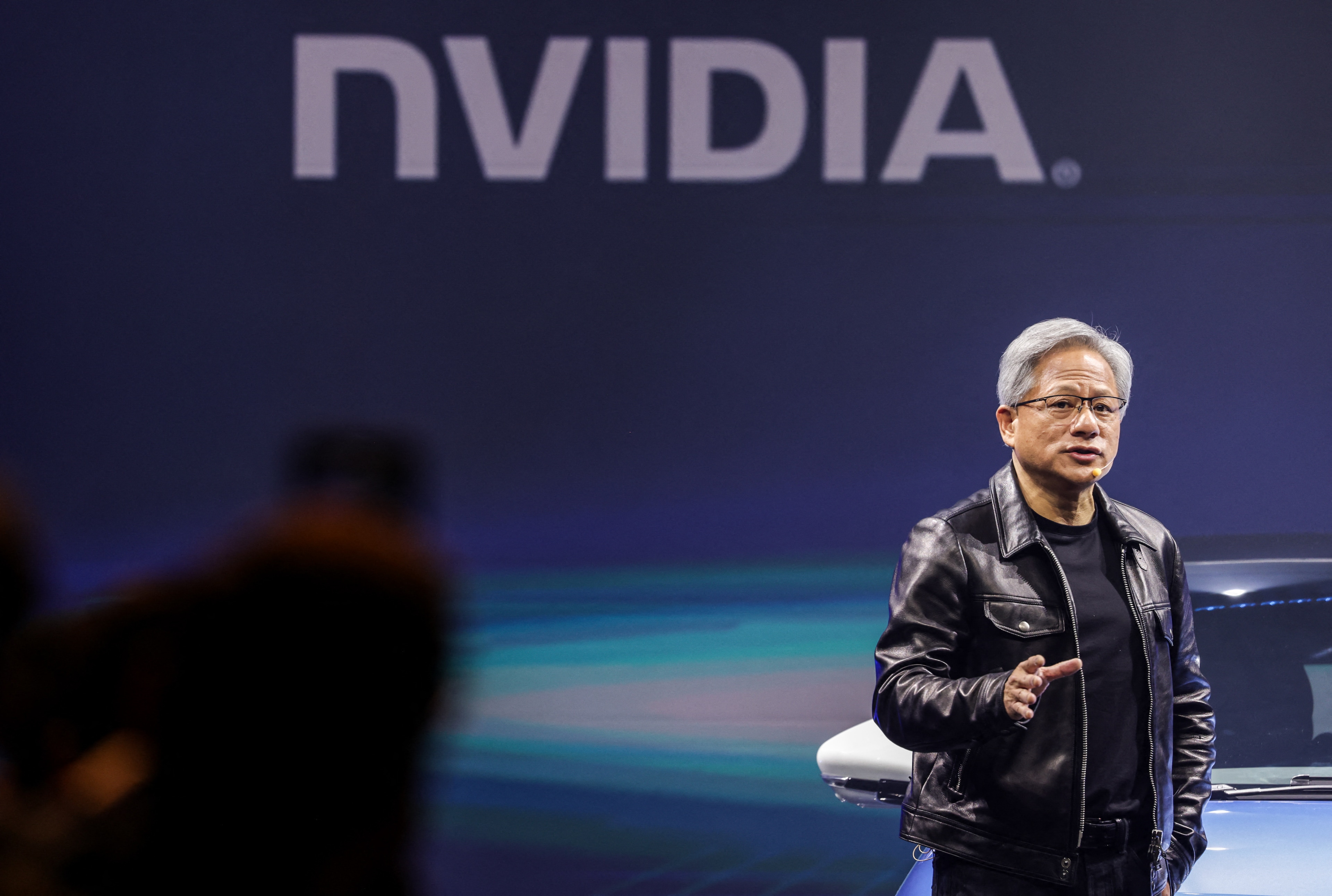
The Week Ahead: Nvidia earnings; UK, Japan CPI
Welcome to Michael Kramer's pick of the key market events to look out for in the week beginning Monday 18 May.

The semiconductor rally has reached extremely overbought levels
The VanEck Semiconductor ETF has surged more than 50% since late March, but the move is now looking stretched. With SMH trading above its upper Bollinger band and RSI pushing beyond 80, the rally may be nearing a phase of consolidation or a sharper pullback.
Rising yields and tighter liquidity could stall the Nasdaq 100
Higher bond yields are forcing a broader repricing across risk assets just as liquidity conditions tighten. With the S&P 500 and Nasdaq 100 stalling near recent highs, traders are increasingly focused on whether last week's lows can hold.