Nasdaq 100 nears correction as semiconductor sell-off deepens
The Nasdaq 100 is close to correction territory after falling almost 9.5% from its June peak, with semiconductor stocks leading the decline as investors question AI returns, competition and funding costs.

CMC Markets Poland
Nasdaq 100 approaches correction territory
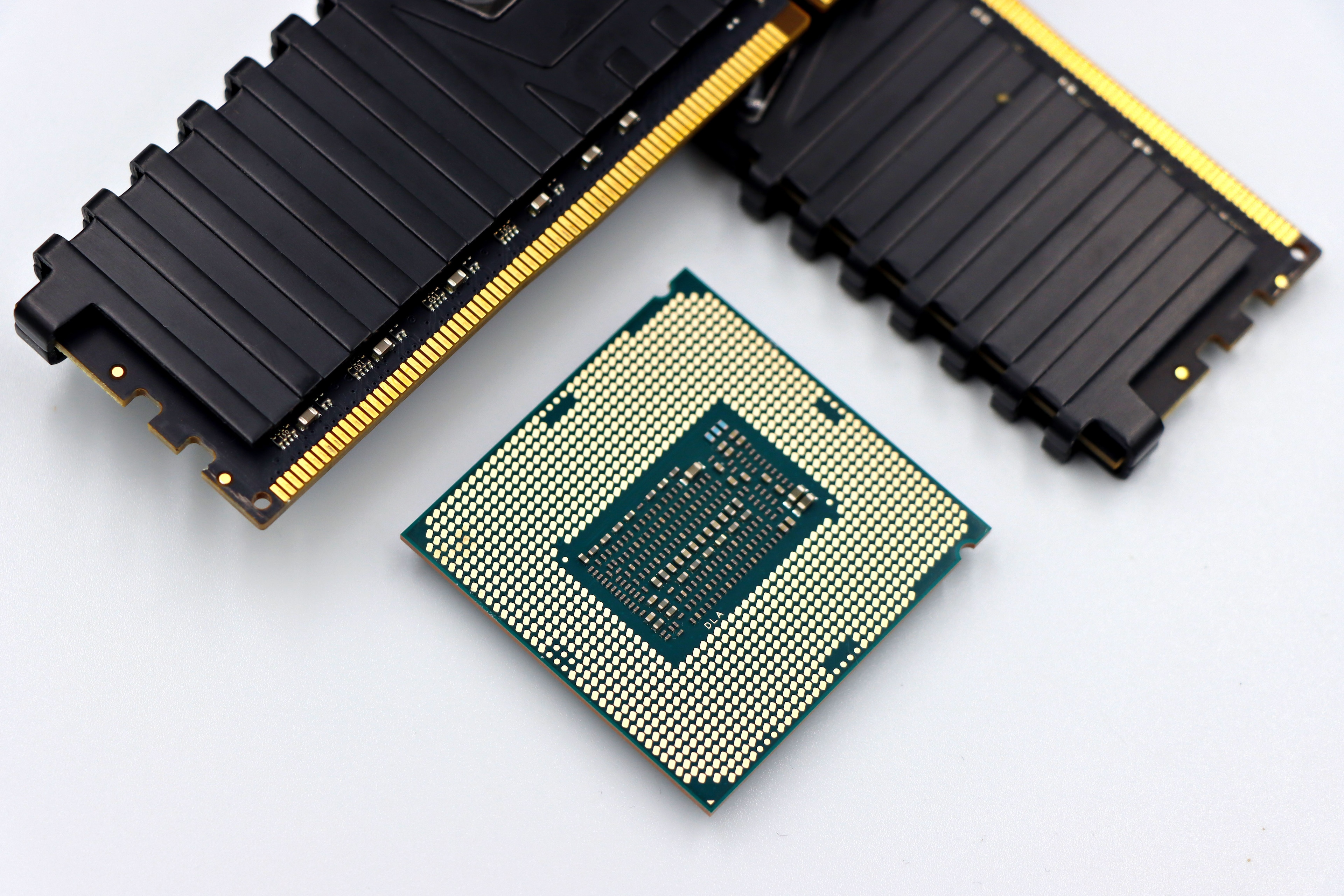
The Nasdaq 100 is on the edge of an official correction after its decline from the June peak reached almost 9.5%. The main force dragging the technology market lower is another wave of selling across semiconductor stocks, with the PHLX Semiconductor Index now down more than 24% from its record high and firmly in bear-market territory.
The sell-off began with Asian memory-chip giants such as Samsung Electronics and SK Hynix, before spreading to US component and microchip companies. Investors who built large positions in leveraged exchange-traded funds linked to chip stocks during the second quarter are now withdrawing capital quickly, adding further momentum to the decline.
Nasdaq 100 daily chart, October 2025 – present
Source: CMC Markets, 30 July 2026
AI expectations face harder questions
Demand for graphics processors and memory chips remains high, but market scepticism is growing over the real return on the huge investments being made in artificial-intelligence infrastructure. Even very strong technology earnings are no longer producing the gains investors once expected, because the market is increasingly demanding evidence that heavy capital expenditure can translate into real profits.
The backdrop has also been complicated by reports of rising competition from Chinese chipmakers and by the rising cost of capital in the US. Record corporate bond issuance to fund data-centre construction has reinforced concerns that the AI investment cycle is becoming more expensive just as investors are asking more difficult questions about future returns.
The AI supply chain hits a turning point
Analysts note that the market has reached a point where the technology-race narrative is no longer enough on its own. Until investors receive clearer answers on the profitability of AI projects and whether major technology companies can keep growing without constantly taking on more debt, the semiconductor sector may remain under pressure and limit the potential for a broader equity-market rebound.
The current decline also highlights the so-called hockey-stick effect in global supply chains. In the first phase of the AI boom, hyperscalers such as Microsoft, Google and Meta ordered chips and memory far in advance, fearing that they would run short of computing power and fall behind in the race.
Orders slow as inventories are absorbed
Chipmakers received signals of almost unlimited demand and continued lifting forecasts. Once equity investors started asking tougher questions about the economics of these investments, however, large technology companies began to slow the pace of new orders and focus first on using existing inventories.
As a result, even a modest decline in optimism at the top of the AI chain can create a much sharper fall in valuations and orders lower down the chain among the companies producing the physical chips.
Europe and Wall Street end weaker
European equity markets have been searching for direction for some time. The previous session across the main European exchanges ended with a clear advantage for sellers. The FTSE 100 was the exception, rising 0.34%, while other leading indices fell by between 0.01% for the DAX and 1.59% for Spain's IBEX 35.
On Wall Street, the sell-off gathered pace after the Federal Reserve's statement. The Dow Jones lost 2.19%, the S&P 500 fell 1.52%, and the technology-heavy Nasdaq declined 1.74%.
Asian markets remain under pressure
Asian markets have shown mixed sentiment over the past four weeks. The current week began with gains, but the quality of the rebound was weak, and the tone later deteriorated.
At the time of the source article, Japan's Nikkei was up 0.3%, while Australia's S&P/ASX 200 was down 1% and South Korea's KOSPI had fallen 1.3%. Elsewhere in the region, Hong Kong was down 0.25%, Shanghai had lost 1.2%, India's Sensex was unchanged, and Singapore was down 1%.
Warsaw remains resilient but risks are rising
After the WIG and WIG20 climbed to record highs, modest pullbacks do not yet change the broader picture. The previous session again showed some reluctance to trust further gains, but optimism remains visible on the Warsaw Stock Exchange.
The June decline in the WIG20 was halted around local support near 3,553 points, where a strong demand response emerged. For now, fear is still hard to see in Warsaw, although uncertainty is becoming more visible across European indices, the S&P 500 and the Nasdaq 100.
Liquidity and bond yields remain key risks
The biggest short-term problem for markets, and for Wall Street in particular, may be the rapid tightening of financial liquidity rather than the possibility of higher interest rates alone. Treasury operations and stronger credit activity are draining capital from the system, leaving the US bond market as a key driver of sentiment.
A further rise in US yields would increase concern that inflation could accelerate again, potentially leading to higher interest rates later in the year and raising corporate financing costs. While investors are still largely ignoring those risks, the Polish market is not isolated from the rest of the world. If scepticism returns to global equities, a correction in Warsaw should also be considered.
The zloty remains under pressure
At the time of writing, GBP/PLN was trading around 5.04, while EUR/PLN was quoted at 4.32.
USD/PLN was trading at 3.77, CHF/PLN stood at 4.63, and PLN/JPY was quoted at 43.32.
Nvidia earnings could test Wall Street's AI rally
Nvidia reports after the US close on 20 May with the stock near record highs and carrying huge weight in the Nasdaq 100 and S&P 500. Expectations are demanding, options are pricing only a limited move, and that leaves an asymmetric risk if the chipmaker merely meets consensus rather than delivers another major upside surprise.