Crude oil caught between Iran tensions and supply-demand fundamentals
In part one of our four-part second-half outlook series: crude oil prices remain caught between fading geopolitical risk premiums and broadly balanced supply-demand fundamentals.

Chief Market Analyst
Geopolitical premium begins to fade
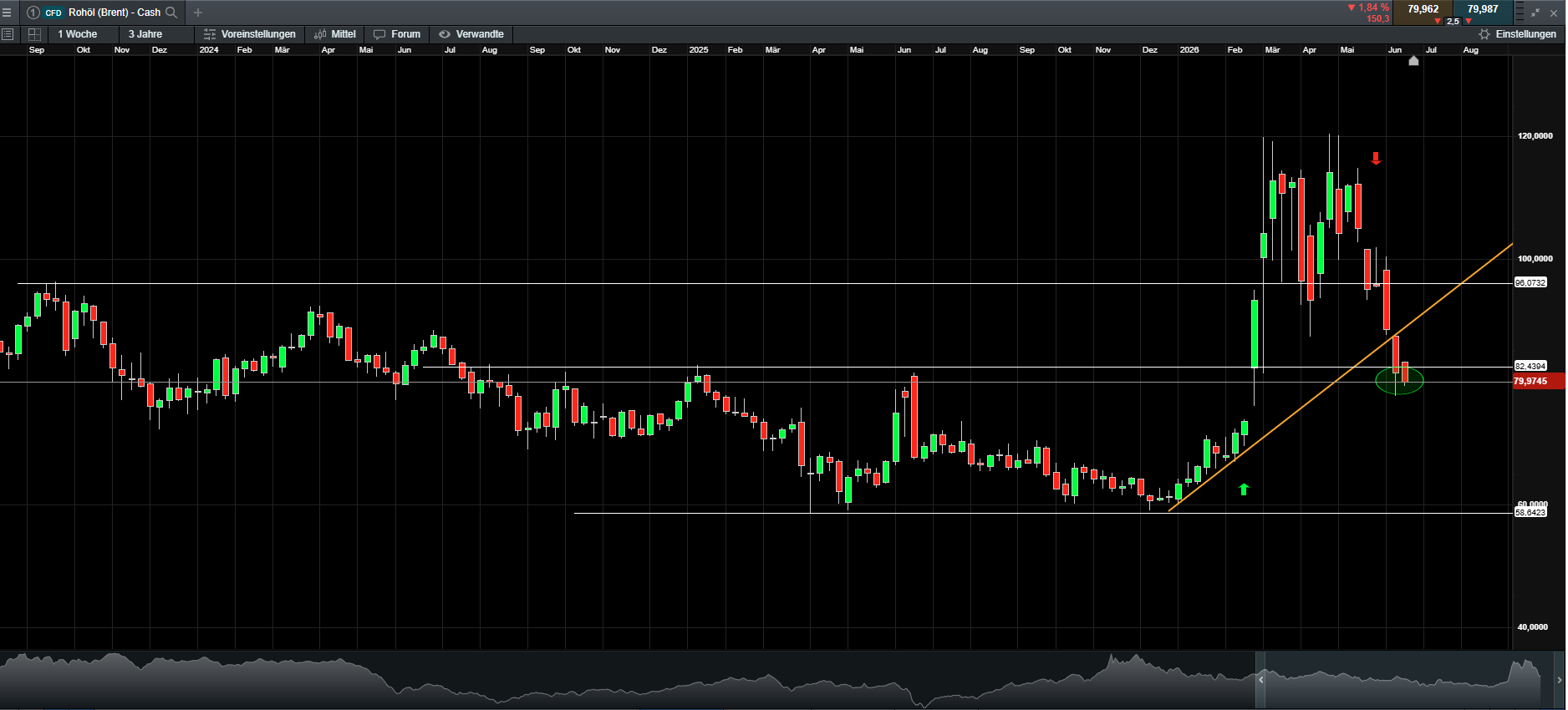
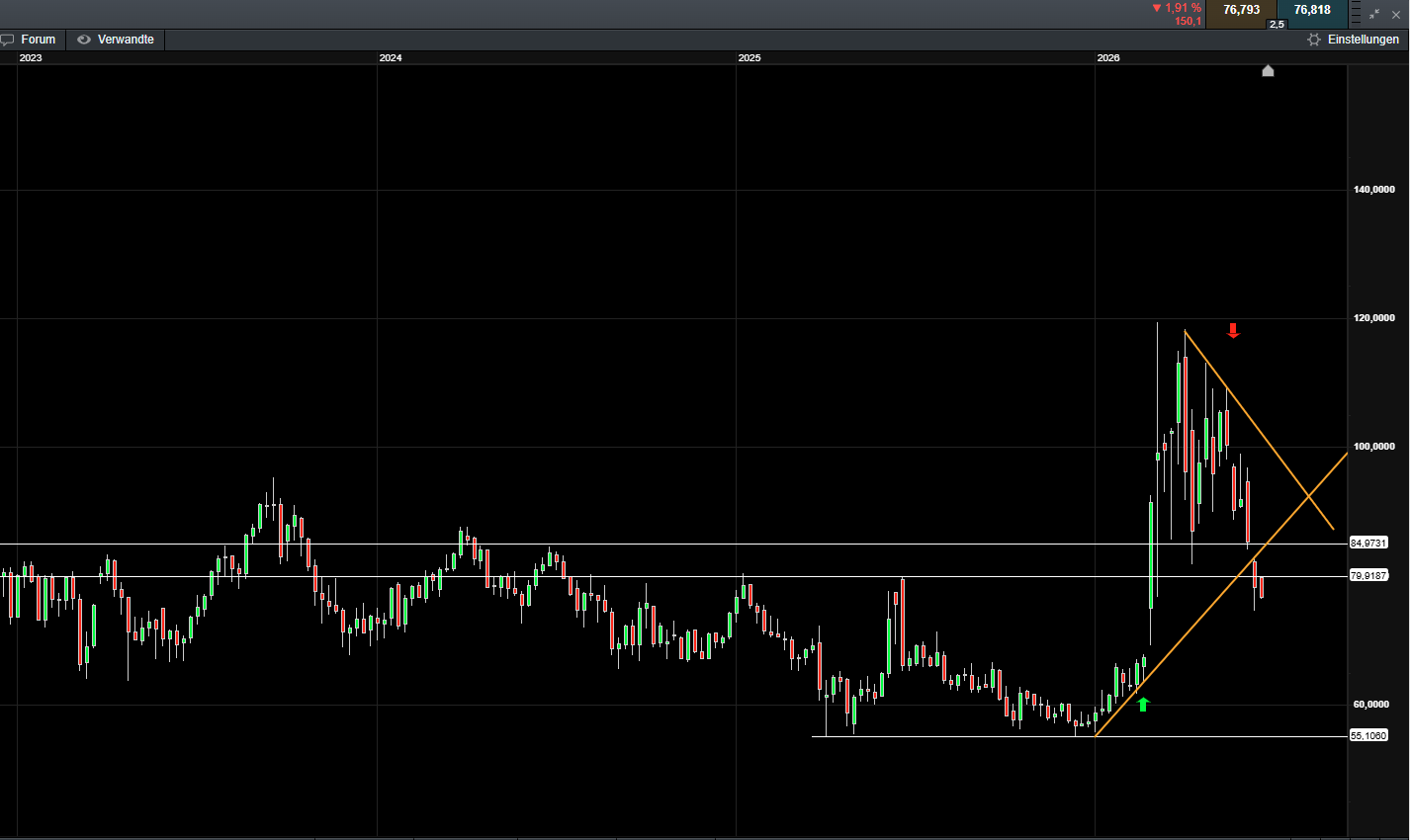
Crude oil markets have remained heavily influenced by geopolitics in recent weeks. Brent crude has traded in a wide range between about $75 and $126 per barrel, while West Texas Intermediate (WTI) has moved between roughly $70 and $119. The Brent premium over WTI has recently fluctuated between $3 and $5 per barrel.
As hopes build for a possible agreement between Iran and the US, markets have started to gradually remove some of the geopolitical risk premium from oil prices. At the same time, the market is also being shaped by a more balanced supply-demand backdrop.
According to the US Energy Information Administration (EIA), US commercial crude inventories fell by 8m barrels in the week ending 29 May to 433.7m barrels, or around 3% below the five-year average. That suggests the market is not oversupplied, but it is also not facing a tight physical shortage.
Crude Oil Brent, September 2004 – present
Source: CMC Markets platform, June 2026
Supply and demand remain broadly balanced
On the supply side, the picture remains mixed. The Organization of the Petroleum Exporting Countries (OPEC) expects global oil demand to grow by 1.2m barrels per day in 2026, while non-OPEC+ supply is expected to rise by only about 0.6m barrels per day. The International Energy Agency (IEA) has also noted that the market was already in surplus before the recent escalation, while Saudi Arabia and the UAE successfully rerouted parts of their exports around the Strait of Hormuz. Although inventories declined significantly, overall supply capacity and spare production potential remained sufficient to prevent a sustained physical shortage.
Demand remains relatively resilient. In the US, product demand recently averaged 20.4m barrels per day on a four-week basis, up 3% from a year earlier. Rising electricity demand from data centres and artificial intelligence (AI) infrastructure is supporting broader energy consumption; transport and industrial activity remain the primary drivers of oil demand. The EIA expects US oil exports to reach a record 4.2m barrels per day in 2026, highlighting the continued strength of global demand for crude oil.
Crude Oil West Texas, 2023 – present
Source: CMC Markets platform, June 2026
Why a sustained oil price spike remains unlikely
At the height of the recent escalation, some market participants feared Brent could spike towards $150 per barrel if the Iran conflict escalated further. So far, however, the market has not priced in a full and lasting supply shock across the Gulf. Three factors are helping to limit the upside: existing surplus conditions, export rerouting and inventory releases, and stronger non-Middle East supply, especially from the US and the Atlantic Basin.
Very high prices also tend to curb demand. Industries, transport companies and consumers begin to adjust by cutting usage or switching to alternatives. Following the recent volatility, oil prices have gradually settled back towards the $90 to $95 range rather than moving into true crisis mode.
The key takeaway is clear: crude oil has been carrying a significant geopolitical risk premium, but markets have already unwound much of it. As long as alternative supply routes remain operational, strategic reserves can be deployed, and non-Middle Eastern producers continue to offset potential disruptions, a sustained rise towards per barrel remains a stress scenario rather than the market's base case.

Oil finds support as volatility falls, but risks remain high
Oil prices are showing signs of stabilisation as geopolitical tensions ease slightly, with volatility declining from recent peaks. However, the market remains sensitive to developments in the Middle East, leaving downside risks firmly in place.

Brent oil nears key technical level
Brent oil is testing an important support area around $94, leaving the market at a technical crossroads. If that level continues to hold, Brent could rebound towards the converging short-term moving averages and potentially extend higher, but a break below support would weaken the outlook materially.