Explore Forex Trading in Canada
You can trade forex through Contracts for Difference (CFDs) with CMC Markets Canada.
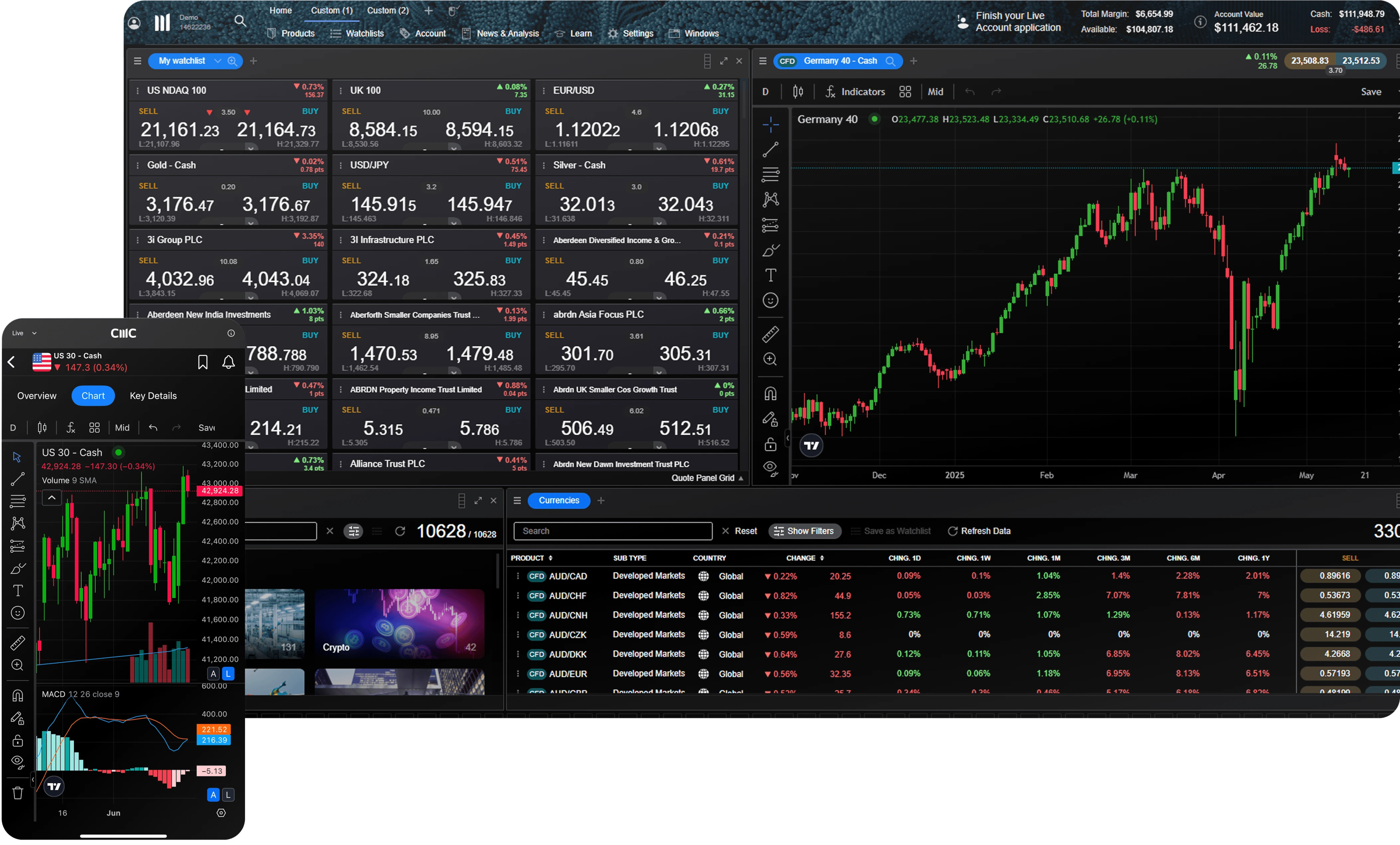
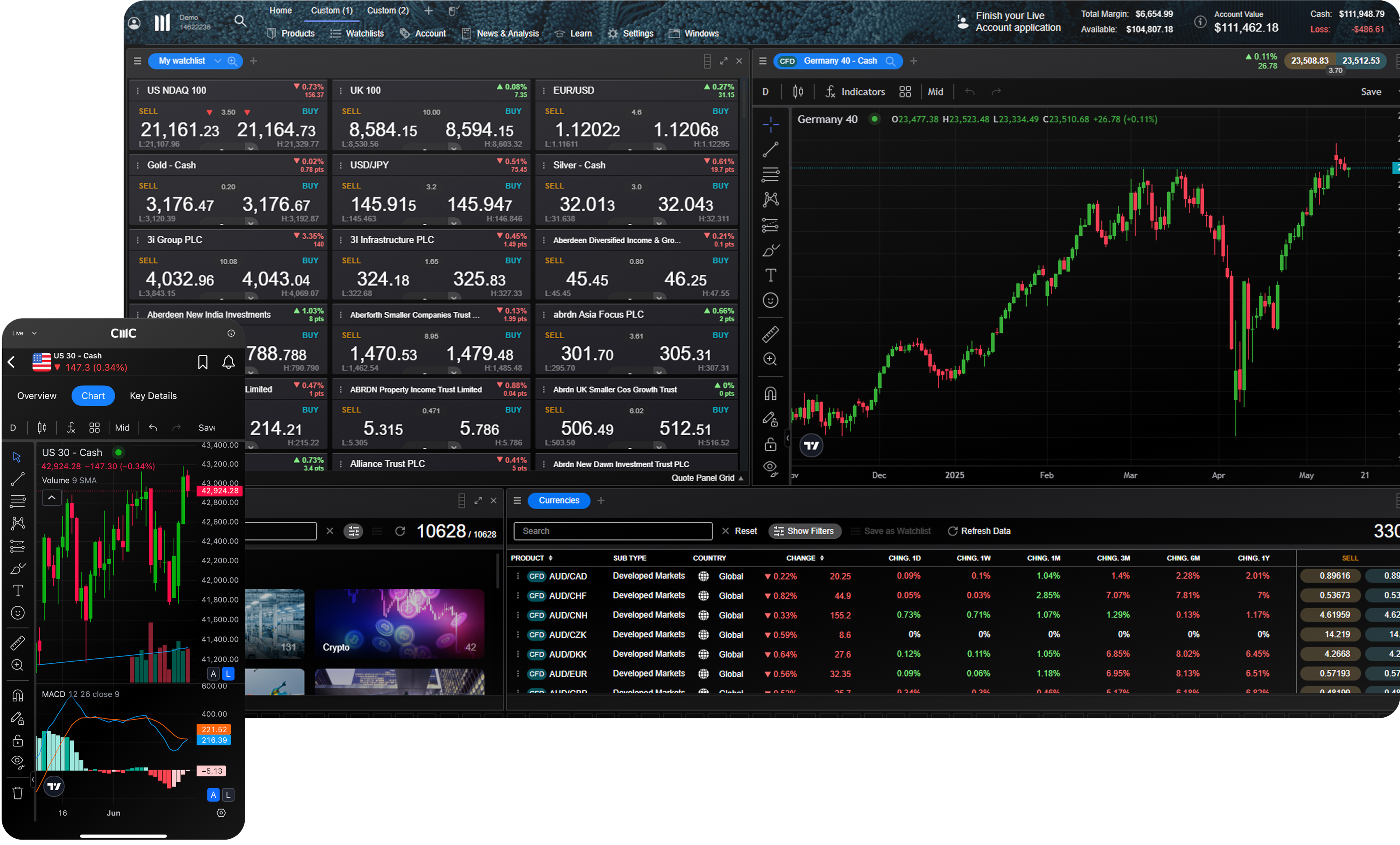
- Access over 330 forex pairs, including major, minor, and exotic currency pairs, on a choice of platforms.
Open a live CFD account, or practice with a demo account using virtual funds before trading with real money.

What is forex trading? A guide for Canadian traders
Forex trading means buying one currency while selling another. Currencies are traded in pairs, such as EUR/USD, GBP/USD, or USD/CAD. The price of a forex pair reflects how much one currency is worth compared with the other.
For Canadian traders, forex markets can include major global pairs as well as Canadian dollar pairs such as USD/CAD (the "Loonie"), EUR/CAD, CAD/JPY, and major pairs like EUR/USD and GBP/USD. These pairs may be affected by factors such as interest rates, inflation, commodity prices, central bank policy, economic data, and changes in market sentiment.
With CMC, forex is traded through contracts for difference, also known as CFDs. A CFD allows you to speculate on the price movement of a currency pair without owning the underlying currencies. You can trade on rising or falling prices, but both directions involve risk.
Why open a forex demo account with CMC Markets Canada?


Account types for every trader


Trade on our award-winning platforms⁴
To trade with us, you choose a CFD account that suits the platform you want to use.
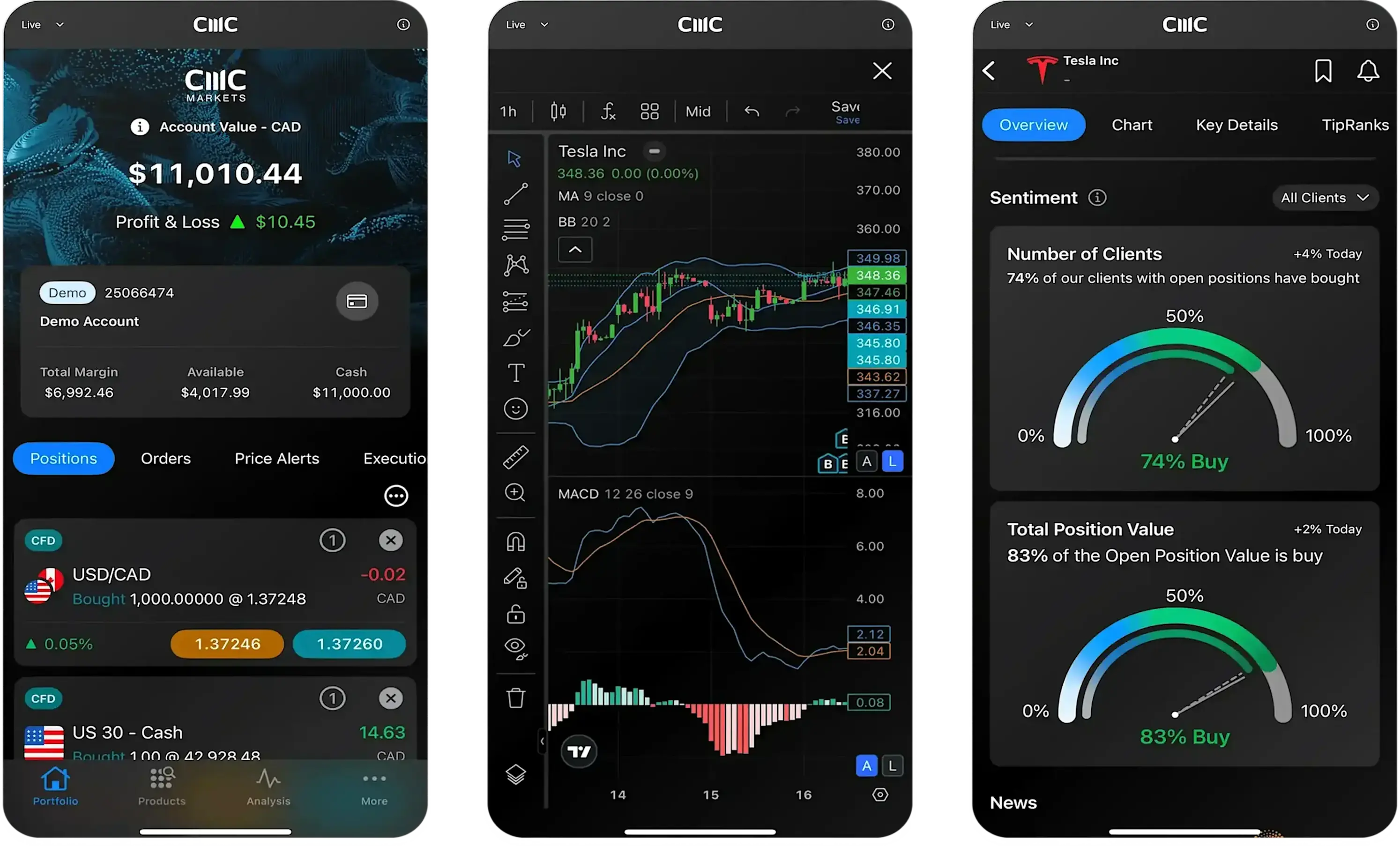
The standard or FXActive CFD accounts provide access to our proprietary and award-winning CMC platform, available on PC and mobile. This account can also be linked to TradingView.
To trade on Metatrader 4 or Metatrader 5, you must create a separate standard or FXActive account.
Read more below about the platforms we offer and find out which one best suits your trading style.
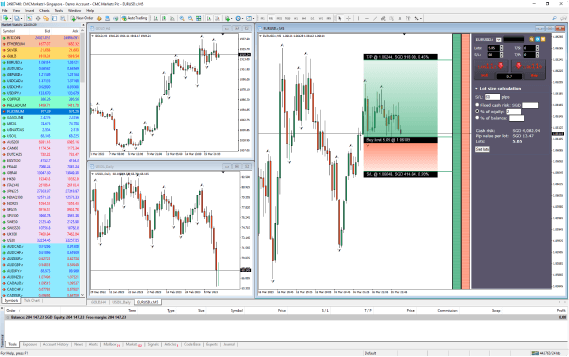
Forex leverage and margin explained
Forex CFDs are traded using leverage. Leverage allows you to gain exposure to a larger position while only putting down a percentage of the full trade value as margin.
For example, if a forex pair has a 5% margin rate, you would need to deposit 5% of the full position value to open the trade. The remaining exposure is leveraged.
Leverage can make trading more capital-efficient, but it also increases risk. Profits and losses are calculated on the full position size, not just the margin amount. This means losses can build quickly and may exceed your initial deposit.
Margin requirements vary by instrument and may change depending on market conditions. If the market moves against your position, you may need to deposit additional funds or close positions to meet margin requirements.
Dive deeper







Open a demo account
Start trading with a live account today or try a demo with $10,000 of virtual funds.
Do you have any questions?
Our client services team is here whenever the markets are open.
Email us at clientmanagement@cmcmarkets.ca or call us on 1-866-884-2608.