2026 Robotics Outlook: Early Adopters Go Head-to-Head

Chris Smith
Head of New Zealand
12 minute read
|9 Dec 2025
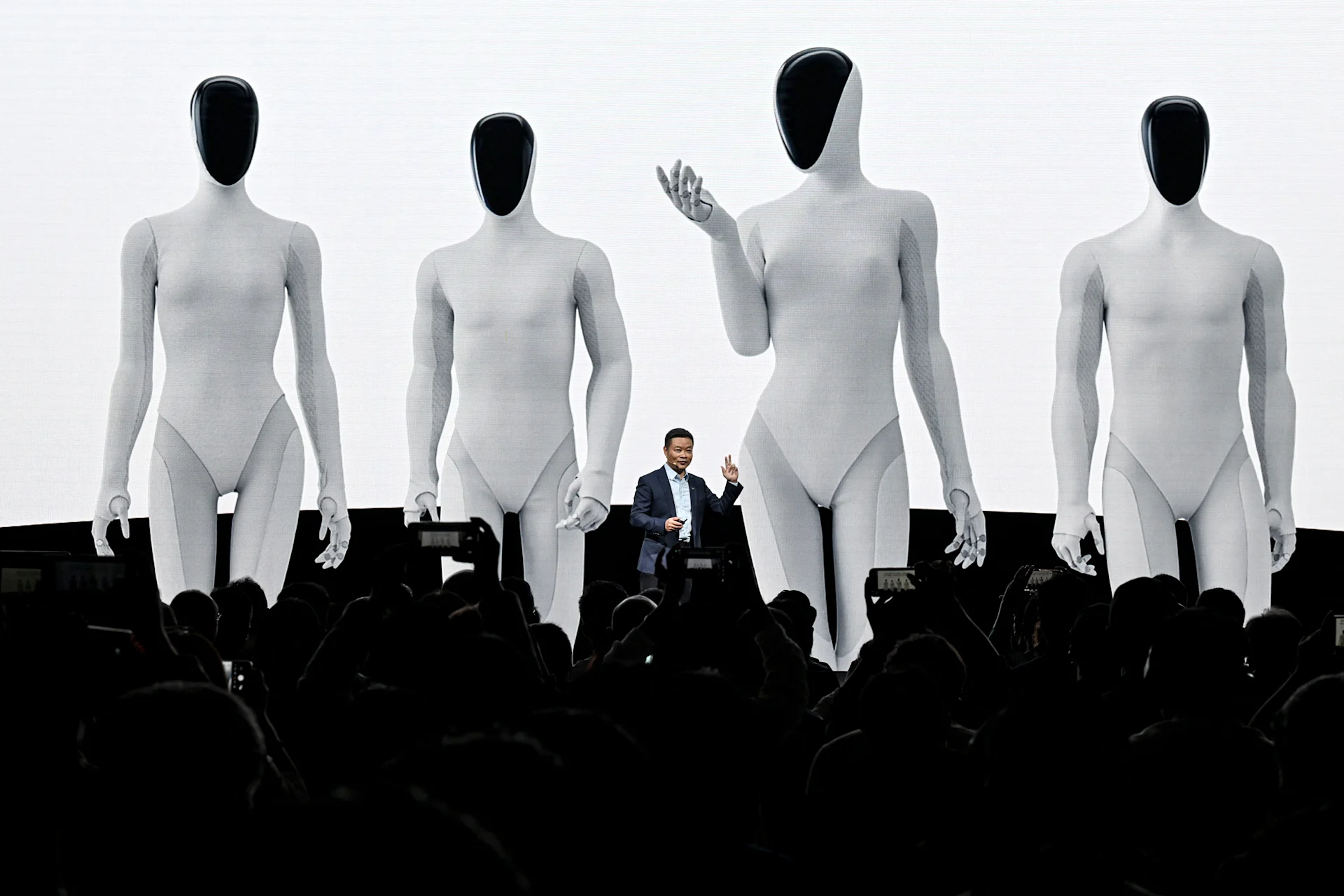
He Xiaopeng, cofounder and chairman of Chinese electric vehicle maker Xpeng, launches Xpeng's next-gen Iron humanoid robot during AI Day press conference
Table of contents
  • 1.
    2025 Review: A Breakout Year for Automation and Robotics 
  • 2.
    2026 Outlook: Sector Leaders to Emerge as Competition Steps Up 
  • 3.
    2026 Watchlist: Robotics Stocks and ETFs to Monitor
  • 4.
    Conclusion 

Key Takeaways: 

  1. Robotaxis enter a decisive year as early adopters like Tesla, Waymo and Baidu race to scale their autonomous ride-hailing operations.  

  1. China is pulling ahead in humanoid robotics, with UBTech preparing to increase output to 5,000 units in 2026 and XPeng moving to mass-produce its IRON humanoids the same year. 

  1. Johnson & Johnson is emerging as a surgical robotics contender. The company may submit its OTTAVA soft-tissue surgical robot to regulators for approval in 2026. 

What artificial intelligence (AI) did for digital workflows in 2025, automation is beginning to do for the physical world, reshaping transportation, manufacturing, logistics, healthcare and corporate workforces. 

With AI acting as a powerful accelerant, a rapidly evolving landscape is emerging, one where robotaxis are preparing for global expansion, robotics is becoming a subject of national interest, and industrial automation is advancing as companies pursue higher productivity and better margins.

With robotics already proving its impact, attention is shifting to execution. The question heading into the new year is how fast reliability can scale and which players will capture the next wave of value. 

2025 Review: A Breakout Year for Automation and Robotics 

In 2025, automation and robotics moved from promising technologies to strategic imperatives. One company that leaned heavily on these technologies to drive its next phase of growth was Tesla [TSLA]. 

The world’s most valuable automaker debuted its self-driving taxis in Austin, Texas, in June and announced plans to roll out robotaxi services in up to 10 US cities by the end of the year.  

Alphabet-backed [GOOGL] Waymo, an early robotaxi leader, clocked over 100 million miles of autonomous trips by the end of August 2025 and added freeway access to its services in Phoenix, the San Francisco Bay Area and Los Angeles, highlighting the growing confidence in driverless cars. 

In M&A, Japanese technology conglomerate SoftBank [9984:JP] made the biggest move of the year with its $5.4bn acquisition of Swiss engineering group ABB’s [ABBNY] robotics division. 

The deal reinforced CEO Masayoshi Son’s goal of positioning SoftBank as a major player in “Physical AI.” The market has responded strongly to this vision, with the company’s OTC shares up 83% year-to-date, as of December 2. 

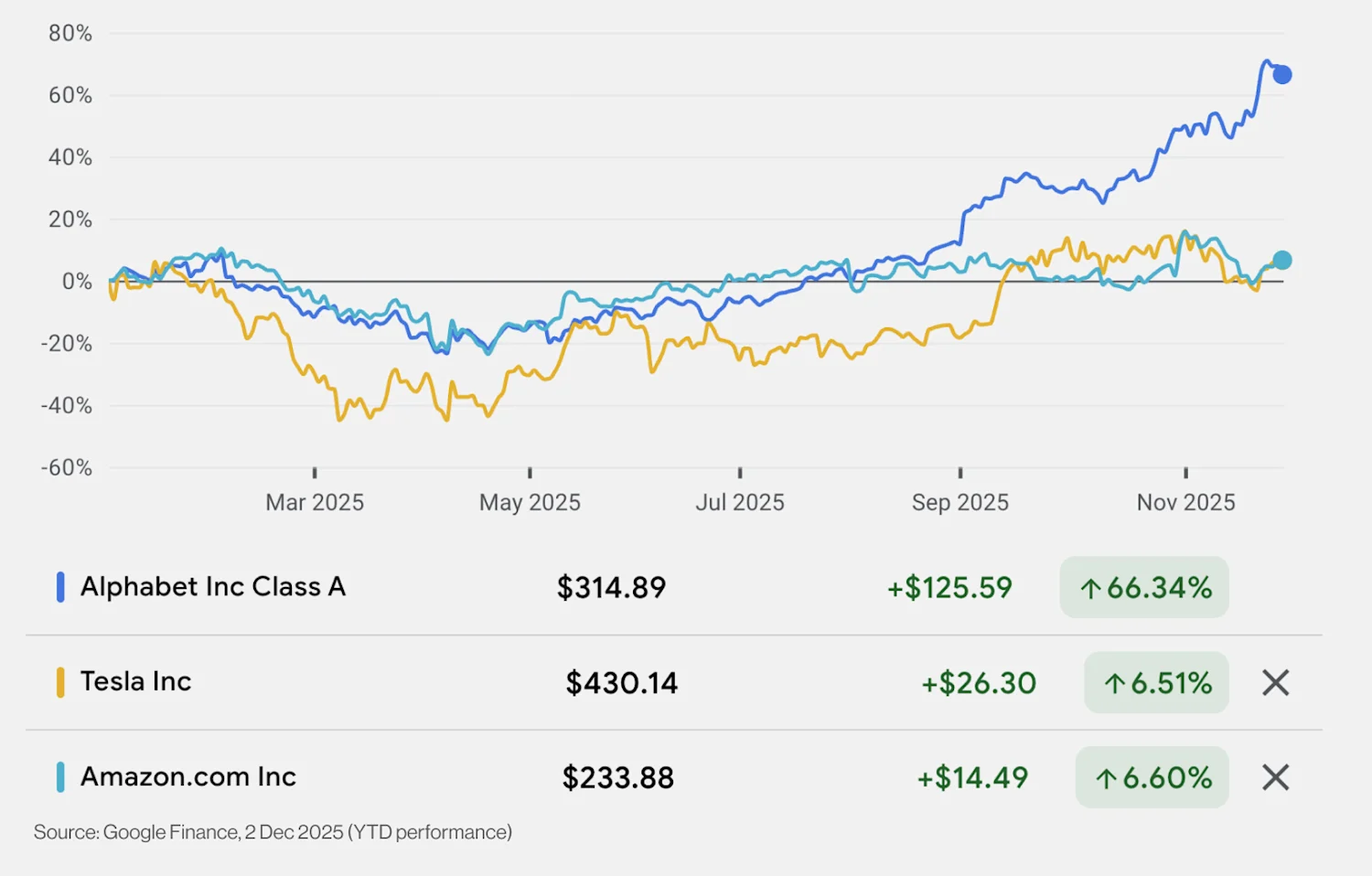
Robotics stocks YTD Performance

In the US, one of the defining deals came from the warehouse-automation space. Symbotic [SYM] agreed to buy Walmart’s [WMT] advanced systems and robotics unit for $200m. The deal also saw Walmart commit to purchase and deploy Symbotic’s automation systems at its Accelerated Pickup and Delivery centres over a multi-year period.  

Notably, Walmart’s commitment could increase the backlog for Symbotic’s automation products to over $5bn, and the company’s shares have more than doubled this year. 

Sticking to the theme of warehouse automation, Amazon [AMZN] announced that the company deployed its one-millionth warehouse robot, highlighting the pace of industrial automation. Alongside the hardware expansion, Amazon launched a new AI foundation model, DeepFleet, to coordinate robot traffic and reduce travel time inside fulfilment centres by roughly 10%. 

Corporate performance from Fanuc [FANUY], the world’s largest industrial-robot manufacturer, was encouraging. After reporting flat growth in 2024, Japan-based Fanuc reported a 5.1% increase in half-yearly revenue on rising factory capex in China, Vietnam and India. 

Across the East China Sea, China doubled down on its robotics leadership. The government’s 15th Five-Year Plan outlined a push for AI-driven, robot-enabled productivity, backed by subsidies, low-cost financing and mandates to integrate automation across key industries. 

Shares of Chinese humanoid robot makers UBtech Robotics [9880:HK] and Xpeng [XPEV] are up 110% and 85%, respectively, in 2025. 

According to the International Federation of Robotics, China was the world’s largest robot market, representing 54% of global deployments in 2024. 

2026 Outlook: Sector Leaders to Emerge as Competition Steps Up 

2026 is expected to be a defining year for robotaxis. As early adopters expand beyond pilot programs, the sector could finally begin to show clear leaders. 

Tesla heads into the new year more committed than ever to autonomous mobility. The company has already piloted its robotaxi services in the US in 2025, with expansion plans earmarked. The next stage will see the company start production of a fully autonomous ride-hailing vehicle called the “Cybercab” in Q2 2026

But competition is intensifying across the US and China. Waymo doubled its fleet to over 1,500 vehicles this year and is now expected to expand internationally. In China, Baidu [BIDU] continues to run one of the world’s most active networks. The company, often referred to as “China’s Google” due to its dominant search engine, now plans to deploy its robotaxis across Europe in partnership with ride-hailing platform Lyft [LYFT]. 

Hong Kong-listed electric vehicle (EV) company XPeng [XPEV] has emerged as a serious challenger. After rebranding itself as an “embodied intelligence company,” XPeng plans to launch three mass-produced robotaxi models in 2026. 

XPeng’s robotaxi strategy closely mirrors Tesla’s. Both companies build their cars in-house and rely mainly on cameras instead of lidar to power self-driving. Waymo and Baidu take a different route, depending on external automakers like Jaguar and Geely [GELYF] to install their autonomous tech into vehicles rather than controlling the whole stack themselves. 

In 2026, the conversation around robotaxis may well shift from operational viability to which approach scales better. Companies that are able to build sufficient fleet density, maintain high utilisation and demonstrate strong safety records may be better positioned to develop robotaxis into a sustainable business model.

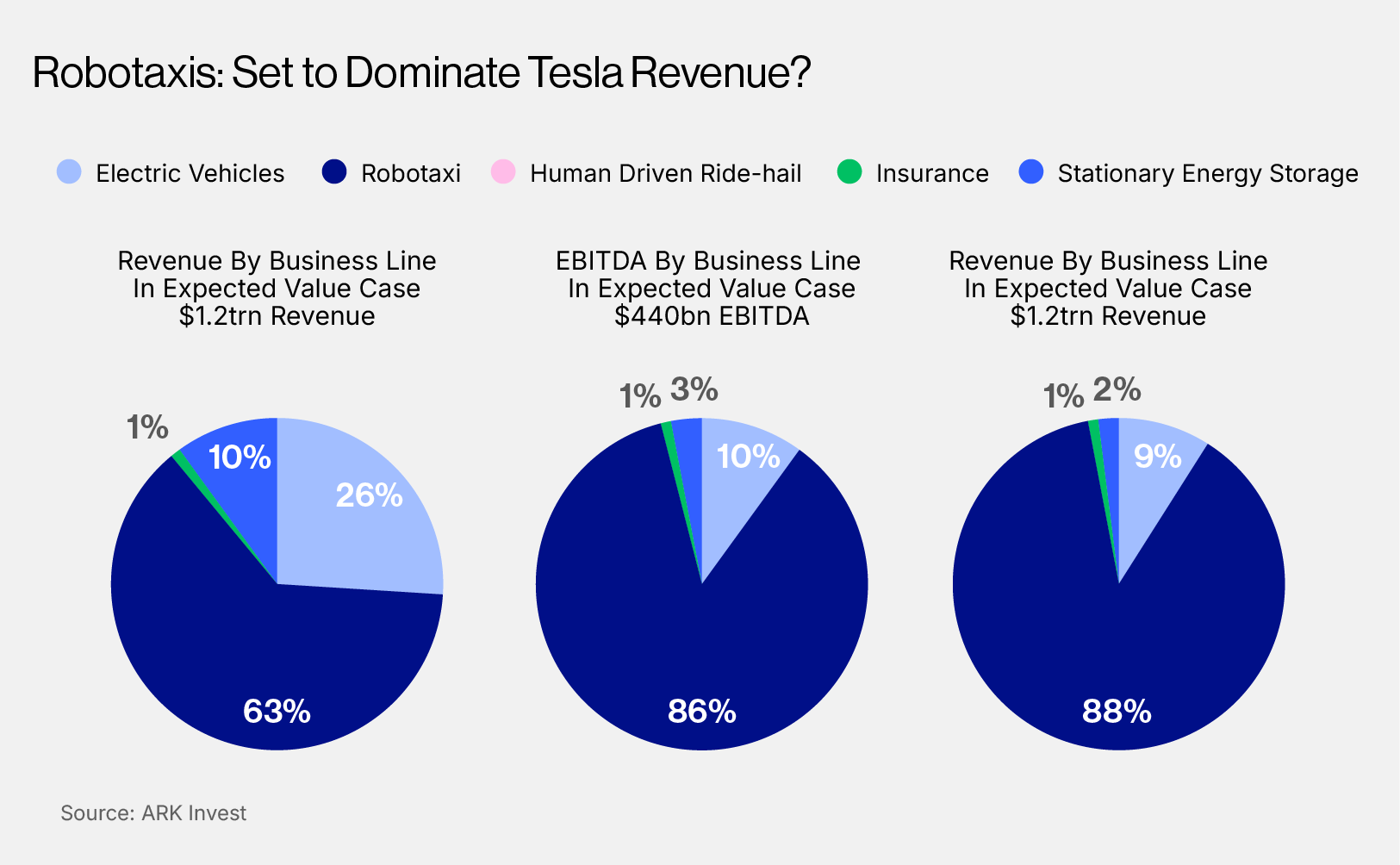
Tesla bull ARK Invest said it expects the company to dominate the US robotaxi market thanks to its “end-to-end vision-only AI, vertically integrated manufacturing and data advantages.” The research firm added that the robotaxi business could represent about 90% of its enterprise value by 2029. 
Tesla Revenue Breakdown projection

But CEO Elon Musk is juggling more than the push for robotaxi dominance. He’s also betting big on Optimus, Tesla’s humanoid robot, which he said had “the potential to be the biggest product of all time” during the Q3 2025 earnings call. 

Tesla expects to install its first-generation Optimus production lines in 2026, setting the stage for its goal to produce “1 million Optimus robots per year.” 

The new AI5 chip that Tesla is building with Samsung [SSNLF] and Taiwan Semiconductor Manufacturing Co [TSM] is a major pillar of this strategy. The chip is expected to deliver roughly 40 times the performance of its predecessor, giving Tesla a huge computational boost for autonomy, robotics and AI training. 

With so much on the horizon, Tesla shareholders are looking to 2026 with renewed confidence. They recently approved a $1trn pay package for Musk, easing concerns he might walk away at a pivotal moment. Musk himself hinted at the stakes, saying he wasn’t comfortable “building that robot army” without strong influence at the company. 

Investment bank Morgan Stanley sees enormous long-term potential in the category, projecting the humanoid robot market could reach $5trn by 2050, with more than 1 billion robots deployed across factories, logistics hubs and households.

Source: Tesla, YouTube

Still, the road ahead is full of uncertainties. Musk himself admitted that the “manufacturing challenge is immense, considering that the supply chain doesn’t exist” for humanoid robots. Elsewhere, Dewardric McNeal, senior policy analyst at Longview Global, wrote in an op-ed article for CNBC that “Musk’s great vision only scales if China permits it to scale.” 

McNeal argued that Tesla needs Beijing’s goodwill and better US-Sino relations to access China’s factories, warehouses, distribution centres and mature industrial ecosystems to manufacture and train humanoid models. 

“Producing foreign-controlled humanoid robots in China requires political comfort, regulatory approval and an implicit understanding that China cannot lose the race to a robotics future by enabling a foreign competitor to the detriment of its own companies,” wrote McNeal. 

Naturally, Chinese companies are currently in the lead. Hong Kong-listed UBTech [9880:HK] delivered its first 10 humanoid robots in 2024, expects to deliver 500 units in 2025, and is preparing to scale output tenfold to 5,000 units in 2026 as costs fall through economies of scale. 

XPeng is advancing on a parallel track. In late 2025, it released VLA 2.0, a foundation model for physical AI that the company expects to become the “operating system” for its autonomous vehicles, humanoid robots and flying cars. XPeng aims to mass produce its IRON humanoid line (as pictured in the cover image of this article) by the end of 2026 while also launching its 500-km flying car ARIDGE, which has received more than 7,000 global preorders. 

Other companies in the humanoid race include China’s Xiaomi [XIACF], and startups such as Figure AI, which received investments from Microsoft [MSFT] and Nvidia [NVDA], and Boston Dynamics, in which South Korea’s Hyundai Motor [HYMLF] holds an 80% stake

Looking ahead, geopolitics could continue to play a pivotal role in shaping the automation landscape. China is building one of the most integrated automation ecosystems in the world, backed by a trillion-yuan policy drive aimed at accelerating robot-enabled productivity. In the US, President Donald Trump’s renewed push to revive domestic manufacturing places robotics and automation at the centre of his economic plan. Many experts view advanced technology as the only viable path to making US production cost-competitive again, with the country’s trade deficit widening significantly in the past 15 years, as seen in the graph below. 

Net Export of Manufactured Goods Trillions

In the healthcare sector, Johnson & Johnson [JNJ] is emerging as a major surgical robotics player. Management expects faster medtech growth in 2026, and may submit its OTTAVA soft-tissue surgical robot to regulators for approval in the first half of the year. The company also spun off its orthopaedics business in 2025 to sharpen its focus on medtech. 

Elsewhere, labour realignment is visible inside corporations. Amazon is said to be preparing deep job cuts as experts believe that the company has gained “enough AI-driven productivity gains within corporate teams to support a substantial reduction in force.” 

Amazon, an early adopter of robotic automation, is expected to flatten its hiring curve over the next decade, which could have a profound impact on blue-collar jobs and influence the likes of Walmart and UPS [UPS] to follow a similar model. 

The road into 2026 is not without risk. Autonomous-vehicle accidents could trigger new regulatory hesitation just as deployments expand. Humanoid programmes face training-data limitations and supply chain constraints. Warehouses and factories adopting robots could face political scrutiny over job displacement. Robotics also sits firmly within the broader AI narrative, sharing dependencies on models, data, and chips that can magnify both technical and financial risks. 

Another key risk for the robotics and automation trend lies in its capital intensity, complexity, and sensitivity to the business cycle. Scaling production demands substantial investment, complex manufacturing, and precise execution, making the sector less adaptable and typically far lower margin than software or chip design. Robotics and humanoid hardware companies face high material costs and expensive components such as actuators, which can account for 30–50% of the bill of materials. The long-term promise is that vertical integration, large-scale production, and hybrid hardware and software models with recurring subscriptions and app ecosystems could help improve margins over time. 

2026 Watchlist: Robotics Stocks and ETFs to Monitor

Asset / Ticker 

Type 

Why We’re Watching 

Tesla [TSLA] 

Stock 

A core player in both autonomous mobility and humanoid robotics. 

Amazon [AMZN] 

Stock 

Deployed its one-millionth warehouse robot and launched DeepFleet AI to optimise robotic movement. Reduced hiring due to automation. 

Alphabet [GOOGL] 

Stock 

Waymo has a head start over its competition in the US robotaxi market. 

Baidu [BIDU] 

Stock 

Baidu runs the world’s largest robotaxi network, spanning China and the Middle East. It plans to expand to Europe and the US. 

XPeng [XPEV] 

Stock 

XPeng rebranded itself as a “global embodied intelligence company” and announced plans to launch three pure-vision robotaxi models in 2026 as well as a humanoid robot. 

SoftBank Group [9984:JP] 

Stock 

Building a portfolio of “Physical AI” companies spanning industrial robots, humanoids, AI chips and data centres. 

Johnson & Johnson [JNJ] 

Stock 

Strengthening its medtech portfolio with a push into robotic surgery and margin-enhancing automation. 

ARK Autonomous Technology & Robotics ETF [ARKQ] 

ETF 

Concentrated exposure to autonomy, drones, robotics and AI-enabled manufacturing. Higher volatility but high-conviction thematic positioning. 

Global X Autonomous & Electric Vehicles ETF [DRIV] 

ETF 

Broad, liquid access to the autonomy supply chain, including sensors, AI compute, EV platforms and mobility-software providers. 

VanEck Robotics ETF [IBOT] 

ETF 

ETF capturing industrial automation, humanoid-robotics suppliers, machine vision, logistics automation and sensing hardware. 

Conclusion 

Automation and robotics are moving from early adoption to real-world scale in 2026. From autonomous vehicles to industrial and surgical robotics, competition is shifting from proving technology to demonstrating profitability and resilience. 

For Tesla, the year ahead will test how its closed, fully integrated model compares with competitors like Waymo that rely on partnerships with automakers and ride-hailing platforms. At the same time, much of the most meaningful progress may come from China, where accelerated investment is aimed at dominating the sector’s next stage of growth. 

Across a range of key sectors, 2026 could mark the moment when automation’s promise begins to translate into tangible productivity gains, clearer market leaders and sharper policy focus. 

Rather than asking whether automation will reshape the economy, investors and traders will now need to grapple with how widely and how quickly that shift unfolds, as well as which companies may be positioned to capture its most lasting advantages.

Series Overview 

Furious Five: CMC’s 2026 Outlook 

Five forces. One furious charge into 2026.

CMC’s Furious Five series examines five pivotal themes that defined 2025, how far these powerful forces could extend through the year ahead, and what might stand in their way.

Explore our market outlook across AI, Energy, Robotics, Defence, and Debasement to see where the next wave of momentum and disruption could emerge in 2026. 

  • 2026 AI Outlook

    AI spending is set to surge in 2026 as compute shortages fuel massive infrastructure investment. Will agentic AI breakthroughs justify the hype or are we headed for an AI bubble? Explore key risks and opportunities.

    Read more
  • 2026 Energy Outlook

    AI is transforming the global energy sector, sparking a surge in demand, reshaping policy, and reviving nuclear power. How will utilities, tech giants, and investors navigate the challenges and opportunities of 2026?

    Read more
  • 2026 Defence Outlook

    Palantir leads a new era of software-driven defence as the US overhauls military procurement and AI reshapes cyber warfare. Will legacy primes adapt or fall behind?

    Read more
  • 2026 Debasement Outlook

    Gold and Bitcoin hit all-time highs in 2025, reigniting fears of currency debasement amid rising debt, shifting Fed policy, and global reserve changes. What’s next for 2026?

    Read more

Disclaimer: This article provides general information only. It has been prepared without taking account of your objectives, financial situation or needs. It is not to be construed as a solicitation or an offer to buy or sell any financial instruments, or as a recommendation and/or investment advice. It does not intend to support an investment decision and it should not be relied upon by you in evaluating the merits of investing in any financial instruments. You should consider your objectives, financial situation and needs before acting on the information in this article. CMC Markets believes that the information in this article is correct, and any opinions and conclusions are reasonably held or made on information available at the time of its compilation, but no representation or warranty is made as to the accuracy, reliability or completeness of any statements made in this article. CMC Markets is under no obligation to, and does not, update or keep current the information contained in this article. Neither CMC Markets nor any of its affiliates or subsidiaries accepts liability for loss or damage arising out of the use of all or any part of this article. Any opinions or conclusions set forth in this article are subject to change without notice and may differ or be contrary to the opinions or conclusions expressed by any other members of CMC Markets.