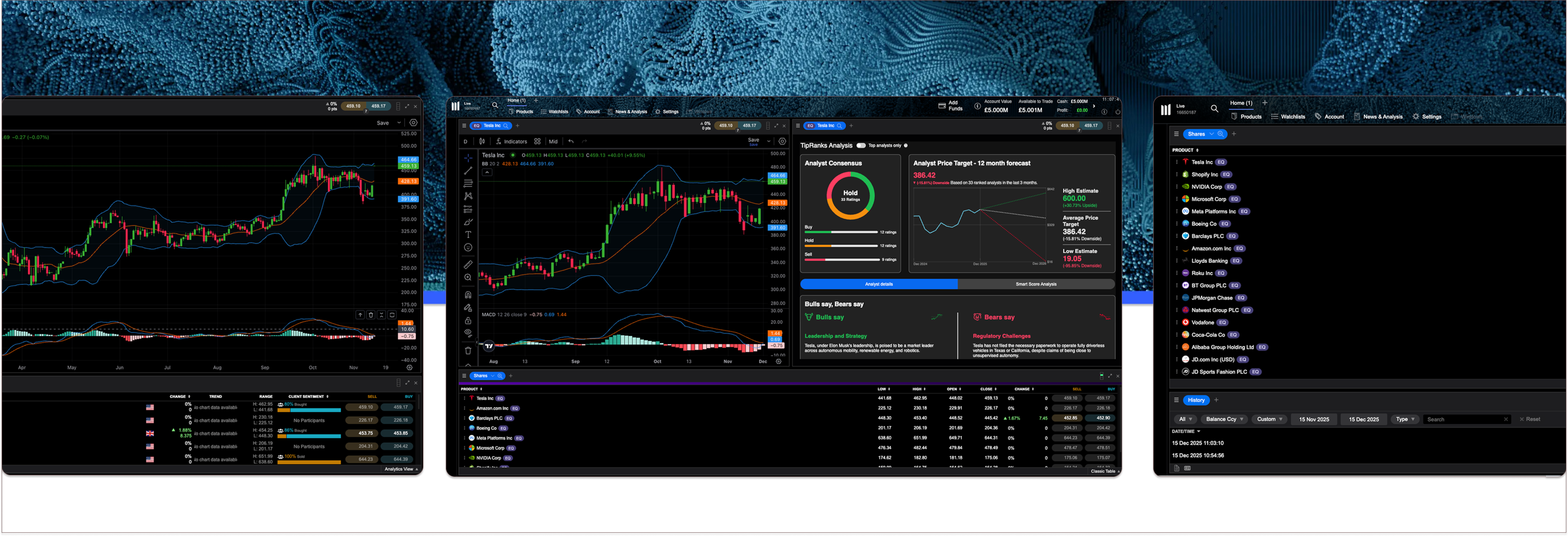
ETN stands for exchange-traded note. The term describes a debt instrument that trades on a stock exchange, much like a share. Banks and financial institutions issue ETNs with a maturity date, typically ranging from 10 to 30 years.
When you buy an ETN, you are not purchasing a stake in a basket of assets. Instead, you are lending money to the issuing institution in exchange for a promise that they will pay you a return based on the performance of an underlying index minus fees. This distinction shapes everything about how ETNs behave, the returns they deliver, and the risks they carry.
An ETN is an unsecured debt obligation. The word unsecured is critical here. If the issuing bank runs into financial trouble or defaults, you could lose some or your entire investment, regardless of how the underlying index has performed.
This structure differs fundamentally from funds that hold actual assets. With an ETN, there is no pool of shares, bonds, or commodities backing your investment. Your return depends entirely on the creditworthiness of the issuer and their ability to honour the payment at maturity or upon sale.
ETNs are complex products. Capital is at risk, and investors may lose money if the issuer defaults.
ETN returns track a specified index or benchmark. The issuer calculates your return by measuring the percentage change in that index over your holding period, then subtracting an annual investor fee.
For example, if an ETN tracks a commodity index that rises 8 percent over a year and the annual fee is 0.75 percent, your net return would be approximately 7.25 percent. The issuer does not need to buy or manage the underlying assets. They simply owe you the calculated amount.
This structure can provide precise tracking of an index without the tracking error that sometimes affects funds. However, that precision comes with the trade-off of credit exposure to the issuing institution.
The difference between an ETN and an ETF often confuses newer investors. Both trade on exchanges and track benchmarks, but their inner workings differ substantially.
← Swipe →
Feature | ETN | ETF |
Structure | Unsecured debt security | Fund holding actual assets |
Issuer risk | Yes, credit risk to issuing bank | No, assets held in trust |
Tracking | Tracks index via contractual promise | Tracks index by holding assets |
Tracking error | Generally minimal | Can occur due to rebalancing costs |
Dividends | Typically none | May distribute dividends |
Tax treatment | Varies by jurisdiction | Varies by jurisdiction |
When comparing ETN vs ETF products, the central question is whether you are comfortable with credit exposure to a financial institution. ETFs hold assets that would remain even if the fund provider collapsed, whereasETNs carry no such protection.
What is the main goal of a leveraged ETN? It aims to deliver a multiple of the daily returns of an underlying index. A 2x leveraged ETN, for instance, seeks to return twice the daily performance of its benchmark.
Leveraged ETNs can amplify gains when markets move in your favour. They can equally amplify losses when markets move against you. These products reset daily, which means their long-term performance can diverge significantly from simple multiples of the index return over extended periods.
Leveraged ETNs are high-risk products. They are generally unsuitable for buy-and-hold strategies and require active monitoring. Losses can exceed your initial investment expectations due to compounding effects.
What does an inverse ETN aim to achieve? It seeks to deliver the opposite of the daily return of a benchmark index. If the index falls 1 percent on a given day, a simple inverse ETN would aim to rise approximately 1 percent, minus fees.
Inverse ETNs are designed for short-term hedging or speculation on market declines. Like leveraged products, they reset daily and can produce unexpected results over longer holding periods. The inverse ETN meaning centres on this contrarian exposure, but the mechanics require careful understanding before use.
A crypto ETN tracks the performance of one or more cryptocurrencies or a crypto-related index. The crypto ETN meaning is straightforward: exposure to digital asset returns through a traditional exchange-traded structure.
Crypto ETNs have gained attention as a way of accessing cryptocurrency markets without directly holding coins or managing digital wallets. However, they combine the volatility of cryptocurrency markets with the credit risk inherent to all ETNs.
In the UK, the Financial Conduct Authority has restricted the sale of crypto derivatives and exchange-traded notes referencing certain crypto assets to retail consumers. This means many crypto ETNs are available only to professional investors. Retail investors should verify whether a specific product is accessible to them before assuming they can trade it.
Do ETNs pay dividends? In most cases, no. Because ETNs do not hold underlying assets, there are no dividend-paying shares or interest-generating bonds within the structure to distribute.
Your return comes from the change in the index value over your holding period, realised when you sell or when the ETN matures. Some ETNs linked to dividend-focused indices may incorporate dividend returns into their index calculation, but this differs from receiving periodic cash payments.
If regular income is a priority, ETNs are generally not designed to meet that objective. ETFs or direct share ownership would typically be more appropriate for income-seeking investors.
Credit risk is the defining risk of any ETN. Since an ETN is an unsecured debt obligation, you depend entirely on the issuer's financial health. If the issuing bank becomes insolvent, your ETN could become worthless, even if the underlying index has performed well.
This risk is not theoretical. During the 2008 financial crisis, the collapse of Lehman Brothers left investors holding worthless structured products issued by the bank. While ETN issuers are typically large, well-capitalised institutions, no bank is immune to financial stress.
ETNs are also subject to standard market risk. If the underlying index falls, your ETN value will decline accordingly. Leveraged and inverse ETNs can experience sharper movements due to their amplified structures.
Liquidity risk matters too. Some ETNs trade infrequently, with wide bid-ask spreads that can erode returns when you buy or sell. Before investing, check the trading volume and spread of any ETN you are considering.
UK investors can access certain ETNs through standard brokerage accounts, but several considerations apply.
First, the FCA's restrictions on crypto derivatives mean many crypto-linked ETNs are unavailable to retail investors. Always confirm regulatory status before attempting to trade.
Second, ETNs listed on European exchanges may be subject to different disclosure requirements than US-listed products. Ensure you review the key information document or prospectus for any ETN you consider.
Third, tax treatment varies. ETN gains may be subject to capital gains tax, but specific treatment depends on individual circumstances. Consider consulting a tax adviser for guidance on your situation.
Finally, remember that ETNs are complex instruments. They are not suitable for everyone. If you are uncertain whether an ETN fits your investment objectives and risk tolerance, seek independent financial advice before investing.
An exchange-traded note is an unsecured debt security issued by a bank that promises to pay returns linked to an index. Understanding the ETN meaning helps clarify why these products behave differently from ETFs, which hold actual assets.
Key points to remember:
ETNs carry credit risk tied to the issuing institution
Leveraged ETNs aim to multiply daily index returns, amplifying both gains and losses
Inverse ETNs seek to deliver the opposite of an index's daily return
Crypto ETNs provide digital asset exposure but face UK retail restrictions
ETNs typically do not pay dividends
Liquidity varies, so check trading volumes before investing
ETNs can serve specific purposes within a broader portfolio, but they demand clear understanding of their risks. Capital is at risk with any ETN investment, and losses can occur both from poor index performance and from issuer default. Approach these products with appropriate caution and, where needed, seek professional guidance.