What is paper trading? A beginner’s guide to practice without risking real money
- :
- :
What is paper trading?
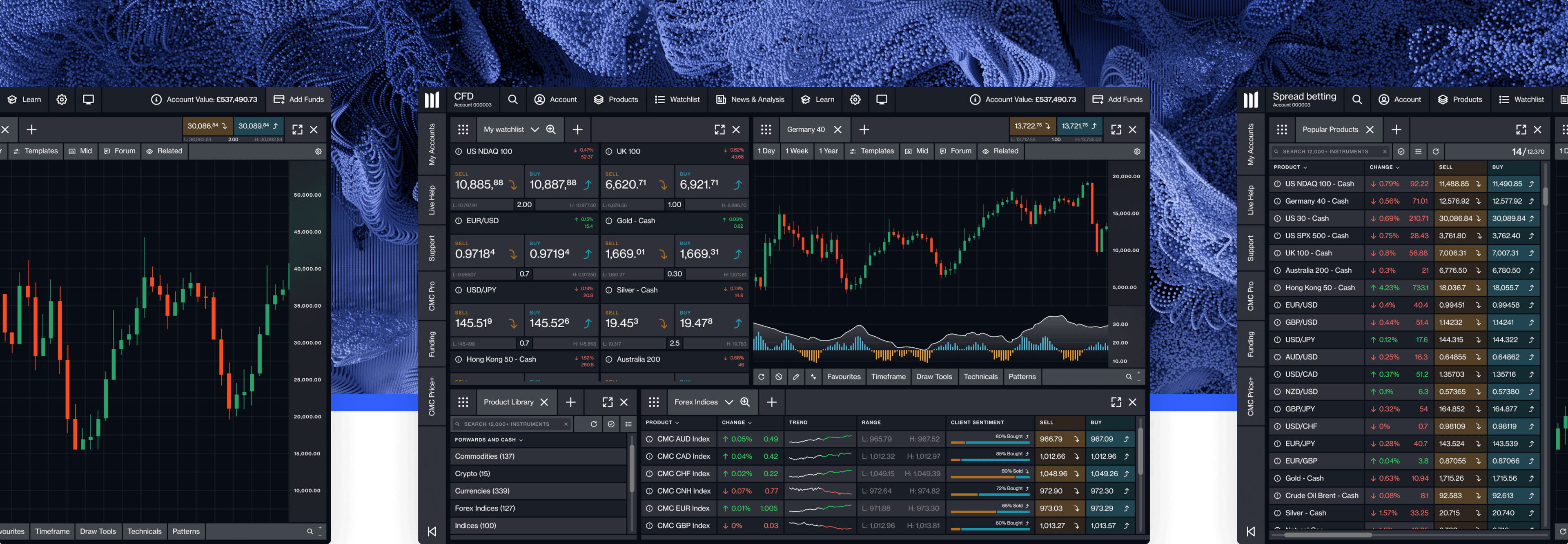
Paper trading is simulated trading that mirrors real market conditions without requiring you to risk actual funds. You receive a virtual balance and can execute trades just as you would with a live account. Prices, charts and market data typically reflect genuine market movements, allowing you to experience trading dynamics without financial consequences.
Think of it as a flight simulator for pilots. The controls work the same way, the scenarios feel realistic and you gain practical experience. However, crashing a simulated aircraft carries no real danger. Similarly, paper trading lets you make errors and learn from them without depleting your savings.
How paper trading works
When you open a paper trading account, the platform assigns you a predetermined virtual balance. Common starting amounts range from £10,000 to £100,000 in simulated funds. From there, the process mirrors live trading:
You analyse markets using real-time or slightly delayed price data.
You place buy or sell orders through the platform interface.
The system executes trades based on current market prices.
Your virtual portfolio reflects gains or losses as prices move.
You can close positions and review your performance.
Most platforms track your complete trading history, allowing you to analyse what worked and what did not. This feedback loop proves essential for developing effective approaches.
Benefits of paper trading
Paper trading offers several advantages for those new to financial markets. These benefits make it a practical starting point before committing real capital.
Practising without financial risk
The most obvious benefit is protection from financial loss during your learning period. New traders frequently make mistakes: entering positions too large, misreading charts or misunderstanding order types. When these errors occur in a paper trading environment, they cost nothing except time.
This risk-free practice allows you to experiment freely. You can test aggressive strategies, learn what happens when trades move against you and understand position sizing without watching real money disappear. The educational value comes from making mistakes in a safe environment.
While you may not lose real money, simulation can still lead to unrealistic expectations and habits that don’t translate to live markets.
Testing strategies in real market conditions
Paper trading lets you test trading strategies against live market data. While historical backtesting shows how a strategy might have performed previously, paper trading reveals how it handles current conditions.
Strategy Testing Method | Uses Live Data | Risk Level | Emotional Realism |
Historical Backtesting | No | None | Low |
Paper Trading | Yes | None | Moderate |
Live Trading | Yes | Full | High |
You can refine entry and exit rules, test different timeframes and assess whether your approach suits your schedule and temperament. This experimentation phase helps identify flawed strategies before they cost you money.
Learning platform features
Trading platforms contain numerous features that require familiarity. Order types, charting tools, watchlists and position management functions all take time to master. A day trading simulator or paper trading app provides the perfect environment to explore these features.
Platforms like TradingView Paper Trading let you practise charting and analysis. Interactive Brokers’ Paper Trading Account offers exposure to a professional-grade interface. Learning these tools thoroughly before trading with real money prevents costly operational errors.
Note: simulated results can differ materially from live trading due to psychology, costs and execution.
Limitations of paper trading
Paper trading has genuine limitations that every beginner should understand. Recognising these constraints helps you interpret simulated results appropriately.
Absence of emotional pressure
When real money sits in a trade, emotions intensify. Fear of loss, greed for more profit and anxiety about uncertainty all influence decision-making. Paper trading cannot replicate these psychological pressures accurately.
You might hold losing positions calmly in simulation, only to panic and exit prematurely when actual capital is at stake. Conversely, you might take profits methodically on paper but become greedy and hold too long with real money. This emotional gap means paper trading results do not guarantee similar performance when trading with real capital.
The psychological challenge of live trading represents a significant factor that simulated environments simply cannot reproduce. Many traders who perform well on paper struggle when genuine financial risk enters the equation.
Execution differences from live markets
Paper trading platforms typically execute orders instantly at displayed prices. Real markets behave differently. Slippage occurs when your order fills at a worse price than expected, particularly in fast-moving or less liquid markets.
Additionally, large orders in live markets can move prices against you. Your simulated £1m position might fill perfectly on paper, but executing that size in reality could prove considerably more difficult and expensive. These execution differences mean simulated results often appear better than achievable live performance.
Paper trading vs demo accounts: what’s the difference?
These terms often appear interchangeably, causing some confusion. In practice, they describe essentially the same thing: simulated trading with virtual funds.
Some providers use “paper trading” while others prefer “demo trading” or similar terminology; the latter is the more common term used by brokers. Functionality remains comparable regardless of labelling. Both provide:
Virtual capital for practising trades
Access to market data and charts
Order execution simulation
Performance tracking
Minor differences might exist between specific platforms. Some demo accounts expire after a set period, while others remain available indefinitely. Some offer full feature access, while others restrict certain tools. Check individual platform terms to understand exactly what you receive.
How to start paper trading
Beginning paper trading requires selecting an appropriate platform and establishing clear objectives for your practice period.
Choosing a paper trading platform
Several platforms offer paper trading functionality accessible to UK residents. Your choice depends on what instruments you plan to trade eventually and which features matter most to your learning.
Considerations when selecting the most suitable paper trading app for your needs include:
Instrument coverage: Does it offer the markets you want to trade?
Data quality: Is pricing real-time or delayed?
Feature set: Does it include the charting and analysis tools you need?
User interface: Can you navigate it comfortably?
Transition path: Can you easily move to a live account later?
Popular options include TradingView for charting-focused practice, Interactive Brokers for comprehensive market access and various broker-specific demo accounts. The most suitable trading simulator for you depends on your specific learning goals and eventual trading intentions.
Setting realistic goals
Approach paper trading with specific objectives rather than vague intentions to “practise”. Consider setting goals such as:
Execute 50 trades following your chosen strategy rules.
Maintain a trading journal documenting every decision.
Learn all order types available on your platform.
Test your strategy across different market conditions.
Develop consistent pre-trade and post-trade routines.
Without clear goals, paper trading can become aimless clicking that teaches little. Structured practice accelerates learning considerably.
When to move from paper trading to live trading
The transition from simulated to live trading requires careful consideration. Moving too quickly risks unnecessary losses, while staying in simulation indefinitely delays genuine learning about managing real risk.
Consider transitioning when you can demonstrate:
Consistent execution of your trading plan over an extended period
Thorough understanding of your platform’s functionality
Clear rules for position sizing and risk management
Ability to accept that live results may differ from simulated performance
Capital you can afford to lose without financial hardship
Start small when transitioning. Your first live trades should involve minimal position sizes to help you adjust to the psychological differences while limiting potential damage. You can increase size gradually as you gain experience managing real money.
Remember that successful paper trading does not guarantee profitable live trading. The emotional and execution differences discussed earlier mean your simulated results represent a best-case scenario rather than a reliable prediction.
Key takeaways
Paper trading provides valuable risk-free practice for learning market mechanics, testing strategies and mastering platform features. It serves beginners well as an educational tool before committing real capital.
However, paper trading has meaningful limitations. It cannot replicate the emotional pressures of risking real money and execution quality in simulation typically exceeds what live markets provide. These factors mean simulated results should not be interpreted as predictions of future live performance.
For UK beginners considering trading, paper trading offers a sensible starting point. Use it purposefully with clear learning objectives, understand its limitations honestly and approach the eventual transition to live trading with appropriate caution and modest position sizes.
Trading with real capital involves risk of loss. The skills developed through simulated practice provide foundation, but they do not eliminate the genuine financial risks present in live markets.
Disclaimer: CMC Markets is an execution-only service provider. The material (whether or not it states any opinions) is for general information purposes only, and does not take into account your personal circumstances or objectives. Nothing in this material is (or should be considered to be) financial, investment or other advice on which reliance should be placed. No opinion given in the material constitutes a recommendation by CMC Markets or the author that any particular investment, security, transaction or investment strategy is suitable for any specific person. The material has not been prepared in accordance with legal requirements designed to promote the independence of investment research. Although we are not specifically prevented from dealing before providing this material, we do not seek to take advantage of the material prior to its dissemination.