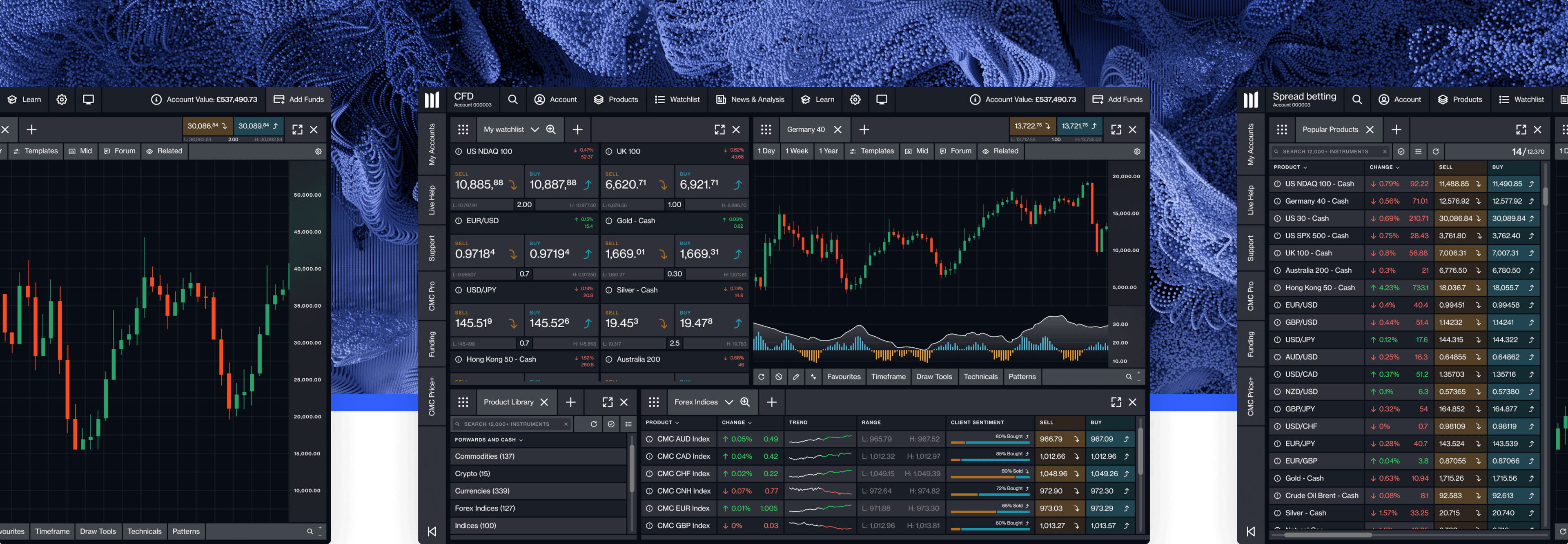
Trading platforms for day traders in the UK: a balanced comparison
- :
- :
What is day trading and who is it suitable for?
Day trading involves opening and closing positions within the same trading day. Unlike investors who hold assets for months or years, day traders aim to profit from short-term price movements in stocks, currencies, indices or commodities. Positions rarely carry overnight, which avoids certain risks but introduces others.
The appeal is understandable. Day trading offers potential opportunities regardless of whether markets rise or fall, provided you correctly anticipate short-term direction. It also avoids overnight funding charges and gap risk, where prices jump between sessions.
However, day trading demands considerable time, focus and emotional discipline. Most successful day traders treat it as a full-time occupation rather than a casual hobby. The learning curve is steep, and consistent profitability is difficult to achieve.
Key risks day traders should understand
Day trading is not suitable for everyone. Before exploring platforms, consider these fundamental risks:
Leverage amplifies losses as much as gains. A small adverse move can wipe out your capital quickly.
Transaction costs accumulate rapidly. Frequent trading means fees, spreads and commissions compound throughout the day.
Emotional decision-making often leads to poor outcomes. Fear and greed drive impulsive trades that deviate from planned strategies.
Markets can move unpredictably. News events, technical glitches or liquidity gaps can cause sudden price swings.
Most retail day traders lose money. This is not pessimism but a statistical reality reflected in FCA-mandated disclosures.
Past performance in demo accounts or historical backtests is not indicative of future results when trading live markets.
What to look for in a UK day trading platform
The day trading platform UK traders choose will depend on individual priorities. However, several factors matter universally.
FCA regulation and client money protection
Regulation should be non-negotiable. The FCA supervises financial services firms in the UK, setting standards for conduct, capital adequacy and client protection.
Trading with an FCA-regulated broker provides several safeguards:
Client money must be held in segregated accounts, separate from the firm’s operational funds.
The Financial Services Compensation Scheme protects eligible claimants up to £85,000 if an authorised firm fails; however, these measures do not protect you from losses arising from trading or adverse market movements.
Firms must meet ongoing capital requirements and submit to regular audits.
Marketing communications must be fair, clear and not misleading.
Always verify a platform’s FCA registration on the official register before depositing funds. Unregulated or offshore platforms may offer tempting leverage or bonuses, but you sacrifice essential protections.
Execution speed and reliability
Day traders rely on rapid order execution. A delay of even a few seconds can turn a profitable trade into a loss, particularly in fast-moving markets.
Key considerations include:
Latency: How quickly does the platform transmit your order to the market?
Slippage: Does the price you receive match the price you requested?
Uptime: Does the platform suffer frequent outages during peak trading hours?
Order types: Can you set stop-losses, take-profits and trailing stops reliably?
Platform reviews and user forums can reveal reliability issues, though individual experiences vary based on internet connections and trading volumes.
Fees, spreads and hidden costs
Day trading profitability is highly sensitive to costs. Even small differences compound over hundreds of trades.
Common fee structures include:
Some platforms advertise commission-free trading but widen spreads to compensate. Others offer tight spreads but charge per-trade commissions. Calculate total costs based on your expected trading frequency and position sizes.
Charting tools and technical analysis features
Day traders rely heavily on technical analysis. A platform’s charting capabilities can significantly affect decision-making speed and accuracy.
Useful features include:
Multiple timeframes, from one-minute to daily charts
A wide selection of technical indicators such as moving averages, RSI, MACD and Bollinger Bands
Drawing tools for trendlines, support and resistance levels and Fibonacci retracements
Customisable chart layouts allowing multiple instruments on screen simultaneously
Price alerts and notifications for key levels
Some traders supplement their broker’s platform with third-party charting software. This adds complexity but may provide superior analysis tools.
Demo accounts and paper trading options
Paper trading allows you to practise strategies without risking real money. A quality day trading simulator replicates live market conditions, including realistic spreads and execution.
Benefits of demo accounts include:
Learning platform mechanics before committing capital
Testing new strategies in real-time market conditions
Building confidence without financial pressure
Identifying weaknesses in your approach
However, demo trading has limitations. Without real money at stake, emotional responses differ significantly. A strategy that works in simulation may fail when fear and greed enter the equation. Treat demo trading as a learning tool, not a guarantee of live success.
Types of day trading platforms available in the UK
UK traders can access several platform categories, each with distinct characteristics.
CFD and spread betting providers
Contracts for difference and spread betting are common instruments for retail day traders in the UK. Both allow speculation on price movements without owning the underlying asset.
Both products use leverage, meaning you control larger positions with smaller deposits. This magnifies potential profits and losses equally.
Risk warning: Spread betting and CFDs are complex instruments. FCA data suggests that around 80% of retail traders lose money when using these products. Ensure you understand how they work before trading.
Direct market access (DMA) brokers
DMA platforms route orders directly to exchanges or liquidity providers without dealer intervention. This typically offers:
Faster execution with less requoting
Transparent pricing showing real order book depth
The ability to place orders within the spread
DMA platforms suit experienced traders comfortable with more complex interfaces. They often require larger minimum deposits and charge per-share or per-contract commissions rather than widened spreads.
Multi-asset platforms
Some platforms offer access to multiple asset classes from a single account: stocks, forex, indices, commodities and sometimes cryptocurrencies. Consolidation can simplify portfolio management and reduce the need for multiple accounts.
Consider whether you actually need multi-asset access. Specialists in a single market may offer superior tools and tighter pricing for that particular asset class.
Comparing popular UK day trading platforms
Rather than declaring winners, this section outlines how platforms typically differ. Your ideal choice depends on what you prioritise.
Fee structures at a glance
Zero-commission does not mean zero-cost. Always examine total transaction costs including spreads, particularly for instruments you trade frequently.
Platform features comparison table
When evaluating day trading platforms, consider how these features align with your needs:
No platform excels in every category. Identify your priorities before comparing options.
Using demo accounts to practise before trading live
Most reputable UK platforms offer demo accounts, sometimes called paper trading accounts or day trading simulators. These replicate live trading conditions using virtual funds.
Effective demo trading practice involves:
Treating virtual money as if it were real
Recording all trades and analysing results
Testing specific strategies rather than trading randomly
Practising for a meaningful period, not just a few days
Gradually increasing position complexity as skills develop
When transitioning to live trading, start with smaller positions than your account allows. The psychological shift from simulated to real money is substantial, and managing that transition carefully protects your capital during the learning phase.
Remember, success in paper trading does not guarantee live trading results. Market conditions change, and emotional responses to real losses differ from simulated ones.
Tax considerations for UK day traders
Tax treatment varies depending on the instruments you trade and your personal circumstances. This is general information, not tax advice. Consult a qualified professional for guidance specific to your situation.
Key distinctions:
Note that tax treatment depends on individual circumstances and may change.
The annual Capital Gains Tax allowance permits a certain amount of gains before tax applies. Beyond this threshold, rates depend on your income tax band.
If HMRC considers your trading activity a trade rather than investment, different rules may apply. Factors include trading frequency, sophistication and whether it constitutes your primary income source. This is a complex area requiring professional advice if your situation is unclear.
Summary: choosing the right platform for your needs
Selecting among the top 10 trading platforms UK traders consider requires honest self-assessment. There is no universally best option, only platforms better or worse suited to particular traders.
Start by confirming FCA regulation. This is non-negotiable for UK traders seeking appropriate protections. Then evaluate:
Your expected trading frequency and preferred instruments
Total costs including spreads, commissions and any platform fees
The quality of charting and analysis tools relative to your strategy
Mobile capabilities if you need flexibility
Demo account availability to test before committing
Take time to paper trade on shortlisted platforms. Interface familiarity matters when making rapid decisions in live markets.
Finally, maintain realistic expectations. Day trading is demanding, and most participants lose money. No platform, however sophisticated, changes this fundamental reality. Approach the activity with appropriate caution, never risk more than you can afford to lose and continue learning throughout your trading journey.
Capital at risk. Trading leveraged products involves significant risk of loss. This article is for informational purposes only and does not constitute personal investment advice.
Focus first on FCA regulation for essential protections. Then consider execution speed, as delays cost money in fast markets. Evaluate total trading costs including spreads and commissions based on your expected frequency. Finally, ensure the charting and analysis tools match your strategy requirements. The UK trading app you choose depends entirely on your individual needs.
Most UK platforms offer demo accounts providing virtual funds to trade in live market conditions. These paper trading environments let you test strategies, learn platform mechanics and build confidence. However, emotional responses differ without real stakes, so view demo results as indicative rather than predictive of live performance.
Both allow leveraged speculation on price movements without owning assets. The primary distinction is tax treatment: spread betting profits are currently tax-free for most UK individuals, while CFD profits incur Capital Gains Tax. Spread betting quotes positions in pounds per point; CFDs use contract sizes. Both carry significant risks of rapid losses.
It depends on the instrument. Spread betting profits are currently exempt from Capital Gains Tax for most individuals. CFD and share trading profits are generally subject to Capital Gains Tax above the annual allowance. If HMRC classifies your activity as a trade, income tax may apply instead. Seek professional tax advice for your specific circumstances
Day trading involves substantial risks and a steep learning curve. Most retail traders lose money. Beginners should invest significant time in education, practise extensively with demo accounts and fully understand the instruments they intend to trade. Starting with small positions and strict risk management is essential. Day trading for beginners requires patience and realistic expectations.
Some platforms advertise commission-free trading, but costs are typically recovered through wider spreads. This embedded cost structure may suit infrequent traders who prefer simplicity. High-frequency day traders often find commission-based platforms with tighter spreads more economical overall. Always calculate total costs based on your expected trading volume.
Disclaimer: CMC Markets is an execution-only service provider. The material (whether or not it states any opinions) is for general information purposes only, and does not take into account your personal circumstances or objectives. Nothing in this material is (or should be considered to be) financial, investment or other advice on which reliance should be placed. No opinion given in the material constitutes a recommendation by CMC Markets or the author that any particular investment, security, transaction or investment strategy is suitable for any specific person. The material has not been prepared in accordance with legal requirements designed to promote the independence of investment research. Although we are not specifically prevented from dealing before providing this material, we do not seek to take advantage of the material prior to its dissemination.