Growing awareness of climate change, corporate governance and social responsibility has increased interest in ESG-focused trading.
According to the Global Sustainable Investment Alliance, sustainable investment assets under management reached more than $35tn globally in 2020, reflecting increased institutional and retail participation.
Traders may focus on ethical and sustainable companies for several reasons:
Exposure to long-term structural growth trends
Alignment with ESG themes and market trends
Interest in sectors such as renewable energy, healthcare and sustainable agriculture
However, sustainable companies still carry market risk, and share prices in any sector can fall as well as rise.
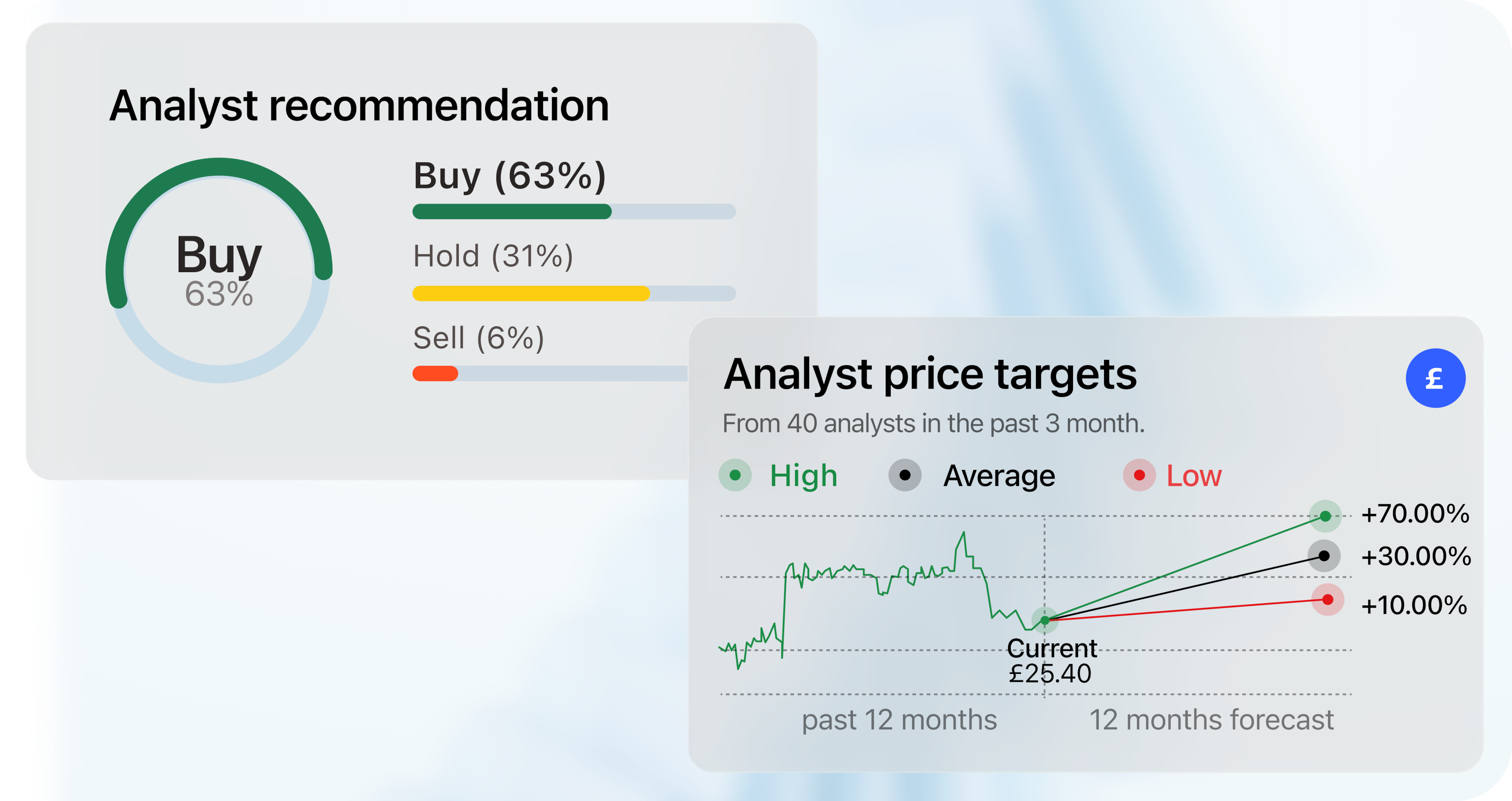
See where analysts think a share is heading
See what analysts expect from a share before you buy or sell: consensus ratings, 12-month price targets, and the bull and bear case side by side.
Although the terms are often used together, ethical and sustainable trading are subtly different.
Ethical trading involves selecting or excluding companies based on moral or social considerations.
For example, some traders may avoid companies linked to:
Tobacco
Gambling
Weapons manufacturing
Fossil fuels
Sustainable trading focuses more broadly on long-term environmental and social themes.
This may include companies involved in:
Renewable energy
Sustainable agriculture
Water management
Healthcare innovation
Many traders and investors also assess ESG frameworks and corporate sustainability commitments when evaluating companies.
Markets never sleeps neither do we
Trade 24/5 on 4000+ US stocks
The companies below are commonly associated with sustainability or ESG-related themes. These examples are for general information purposes only and should not be considered financial advice.
Tesla (TSLA) is a leading electric vehicle and renewable energy company.
ESG themes: electric vehicles, renewable energy
Growth drivers: EV adoption, energy storage expansion
Risks: competition, share-price volatility, regulatory changes
United Natural Foods (UNFI) focuses on organic and natural food distribution.
ESG themes: sustainable food supply chains
Growth drivers: demand for organic products
Risks: margin pressure, changing consumer demand
Weyerhaeuser (WY) is a timberland company focused on sustainable forestry practices.
ESG themes: reforestation, land management
Growth drivers: housing demand, timber pricing
Risks: commodity cycles, environmental regulation
Hannon Armstrong (HASI) provides financing for renewable energy and sustainable infrastructure projects.
ESG themes: climate solutions, energy efficiency
Growth drivers: infrastructure investment, energy transition
Risks: interest rates, project financing conditions
Mowi ASA (MOWI) is a major aquaculture company focused on salmon farming.
ESG themes: sustainable seafood production
Growth drivers: global protein demand
Risks: environmental regulation, supply chain disruption
Gilead Sciences (GILD) is a biopharmaceutical company focused on treatments for infectious diseases and other conditions.
ESG themes: healthcare access, medical innovation
Growth drivers: pharmaceutical development
Risks: patent expiry, regulatory approvals
Ecolab (ECL) provides water treatment and hygiene solutions.
ESG themes: water conservation, emissions reduction
Growth drivers: industrial demand, sustainability initiatives
Risks: economic slowdown, operating costs
There are several ways traders and investors can gain exposure to ethical or sustainable themes.
Trading individual shares allows market participants to gain exposure to specific ESG themes or sectors.
Exchange traded funds (ETFs) provide diversified exposure to multiple companies through a single position.
Examples include:
Thematic share baskets provide exposure to groups of companies linked by a common trend, such as renewable energy.
Assessing whether a company is truly ethical or sustainable can be complex.
Key considerations include:
ESG ratings can vary between providers
Sustainability claims may evolve over time
Companies may face criticism despite ESG commitments
Market performance and ethical positioning do not always align
Ethical and sustainable trading continues to attract market interest
ESG themes span multiple sectors and industries
Companies differ significantly in their business models and risks
Diversification and risk management remain important