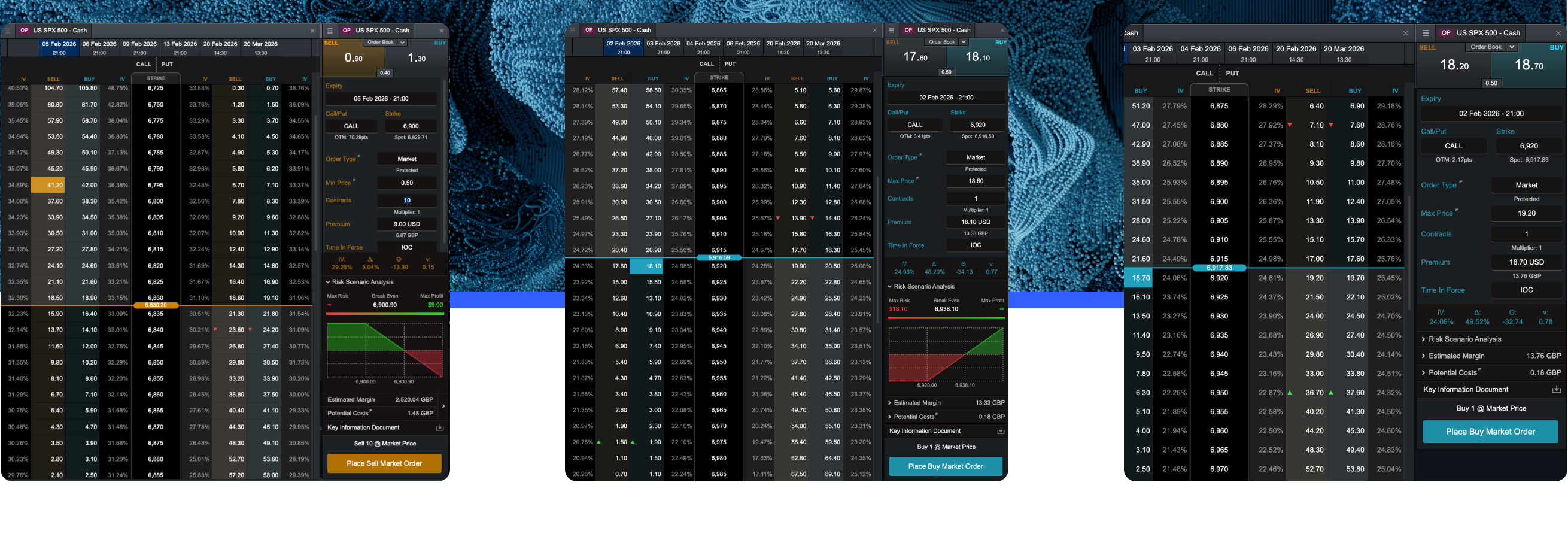
A gamma squeeze happens when market makers must buy increasing amounts of the underlying stock to hedge their options exposure, creating upward price pressure that feeds on itself.
Gamma measures how rapidly an option’s sensitivity to the underlying price adjusts. Near-the-money options approaching expiry have the highest gamma.
Market makers typically take the opposite side of retail options trades and must delta-hedge to remain neutral, which can amplify price moves.
Gamma squeezes differ from short squeezes, though both can occur simultaneously and reinforce each other.
These events are extremely difficult to predict and often reverse violently. Past episodes like GameStop [GME] are not reliable templates for future outcomes.
UK retail investors face restrictions on certain complex derivatives under Financial Conduct Authority (FCA) rules, and options trading carries material risks including losses that can exceed initial deposits.
A gamma squeeze is a rapid increase in a stock’s price driven primarily by options market mechanics rather than changes in the company’s fundamental value. When many traders buy call options on a particular stock, market makers who sell those options must hedge their exposure by purchasing shares of the underlying stock. If buying pressure intensifies and the stock price rises, those hedging requirements grow, forcing market makers to buy even more shares. This creates a feedback loop that can push prices dramatically higher in a short period.
Options have several measurements that traders use to assess risk and behaviour. These are collectively known as the Greeks. Gamma is one of these measurements.
To understand gamma, you first need to understand delta. Delta measures how much an option’s price changes when the underlying stock moves by one unit. A call option with a delta of 0.50 will increase by roughly £0.50 when the stock rises by £1.
Gamma measures the rate of change in delta. Think of delta as speed and gamma as acceleration. When gamma is high, small moves in the stock price cause large changes in delta. This means the option’s sensitivity to price movements is itself changing rapidly.
Gamma tends to be highest for options that are:
This matters because high-gamma options force market makers to adjust their hedges more frequently and in larger amounts as the stock price moves.
Market makers provide liquidity in options markets. When a retail trader buys a call option, a market maker typically sells it to them. The market maker now has exposure: if the stock rises, they lose money on that sold call.
To neutralise this risk, market makers delta hedge. They buy shares proportional to the contract size (often 100 shares per contract in US equity options). For example, with a delta of 0.30, they may buy ~30 shares per 100-share contract. This keeps their overall position roughly neutral to small price movements.
However, delta changes as the stock price moves. If the stock rises and the option’s delta increases to 0.50, the market maker must buy an additional 20 shares to maintain their hedge. When gamma is high, these adjustments become larger and more frequent.
A gamma squeeze develops through a specific sequence of events that creates a self-reinforcing cycle.
Stage 1: Heavy call option buying
Traders purchase a significant volume of call options, often out-of-the-money calls that are relatively cheap. This might happen due to speculation, social media coordination or perceived opportunity.
Stage 2: Market makers hedge
Market makers who sold those calls buy shares of the underlying stock to delta hedge their exposure.
Stage 3: Stock price rises
The share buying from hedging activity pushes the stock price upward, particularly in stocks with lower trading volumes or limited float.
Stage 4: Delta increases
As the stock price rises, the call options move closer to being in the money. Their delta increases, meaning each option now represents greater exposure to the underlying stock.
Stage 5: More hedging required
Market makers must buy additional shares to maintain their delta-neutral position. This purchases more stock, pushing prices higher still.
Stage 6: Cycle accelerates
The process repeats, potentially with increasing intensity. Options that were far out of the money become at the money or in the money, causing gamma to spike and forcing yet more buying.
This feedback loop can drive prices far beyond any level justified by the company’s business fundamentals. However, it requires continuous fuel in the form of new call buying and rising prices. Once that fuel runs out, the process can reverse just as quickly.
The most prominent gamma squeeze events occurred in January 2021, when shares of GameStop and AMC Entertainment [AMC] experienced extraordinary price movements.
GameStop, a video game retailer that had struggled financially, saw its share price rise from approximately $20 dollars at the start of January 2021 to an intraday high of $483 on 28 January 2021. AMC, a cinema chain facing pandemic-related challenges, experienced similar though less extreme volatility.
Several factors contributed to these events:
Coordinated buying by retail traders, often organised through social media platforms
Heavy purchasing of out-of-the-money call options
Extremely high short interest in both stocks, which added a simultaneous short squeeze
Relatively small public floats that amplified price impact
Market makers hedging call options were forced to buy substantial quantities of shares, contributing to the rapid price increases. The gamma squeeze and short squeeze elements reinforced each other, creating exceptional volatility.
These events demonstrated how options market mechanics can drive prices detached from fundamental value. They also demonstrated the risks: GameStop fell from its peak of $483 to below $50 within weeks. Many traders who bought near the top experienced severe losses.
Past events are not indicative of future outcomes. The specific conditions that enabled these squeezes may not repeat, and attempting to replicate such trades carries substantial risk.
These terms are sometimes used interchangeably, but they describe different mechanisms that can occur independently or together.
Gamma Squeeze vs Short Squeeze Comparison
← Swipe →
Feature | Gamma Squeeze | Short Squeeze |
Primary driver | Options hedging activity | Short sellers covering positions |
Key participants | Options market makers | Short sellers |
Trigger | Heavy call option buying | Rising prices forcing short covering |
Fuel | Increasing gamma near strikes | High short interest |
Typical duration | Days to weeks | Days to weeks |
Can occur together | Yes | Yes |
A short squeeze happens when traders who have borrowed and sold shares betting on a price decline are forced to buy back those shares as prices rise. Their buying pushes prices higher, forcing other short sellers to cover, creating its own feedback loop.
In the GameStop example, both mechanisms operated simultaneously. The extremely high short interest meant that rising prices triggered short covering, while heavy call buying triggered gamma-driven hedging. The combination produced unusually powerful price movements.
Understanding which mechanism is dominant matters because they have different characteristics. A gamma squeeze is tied to options expiration dates and strike price clustering. A short squeeze is tied to short interest levels and the ability of short sellers to maintain their positions.
Trading during gamma squeeze conditions involves substantial risks that deserve careful consideration. Selling options and trading on margin/with leverage can result in losses exceeding your initial deposit; buying options can result in losing 100% of the premium paid.
Gamma squeezes create extreme volatility. Prices can move by double-digit percentages within a single trading session. While this volatility can produce gains for those positioned correctly, it also creates conditions for severe losses.
The same mechanics that drive prices upward can work in reverse. When call buying slows, market makers need fewer shares to hedge. They may sell shares, adding downward pressure. Options that moved into the money can fall back out of the money, reducing gamma and hedging requirements. The feedback loop can unwind quickly.
Key volatility risks include:
Prices can reverse direction within hours or minutes.
Stop-loss orders may execute at prices far worse than expected.
Position sizes appropriate for normal markets may be inappropriate for these conditions.
Emotional decision-making becomes more likely under stress.
Liquidity and slippage
During squeeze events, normal market liquidity often deteriorates. The bid-ask spread on shares and options can widen substantially, meaning you pay more to buy and receive less when selling.
Slippage occurs when your trade executes at a different price than expected. During volatile periods, you might place a market order expecting to buy at £50 and find your order filled at £55. This can erode profits or magnify losses.
Order types matter during these events. Market orders guarantee execution but not price. Limit orders guarantee price but not execution, meaning you might miss a trade entirely.
Additional considerations:
Trading platforms may experience delays or outages during high-volume periods.
Margin requirements can increase suddenly, forcing position closures.
Corporate actions or trading halts can freeze positions at inconvenient times.
UK retail investors can trade options, but face important regulatory considerations. The FCA has implemented restrictions on certain complex derivatives to protect retail consumers.
Since January 2021, the FCA has prohibited the sale, marketing and distribution to UK retail consumers of derivatives (including CFDs and options) that reference crypto-assets. For other options, UK investors can access US options markets through brokers that offer such services, subject to suitability assessments.
Before considering options trading, UK investors should understand:
Options are complex instruments that require education beyond basic share trading.
Losses can exceed your initial investment, particularly when selling options.
Options expire, meaning poor timing can result in total loss of premium paid.
Tax treatment of options differs from share trading and can be complex.
Not all UK brokers offer options trading and those that do may impose knowledge requirements.
The mechanics of gamma squeezes primarily involve US-listed stocks with active options markets. UK investors seeking exposure to such situations would typically need to trade through platforms offering access to US markets, which introduces currency risk and different regulatory protections.
This article provides general information only and does not constitute personal financial advice. Consider seeking guidance from a qualified professional before trading options or other complex instruments.
A gamma squeeze is a market event where options hedging mechanics create a self-reinforcing cycle of share buying that pushes prices sharply higher. The phenomenon occurs because market makers must continuously adjust their delta hedges as stock prices move and option deltas change. When many traders buy call options, particularly those with high gamma, the resulting hedging activity can significantly impact share prices.
The GameStop and AMC episodes of early 2021 demonstrated how gamma squeezes can interact with short squeezes to produce extraordinary volatility. They also demonstrated how quickly such moves can reverse, causing substantial losses for those caught on the wrong side.
For UK investors, understanding these mechanics provides useful market knowledge. However, attempting to profit from gamma squeezes involves considerable risks including extreme volatility, rapid reversals, liquidity problems and the complexity of options trading itself. Past squeeze events are not templates for future success.
If options trading interests you, focus first on thorough education about how these instruments work, their risks and whether they suit your circumstances and risk tolerance. The excitement surrounding squeeze events often obscures the reality that most participants in such situations do not achieve the returns highlighted in media coverage.