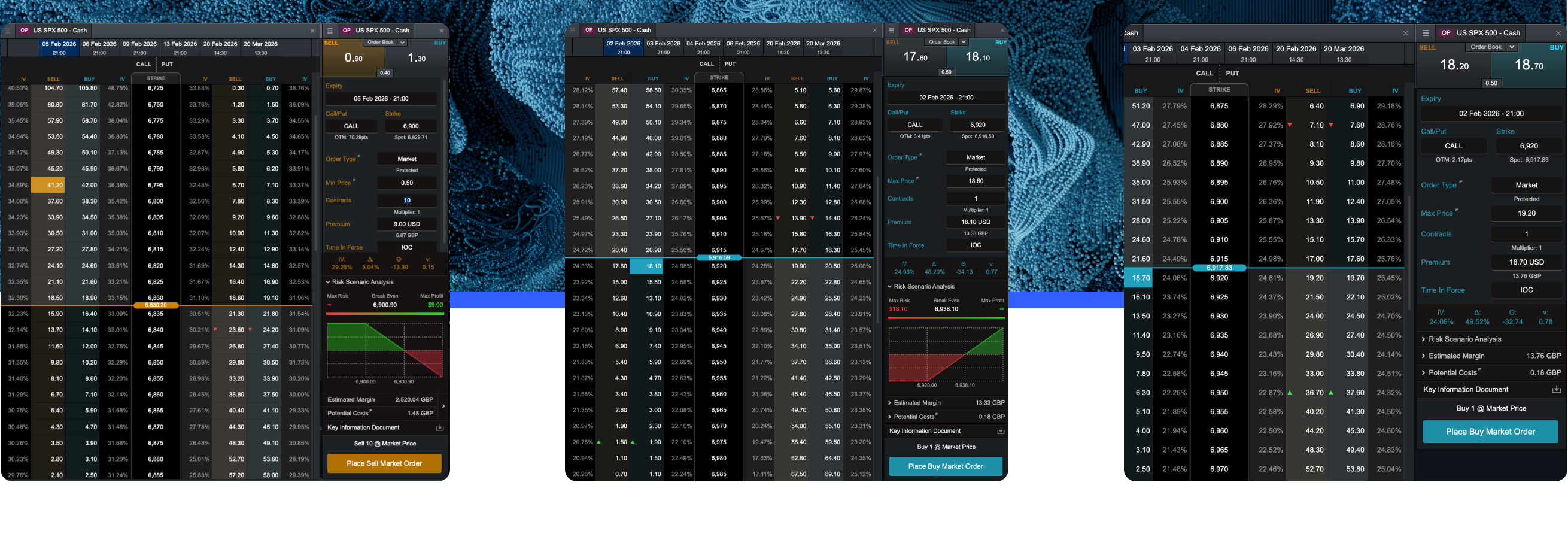
A put option is a financial contract that gives the buyer the right, but not the obligation, to sell a specific asset at a predetermined price within a set timeframe. The key phrase here is “right, but not obligation”. You are not forced to sell. You have the choice.
Think of it like an insurance policy on something you own. You pay a fee upfront for protection against a potential decline in value. If that decline happens, the policy has worth. If it does not, you have lost only the fee you paid. That fee, in options terminology, is called the premium.
Put options typically cover shares, indices, commodities or currencies. In the UK, investors can access options through various platforms, though availability and product types vary. The underlying asset determines what the option relates to and how its value moves.
When you purchase a put option, you enter a contract with another party, the seller. This contract specifies three essential elements: the underlying asset, the price at which you can sell it and the date by which you must decide.
If the market price of the underlying asset falls below your agreed selling price, your put option gains value. You could exercise your right to sell at the higher contract price or simply sell the option itself to another buyer at a profit. Conversely, if the market price stays above your agreed price, exercising the option makes no financial sense. You would let it expire worthless.
The buyer’s maximum loss is limited to the premium paid. The seller, however, faces potentially larger losses, which we will explore later.
Three terms appear constantly in options discussions. Understanding them is essential.
← Swipe →
Strike Price | Expiry Date | Premium |
The fixed price at which the option holder can sell the underlying asset | The deadline by which the option must be exercised or it becomes worthless | The upfront cost paid by the buyer to the seller for the contract |
The strike price represents your target. If you buy a put with a strike price of £100, you have the right to sell at that level regardless of where the market trades. The expiry date creates urgency. Options are time-limited contracts, typically ranging from days to months. The premium reflects what the market charges for this right, influenced by factors including time remaining, current asset price and expected volatility.
The distinction between a call option vs put option is straightforward once you grasp the core idea. Both are contracts providing rights without obligations. The direction differs.
A put option gives you the right to sell at a set price. A call option gives you the right to buy at a set price. Investors use puts when they expect prices to fall. They use calls when they anticipate prices rising.
← Swipe →
Feature | Put Option | Call Option |
Buyer’s right | To sell the underlying asset | To buy the underlying asset |
Profitable when | Asset price falls below strike | Asset price rises above strike |
Maximum loss for buyer | Premium paid | Premium paid |
Typical use | Hedging or bearish speculation | Bullish speculation |
What are puts and calls in practical terms? They represent opposite bets on market direction. A trader expecting a share price to drop might buy a put. One expecting it to rise might buy a call. Neither guarantees profit, and both can expire worthless.
Investors turn to put options for two primary reasons: protection and speculation. These motivations carry different risk profiles and suit different circumstances.
Hedging uses put options to offset potential losses in an existing holding. Suppose you own shares worth £10,000 and worry about a market downturn. Buying put options on those shares can help limit losses (depending on the strike price chosen, the premium paid and market moves, including gaps). If prices fall sharply, your put options gain value, partially compensating for the decline in your shares. .
This approach resembles insurance. You pay a premium hoping you never need it. If markets rise, your shares gain value but your puts expire worthless. The premium becomes the cost of peace of mind.
Hedging does not eliminate risk. It transfers some of it at a cost. The premium paid reduces overall returns if markets perform well. Investors must weigh protection costs against potential portfolio damage.
Some traders use put options purely to profit from falling prices. This speculative approach requires no ownership of the underlying asset. The trader simply buys puts, hoping the asset drops enough to make those puts valuable.
Speculating with options can amplify gains compared to shorting shares directly. It also limits the speculator’s maximum loss to the premium paid. However, the timing must be precise. If prices fall slowly or the decline occurs after expiry, the speculation fails.
This approach carries meaningful risk. Options can lose value rapidly as expiry approaches, a phenomenon called time decay. Speculative options trading is not suitable for everyone, and losses can equal 100% of the amount invested.
The buyer and seller of a put option occupy opposite sides of the same contract. Their risk profiles differ dramatically.
Buying a put option establishes a long put option position. The buyer pays the premium upfront and acquires the right to sell the underlying asset at the strike price.
The long put buyer profits when the underlying asset falls significantly below the strike price. Maximum profit occurs if the asset drops to zero, though this is rare. Maximum loss is limited to the premium paid. If the option expires worthless, the buyer loses the premium but nothing more.
Long put positions suit investors who believe an asset will decline or who want downside protection on existing holdings.
Selling a put option creates a short put option position. The seller receives the premium immediately but accepts an obligation. If the buyer exercises the option, the seller must purchase the underlying asset at the strike price, regardless of its current market value.
The short put seller profits if the asset price stays at or above the strike price. The option expires worthless, and the seller keeps the premium. However, if prices fall sharply, the seller must buy at the strike price while the asset trades far lower.
Selling a put option carries substantially higher risk than buying one. While the buyer can lose only the premium, the seller faces losses that grow as the underlying asset falls. In theory, an asset could approach zero, meaning losses could be very large relative to the premium received.
← Swipe →
Position | Premium | Maximum Profit | Maximum Loss |
Long put (buyer) | Pays | Strike price minus zero, less premium | Premium paid |
Short put (seller) | Receives | Premium received | Strike price minus zero, less premium received |
Consider a hypothetical example to illustrate how a put option works. Note that contract size and settlement method can vary by market and provider (some options are cash-settled rather than physically delivered).
Sarah owns 500 shares of a UK company currently trading at £20 per share. Her holding is worth £10,000. She worries about a potential earnings disappointment and wants protection.
Sarah buys five put option contracts (each covering 100 shares) with a strike price of £19, expiring in three months. She pays a premium of £0.80 per share, totalling £400.
Scenario A: The share price falls to £15. Sarah exercises her puts, selling her shares at £19 instead of £15. She saves £4 per share, or £2,000 total. After subtracting the £400 premium, she has protected £1,600 of value.
Scenario B: The share price rises to £22. Sarah lets her puts expire worthless. She loses the £400 premium but her shares have gained £1,000 in value (from £20 to £22). The premium was the cost of protection she did not need.
Scenario C: The share price stays at £20. The puts are slightly out of the money (strike is £19, market is £20). Sarah lets them expire and loses the £400 premium. Her shares are unchanged.
This example demonstrates that put options provide asymmetric outcomes. Gains can be substantial if the underlying falls significantly, but losses are capped at the premium when the prediction is wrong.
Options trading carries meaningful risks that every investor should understand before participating.
Total loss of premium: When buying options, you can lose 100% of your investment. If the option expires worthless, the premium is gone entirely.
Time decay: Options lose value as expiry approaches. An option that looks promising today may erode in value simply through the passage of time, even if the underlying price barely moves.
Complexity: Options pricing depends on multiple variables including volatility, interest rates and time. Beginners often underestimate this complexity.
Liquidity risk: Some options trade infrequently. Wide bid-ask spreads can make entering and exiting positions costly.
Selling risks: Short put option positions can generate losses far exceeding the premium received. This strategy requires careful risk management and is generally unsuitable for beginners.
Tax considerations: Options profits may be subject to Capital Gains Tax in the UK. Individual circumstances vary. Consult a qualified tax adviser for guidance specific to your situation.
Regulatory status: Options are regulated investments, but protections (for example, FSCS eligibility and the way risks are managed) can differ by product type and provider. Retail investors should use FCA-authorised firms and understand what protections apply.
Options are complex instruments. Capital is at risk, and losses can occur rapidly. Never invest more than you can afford to lose.
A put option grants the right, but not the obligation, to sell an asset at a fixed price before expiry.
The buyer pays a premium. The seller receives it but accepts potential obligations.
Strike price, expiry date,and premium are the three essential components.
Put options differ from call options in direction: puts benefit from falling prices, calls from rising prices.
Investors use puts for hedging existing positions or speculating on declines.
A long put option position limits losses to the premium. A short put option position carries potentially substantial risk.
Time decay erodes option value as expiry approaches.
Options are complex instruments. Capital is at risk, and losses can equal 100% of the investment for buyers or exceed the premium received for sellers.
Understanding what is a put option provides a foundation for exploring derivatives. This knowledge alone does not qualify anyone to trade options successfully. Further study, careful consideration of personal risk tole