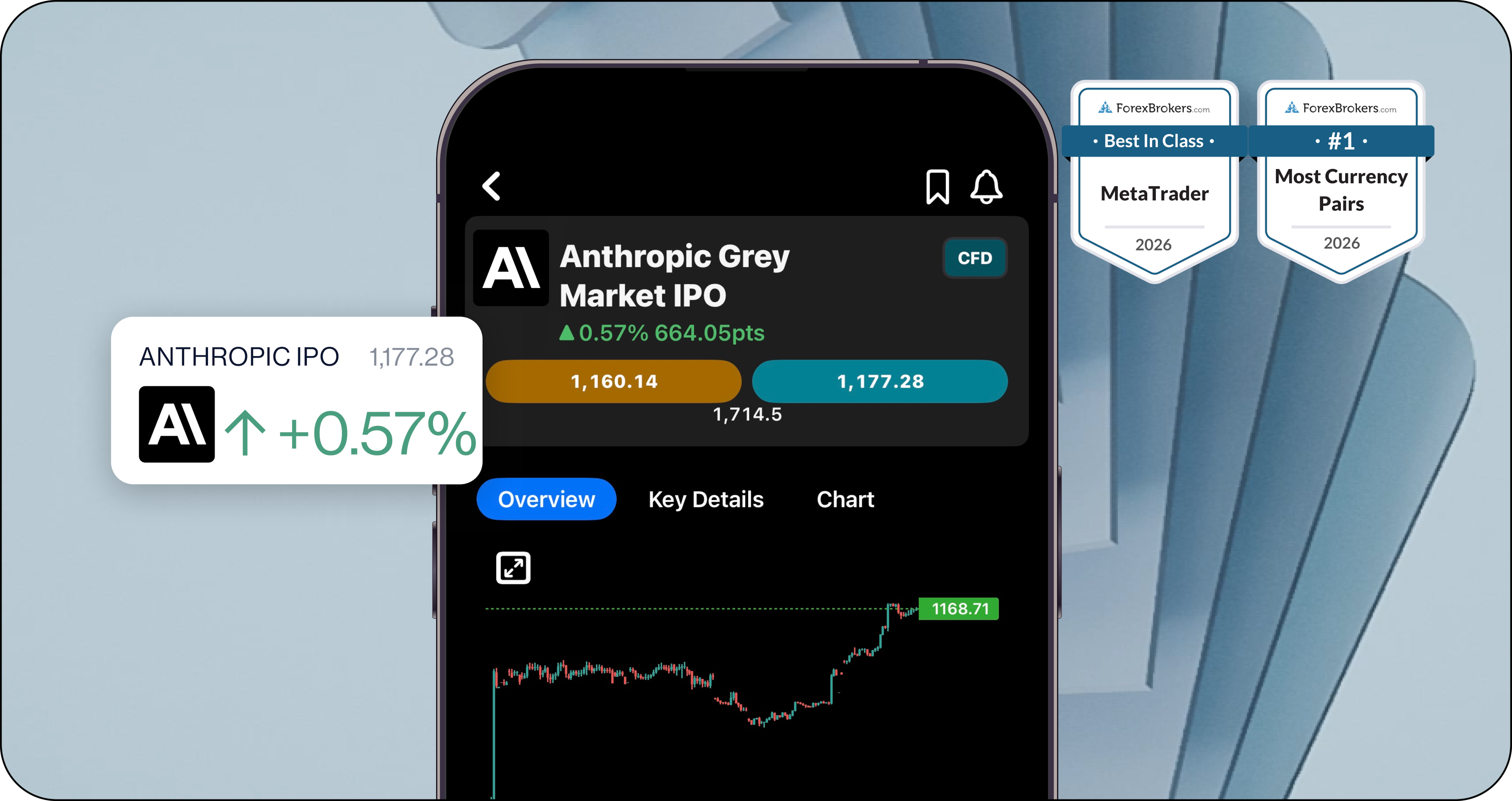
Anthropic is an AI company founded in 2021 by siblings Dario and Daniela Amodei, both former executives at OpenAI. The company focuses on developing AI systems that are safer, more interpretable and more controllable than many existing alternatives.
The firm’s primary product is Claude, a family of large language models (LLMs) designed to assist with analysis, writing, coding and complex reasoning tasks. Claude competes directly with products from OpenAI, Alphabet’s [GOOGL] Google and other major technology firms in the rapidly evolving AI assistant market.
What distinguishes Anthropic from some competitors is its stated focus on AI safety research. The company has published work on constitutional AI, the method it pioneered for training systems to follow ethical guidelines, and conducts research into understanding how AI makes decisions.
Anthropic generates revenue primarily through:
Application programming interface (API) access for businesses integrating Claude into their products
Direct subscriptions for its Claude Pro and Team offerings
Enterprise partnerships with large organisations
The Form S-1, the prospectus Anthropic filed with the SEC on 26 October 2026, shows how concentrated that revenue is.
Enterprise consumption-based fees produced about $13.1bn of the $16.3bn Anthropic reported for the first half of 2026, roughly 80% of the total5.
Close to half of first-half revenue, around 48%, reached the company through the cloud marketplaces of Google, Amazon and Microsoft, up from 11% in 20236. Anthropic has secured substantial investment from major technology firms and venture capital investors, though being well-funded as a private company does not guarantee success as a public one.
Will Company IPO live up to its valuation?
Go long or short on company's expected listing price with our pre-IPO market, before it hits the exchange.
Yes. Anthropic confidentially submitted a draft Form S-1 on 1 June 20267, then filed the public version on 26 October 20261. The public filing names the venue: Anthropic has applied to list its Class A common stock on the Nasdaq Global Select Market under the ticker ANT2.
The number of shares and the price range are still blank in the prospectus, and Anthropic has not confirmed a listing date1.
Press reports point to a debut in the week of 16 November 2026, which is also the earliest date the SEC's timetable would allow, though that is press reporting rather than company guidance4.
Filing is not the same as listing. The registration statement has not yet become effective, and the offering remains subject to SEC review and market conditions2.The public prospectus changes what investors can see. Audited financial statements, risk factors, share-class details and compute commitments are now on the public record and can be read in full on the SEC's EDGAR database1.
Reported listing dates and valuations, by contrast, still come from press coverage rather than from the company, so those should be treated as provisional.
The prospectus names 22 banks handling the IPO, led by Goldman Sachs, Morgan Stanley, J.P. Morgan and Citigroup.¹
It also sets out Anthropic's financial record for the first time revenue figures are as follows
$16.3bn for the half of 2026 January - June 2026
$4.6bn for the whole of 2025,
$386m in 2024 and $41m in 20231.
Press reports, including from the Financial Times, suggest investors have discussed a valuation near $2tn. This valuation has not been confirmed by the company, and remains subject to change.
Anthropic has raised multiple funding rounds from investors including Amazon, Google, Spark Capital and Salesforce Ventures. In late May 2026 the company closed a $65bn Series H funding round at a $965bn post-money valuation3, shortly before its confidential S-1 filing. That private mark is now one reference point among several, and reported figures for a listing valuation require careful interpretation.
Private valuations differ fundamentally from public market prices:
← Swipe →
Private valuation | Public market price |
|---|
Negotiated between company and select investors | Determined by open market supply and demand |
Based on projected future growth | Reflects current earnings, sentiment and comparables |
Illiquid; shares cannot be freely traded | Liquid; shares trade on exchanges |
May include preferential terms for investors | Common shareholders have equal rights |
Reported private valuations do not indicate what Anthropic shares might trade for in a public offering. IPO prices can differ substantially from final private round valuations, sometimes higher, sometimes lower.
Technology companies commonly pursue public listings through one of three routes: traditional IPOs, direct listings or special purpose acquisition company (SPAC) mergers. Each involves different processes, timelines and regulatory requirements.
In a traditional IPO, the company works with investment banks to set an initial price range and gauge institutional investor interest through a roadshow. It then prices shares before the first day of public trading. This process typically takes six to 12 months from initial planning to listing, though it may be longer.
The AI sector presents particular challenges for valuation. Many AI companies have high research costs, limited operating history and business models that are still evolving. Revenue growth rates can be substantial, but so can losses.
The prospect of an OpenAI IPO has attracted similar speculation to Anthropic’s potential listing. OpenAI faces its own complex considerations, including its unusual corporate structure involving a capped-profit subsidiary.
← Swipe →
| Anthropic | OpenAI |
|---|
Founded | 2021 | 2015 |
Primary product | Claude | ChatGPT and GPT models |
Corporate structure | Public benefit corporation with multiple share classes1 | Public benefit corporation; nonprofit foundation retains control8 |
IPO filed | Public S-1 filed 26 October 20261 | Confidential draft filed June 2026; no public prospectus9 |
Reported private valuation | $965bn (Series H, May 2026); not a guide to IPO price3 | $852bn (March 2026); reportedly raising at $1.25tn10 |
Anthropic has now published its prospectus; OpenAI has not. OpenAI filed confidentially on 8 June 20269, and its chief financial officer told staff in August 2026 that the company expects to be public in 2027, or sooner if growth accelerates11.
In October 2026 it was reported to be nearing a funding round of about $30bn at a $1.25tn valuation ahead of that listing10. Media reports about listing timelines remain unconfirmed until formal announcements occur.
Several conditions typically influence when and whether private technology companies pursue public listings:
Market conditions
IPO activity tends to increase during periods of strong equity market performance and decline during volatility. The technology sector’s overall health and investor appetite for growth stocks significantly affect IPO timing decisions.
Company readiness
Public companies face reporting requirements, audit standards and governance expectations that private companies can avoid. Anthropic has now published audited accounts and a full risk-factor section in its prospectus, but it lists its own limited operating history among the risks of investing1.
The AI industry is evolving rapidly. How Anthropic’s products perform relative to competitors, how regulation develops and how enterprise customers adopt AI tools will all affect the company’s attractiveness to public market investors.
Investor liquidity needs
Early investors and employees holding equity often become motivated to sell after several years. IPOs provide liquidity that private markets cannot easily match, creating internal pressure toward public listings.
Regulatory environment
Both AI regulation and securities regulation affect IPO planning. Emerging rules around AI development in the US, EU and UK could influence how investors value AI companies.
UK investors considering any AI company IPO should understand several categories of risk that apply broadly to technology sector investments and IPOs specifically. Anthropic sets out its own risk factors in full in the prospectus, and the points below should be read alongside them1.
Technology sector volatility
Technology stocks, particularly those of companies without established profitability, can experience substantial price swings. Investors should consider whether such volatility aligns with their financial situation and investment objectives. If you’re unsure, consider seeking independent financial advice.
Valuation uncertainty
AI companies often trade at high multiples of revenue because investors anticipate future growth. If growth disappoints or market sentiment shifts, valuations can contract rapidly. What appears reasonable during optimistic periods may prove expensive in hindsight.
Losses and cash burn
Anthropic reported a net loss of $80.7bn for the first half of 2026, against a net loss of $42bn for the whole of 20251. Most of the 2026 figure is non-cash: a $72.4bn charge for the change in fair value of convertible notes, derivative liabilities and simple agreements for future equity1. Stripping that out, the operating loss for the half was $693m, and the company reported operating income of $974m in the second quarter5. A headline loss of this size is not the same as cash going out of the door, but neither figure should be read on its own.
Compute commitments
The prospectus sets out future compute and infrastructure commitments of roughly $542bn to $567bn12, a large share of which Anthropic owes whether or not customers use the capacity5. Compute was its largest operating expense in the second quarter, at $5.6bn against $11.6bn of revenue12. Commitments on that scale are a fixed cost set against revenue that is not contractually fixed.
Customer concentration
Anthropic's five largest customers accounted for about 25% of revenue in the first nine months of 20265. Much of its revenue carries no long-term commitment, and contracts can allow customers to cut usage or terminate at limited or no notice5. The company is moving enterprise customers onto multi-year contracts with minimum spends, but that shift is not complete.
Voting rights and governance
The share structure gives public investors limited influence. Class A shares sold in the offering carry one vote each, while the founders' holding company holds Class F stock representing 50.1% of total voting power, and the Long-Term Benefit Trust holds a class that elects a majority of the board1. Anthropic lists this concentration of control among its own risk factors1. Investors used to one-share-one-vote should understand what they would and would not be able to influence.
Competition and disruption
The AI industry includes well-resourced competitors. Google, Microsoft [MSFT], Meta [META] and numerous startups all compete for talent, customers and technological breakthroughs. Today’s leader may face serious competitive challenges within a few years.
Currency considerations
Anthropic has applied to list on the Nasdaq Global Select Market in the US2. UK investors would therefore face currency risk between sterling and the US dollar, adding another variable to investment returns.
Some platforms offer access to shares in private companies before they list publicly. These arrangements carry additional risks beyond normal equity investing:
Illiquidity: Pre-IPO shares typically cannot be sold until after a public listing, and even then may face lock-up periods.
Information asymmetry: Private companies disclose less information than public companies, often making valuation difficult.
Uncertain outcomes: Not all private companies that attract investment eventually complete successful IPOs.
Pricing opacity: Prices on secondary markets for private shares may not reflect fair value.
UK investors should approach any platform offering pre-IPO investment access with considerable caution and understand exactly what they are buying before committing funds.
Check whether the firm and the specific product offered are authorised/regulated by the Financial Conduct Authority; you may not be covered by the Financial Services Compensation Scheme or able to use the Financial Ombudsman Service if things go wrong.
With a prospectus now on the public record, investors tracking Anthropic's status should work from primary sources rather than secondary coverage:
Official company announcements
Anthropic’s official website and verified corporate communications will be the first reliable source of any IPO announcement. The company would issue a press release before or simultaneously with regulatory filings.
Regulatory filings
In the US, IPO registration statements appear in the Securities and Exchange Commission's EDGAR database. The initial filing, called a Form S-1, contains detailed financial and business information. Anthropic submitted a confidential draft on 1 June 20267 and filed the public version on 26 October 20261. That document is the authoritative record of the company's financials, risk factors and share structure. Later amendments, including the price range, will be filed in the same place.
Financial news services
Major financial news outlets cover IPO filings and announcements. While their speculative coverage requires scepticism, their reporting on actual regulatory filings tends to be accurate.
What to avoid
Be wary of social media posts, forum discussions or websites claiming insider knowledge of IPO dates or pricing. Much of this content is speculation, occasionally mixed with promotional intent.
Open a spread betting or CFD trading account
With our pre-IPO market, you can take a position on Anthropic through a spread bet or CFD trade ahead of its listing, and speculate on whether its price will rise or fall against our expected listing price after its IPO.
Practise with a demo account
If you’re unfamiliar with leveraged trading, you can open a demo account to practise trading with virtual funds. Familiarise yourself with pricing, volatility, and managing risk before trading with real capital.
Your position rolls into the listed market
Once Anthropic lists on a stock exchange and its shares start trading in the underlying market, your position rolls into our listed share spread bet or CFD. This means your position continues, and you retain full control over when to close it.
What happens if the IPO is cancelled
If the Anthropic IPO is cancelled or doesn't happen for any reason, your open positions will be closed at the price they were opened, and no profit or loss will be realised.
The Anthropic IPO has moved from speculation to a public filing. The company published its Form S-1 on 26 October 2026 and has applied to list on Nasdaq under the ticker ANT1. The share count, price range and listing date are still to be set, and Anthropic remains a private company until the offering completes.
Key points for UK investors:
Anthropic filed a public S-1 on 26 October 2026 and has applied to list on Nasdaq as ANT, but the share count, price range and listing date are not yet set.
1
Reported private valuations do not predict public market prices.
Anthropic reported revenue of $16.3bn and a net loss of $80.7bn for the first half of 2026, most of that loss non-cash
The AI sector presents both opportunities and substantial risks.
IPO investing and technology stocks carry significant risk of capital loss .
Pre-IPO investment platforms require careful scrutiny and understanding of specific risks.
Investors should base their decisions on verified information from authoritative sources rather than speculation. The AI industry will continue evolving regardless of any single company’s listing timeline. Opportunities to invest may emerge through various established channels if and when a company lists, and may not be suitable for all investors.
For those interested in the broader sector, understanding how AI companies operate, compete and generate revenue provides better preparation than fixating on any particular IPO date that remains, for now, entirely unknown.
This article is for informational purposes only and not investment advice. Investments involve risk.