Warsh is trying to rebuild a more orthodox Fed
Kevin Warsh's first message as Fed chair has been read by markets as clearly hawkish. He wants to modernise the Federal Reserve through five workstreams covering monetary-policy frameworks, communication, regulation, balance-sheet operations and data modernisation.
The bigger signal is philosophical. Warsh is arguing for a more orthodox and less interventionist Fed, with a smaller balance sheet and less focus on cushioning market volatility. If that approach sticks, investors may need to price a weaker "Fed put" and a closer link between asset prices, economic data and real monetary conditions.
Inflation risk keeps policy tighter for longer
Warsh's starting point is that inflation is mainly determined by monetary policy and that returning it to the 2.0% target remains the priority. He also described the economy as resilient, supported by productivity and capital investment, while the labour market remains stable enough to avoid forcing a quick policy retreat.
That combination gives the Fed room to sound restrictive. If growth is holding up and inflation is still viewed as the main risk, markets have less reason to expect near-term relief from lower rates. That is why the speech has mattered beyond the Fed itself: it changes the policy tone across the dollar, Treasuries and rate-sensitive assets.
A stronger dollar and flatter curve are the first market signals
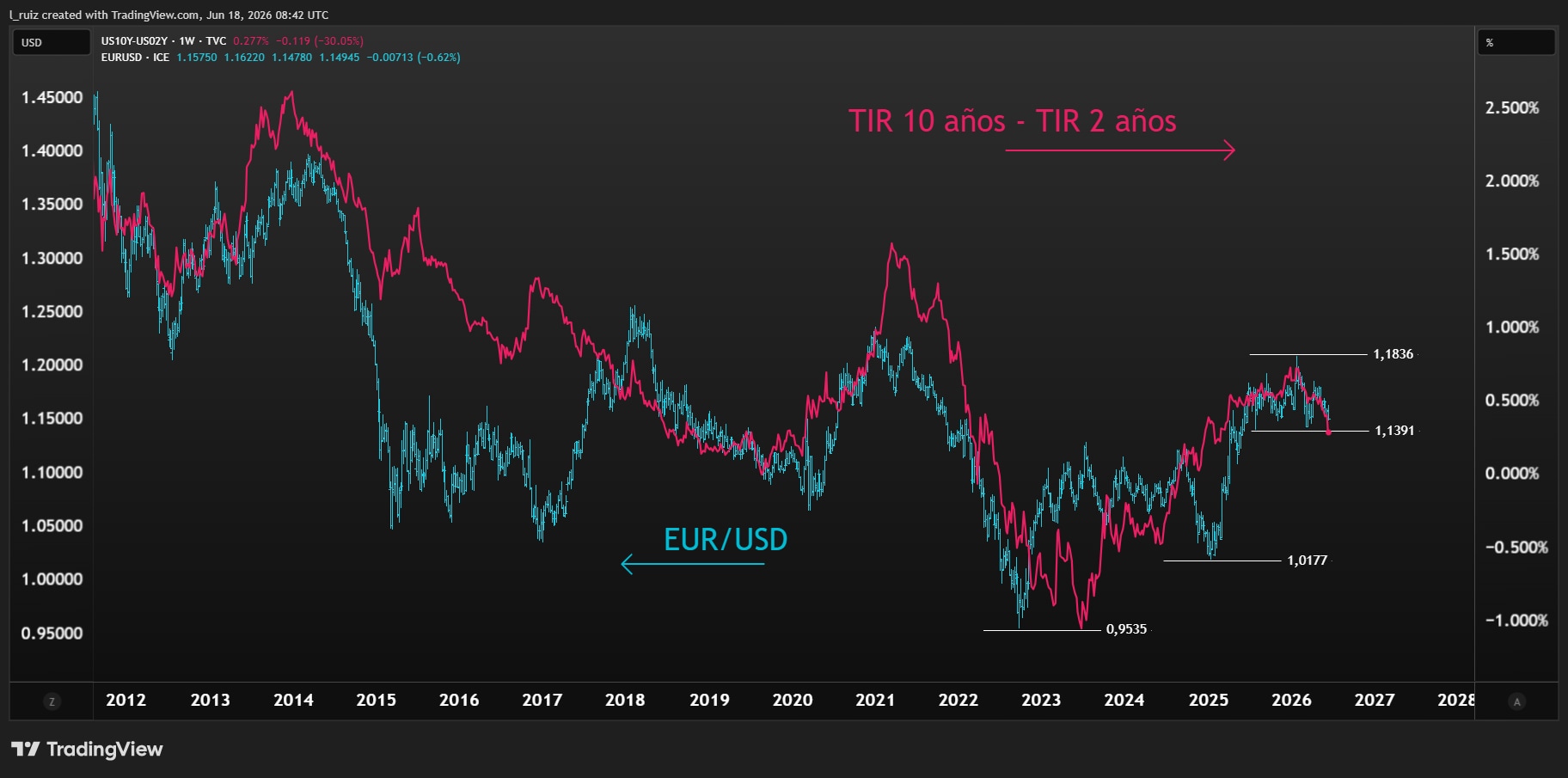
The immediate reaction has come through the front end of the US rates market. The source says short maturities moved sharply higher, while longer maturities barely moved, creating a strong flattening of the yield curve. Fed funds pricing is now described as discounting two 25-basis-point hikes, the first in September 2026 and the second in January 2027.