EMA in trading
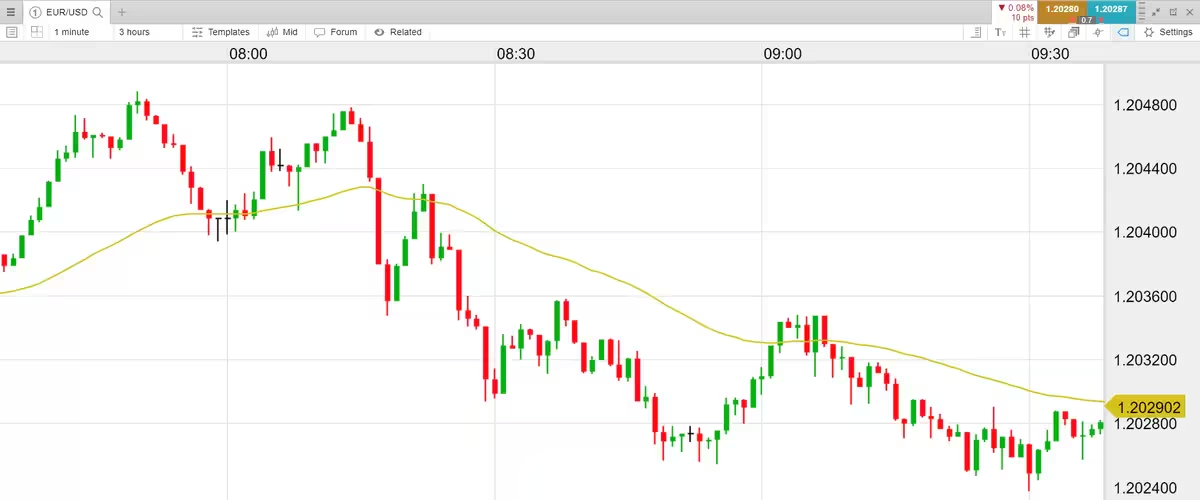
Using the EMA in trading means that it adapts more quickly to changes in price action, which is an advantage over the simple moving average. As more weight is given to the recent price data and less to that which occurred earlier in the trading day, this makes it more sensitive to any change in price data and, theoretically, better for understanding in which direction the price may head next.
The exponential moving average therefore helps to influence traders’ decisions in the exact moment that they place a trade based on the exact price movements, as opposed to what was happening on trading charts in the past.
This higher weight of recent price data is useful when analysing volatile markets, where there may be abrupt price changes. It is particularly useful for identifying trends and recent swings on price charts to highlight trading patterns. It also means that there is less of a lag, as the EMA instead reacts quickly to price changes. Therefore, developing an exponential moving average strategy is great for traders who favour short-term strategies, such as day trading in fast-moving markets.
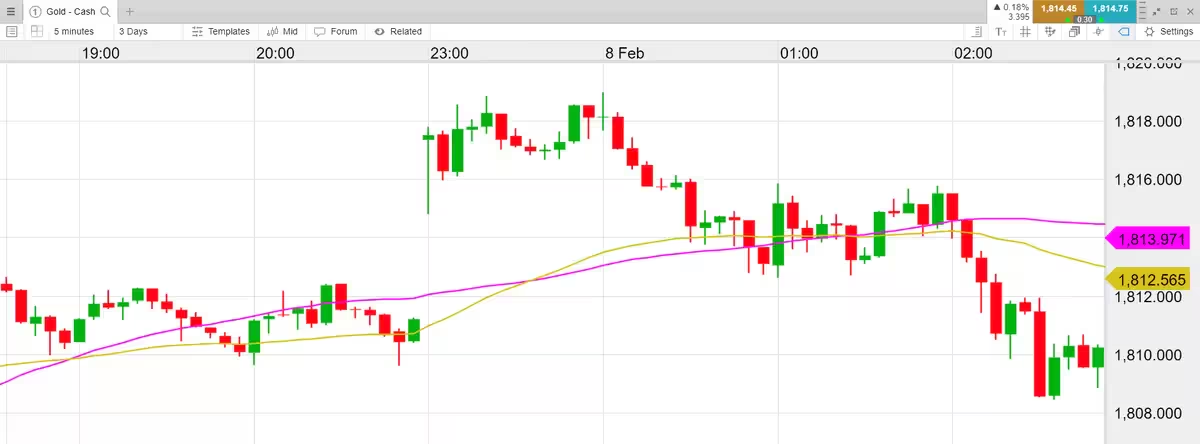
Exponential moving average example
What is the difference between simple and exponential moving averages?
Unlike the simple moving average (SMA), which is a calculation of the average price of a security over a certain length of time, the EMA gives more weight to the most recently occurring prices. This is the major difference between the moving averages, and it also explains why the EMA is preferred by many traders, as it is more responsive than the SMA. However, as with most technical indicators, the EMA works better when used with its component rather than by itself, as the EMA alone cannot guarantee success.