Geopolitical tensions drive recent volatility
Oil prices have been very volatile in recent weeks due to escalating tensions in the Middle East. Currently, signs of de-escalation have caused oil prices to fall, though some might argue that oil is beginning to establish a natural floor amid this new environment of increased geopolitical risk.
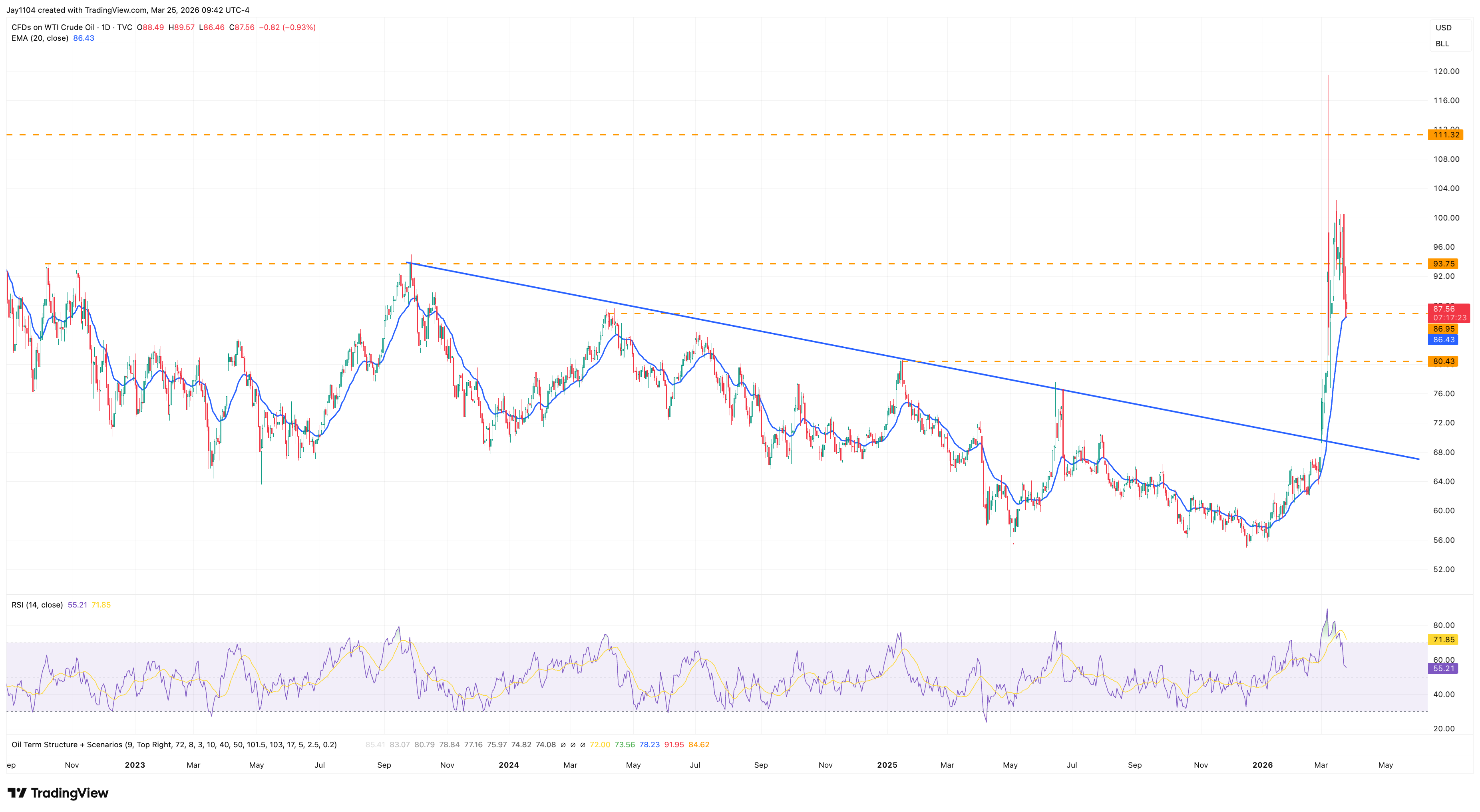
Technical levels point to emerging support
WTI Oil had been holding fairly steadily above the 10-day exponential moving average for some time before breaking below that level on 23 March. It now seems that WTI is trying to find support in the $86 to $88 range, which also aligns with the 20-day exponential moving average. This slightly differs from the 20-day simple moving average, but it does appear to provide at least some support for now.
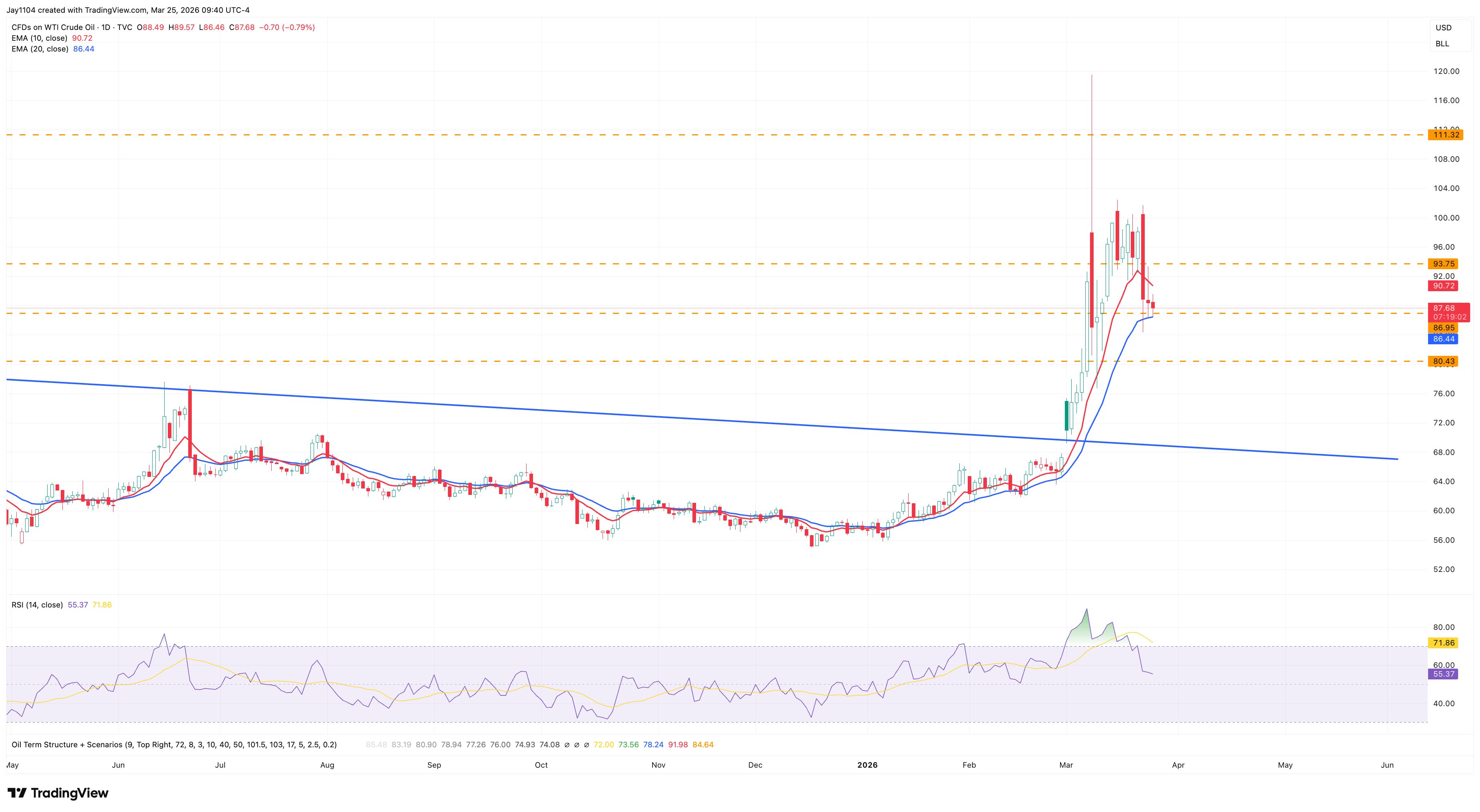
Source: TradingView, 25 March
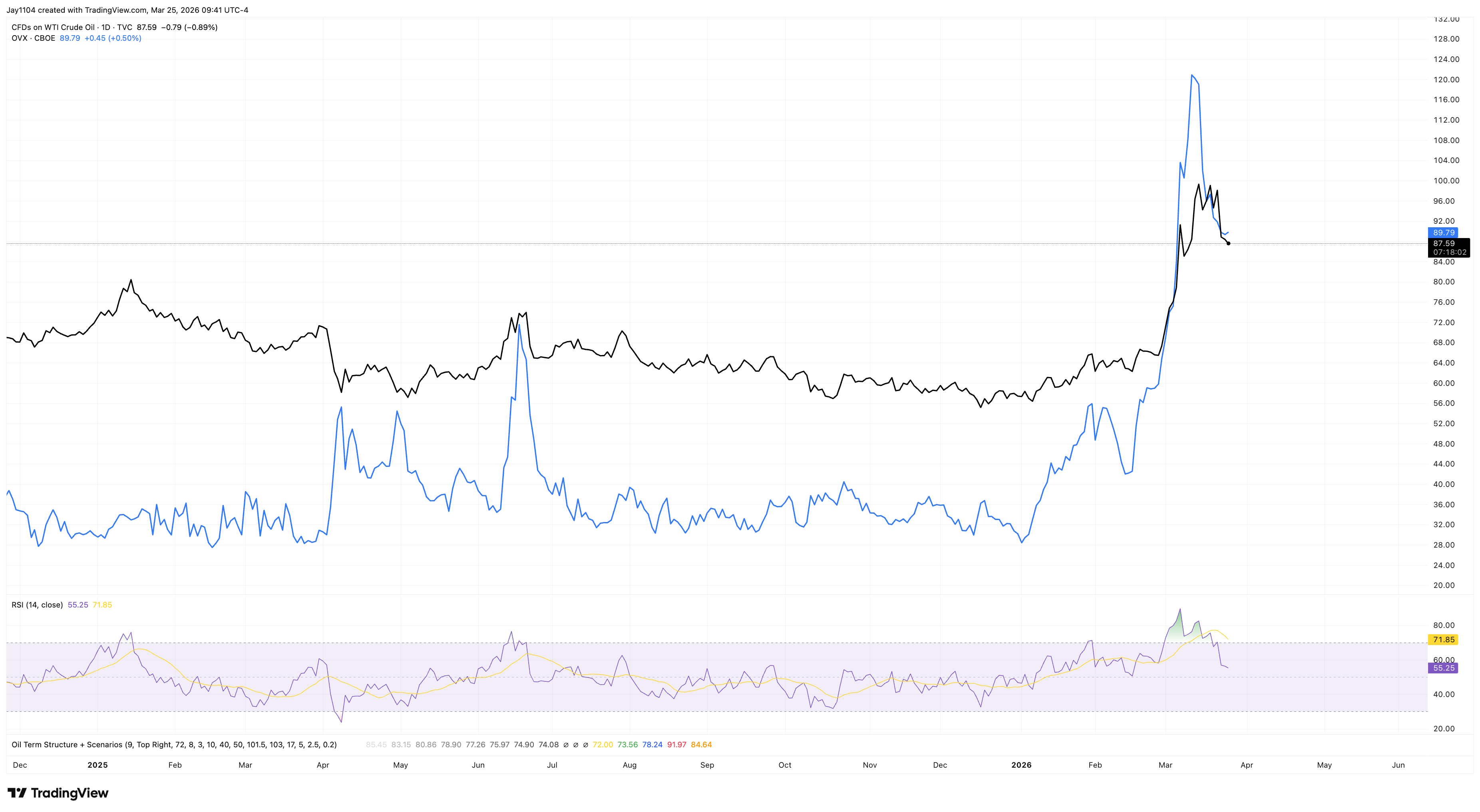
Volatility eases but remains elevated
That is worth noting, especially if volatile headlines from the Middle East continue and price movements start to shrink as volatility is reassessed downward. The OVX, the CBOE crude oil volatility index, has dropped sharply over the past few sessions and is now trading around 90, well below its recent peak near 130. Although this still indicates elevated implied volatility, it also suggests that conditions are beginning to diminish.