Forex margin explained
Margin is a percentage of the full value of a trading position that you are required to put forward in order to open your trade. Margin trading enables traders to increase their exposure to the market. This means both profits and losses are amplified.
Trading forex on margin enables traders to increase their position size. Margin allows traders to open leveraged trading positions, giving them more exposure to the markets with a smaller initial capital outlay. Remember, margin can be a double-edged sword as it magnifies both profits and losses, as these are based on the full value of the trade, not just the amount required to open it.
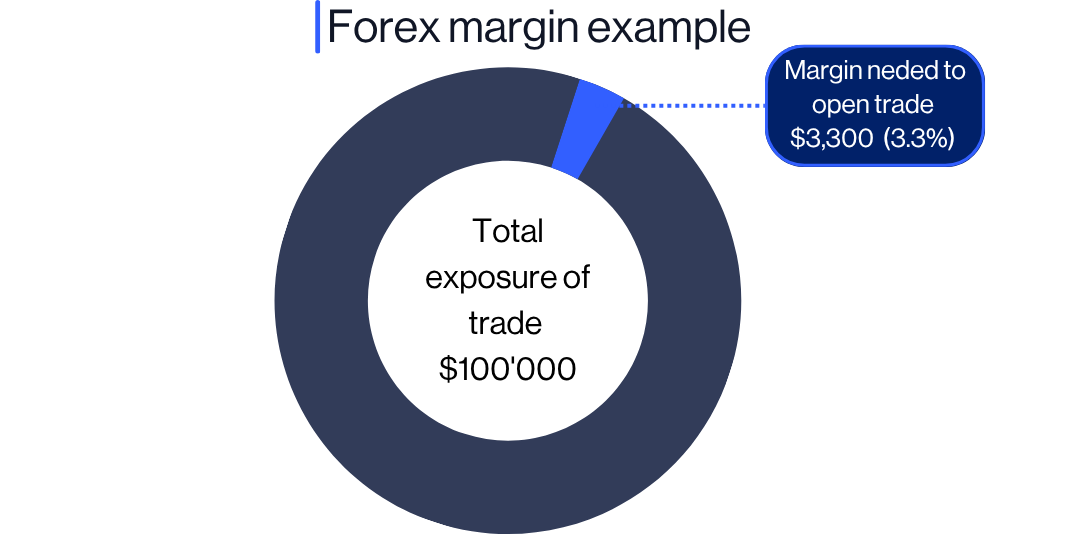
The leverage available to a trader depends on the margin requirements of the broker, or the leverage limits as stipulated by the relevant regulatory body, ESMA for example. Margin requirements differ depending on forex brokers and the region your account is based in, but usually start at around 3.3% in the UK for the most popular currency pairs. For example, if a forex broker offers a margin rate of 3.3% and a trader wants to open a position worth $100,000, only $3,300 is required as a deposit to enter the trade. The remaining 96.7% would be provided by the broker. The leverage on the above trade is 30:1. As trade size increases, so does the amount of margin required.
Learn the basics of what forex trading is and how it works.
Having a good understanding of margin is very important when starting out in the leveraged foreign exchange market. It’s important to understand that trading on margin can result in larger profits, but also larger losses, therefore increasing the risk. Traders should also familiarise themselves with other related terms, such as ‘margin level’ and ‘margin call’.
Margin level in forex
When a forex trader opens a position, the trader’s initial deposit for that trade will be held as collateral by the broker. The total amount of money that the broker has locked up to keep the trader’s positions open is referred to as used margin. As more positions are opened, more of the funds in the trader’s account become used margin. The amount of funds that a trader has left available to open further positions is referred to as available equity, which can be used to calculate the margin level.