Alcohol stocks: value opportunity or structural decline?
Diageo and Pernod Ricard shares are trading near multi-year lows as investors reassess alcohol demand, consumer habits and the outlook for defensive stocks.
The alcohol sector is facing one of its most difficult periods in years. Shares in companies such as Diageo and Pernod Ricard are trading at levels not seen for many years, prompting investors to ask whether the industry is dealing with a lasting slowdown or a temporary sell-off. For investors watching equity markets, and for traders using CFDs, consumer staples are once again becoming a closely watched area of the market.
For a long time, major drinks companies were viewed as resilient defensive stocks. That perception has weakened. After alcohol consumption surged during the pandemic, demand in the US has since fallen by about 7% compared with 2019 levels. Some analysts are now asking whether the alcohol industry could face a challenge similar to the one that reshaped tobacco stocks in previous decades.
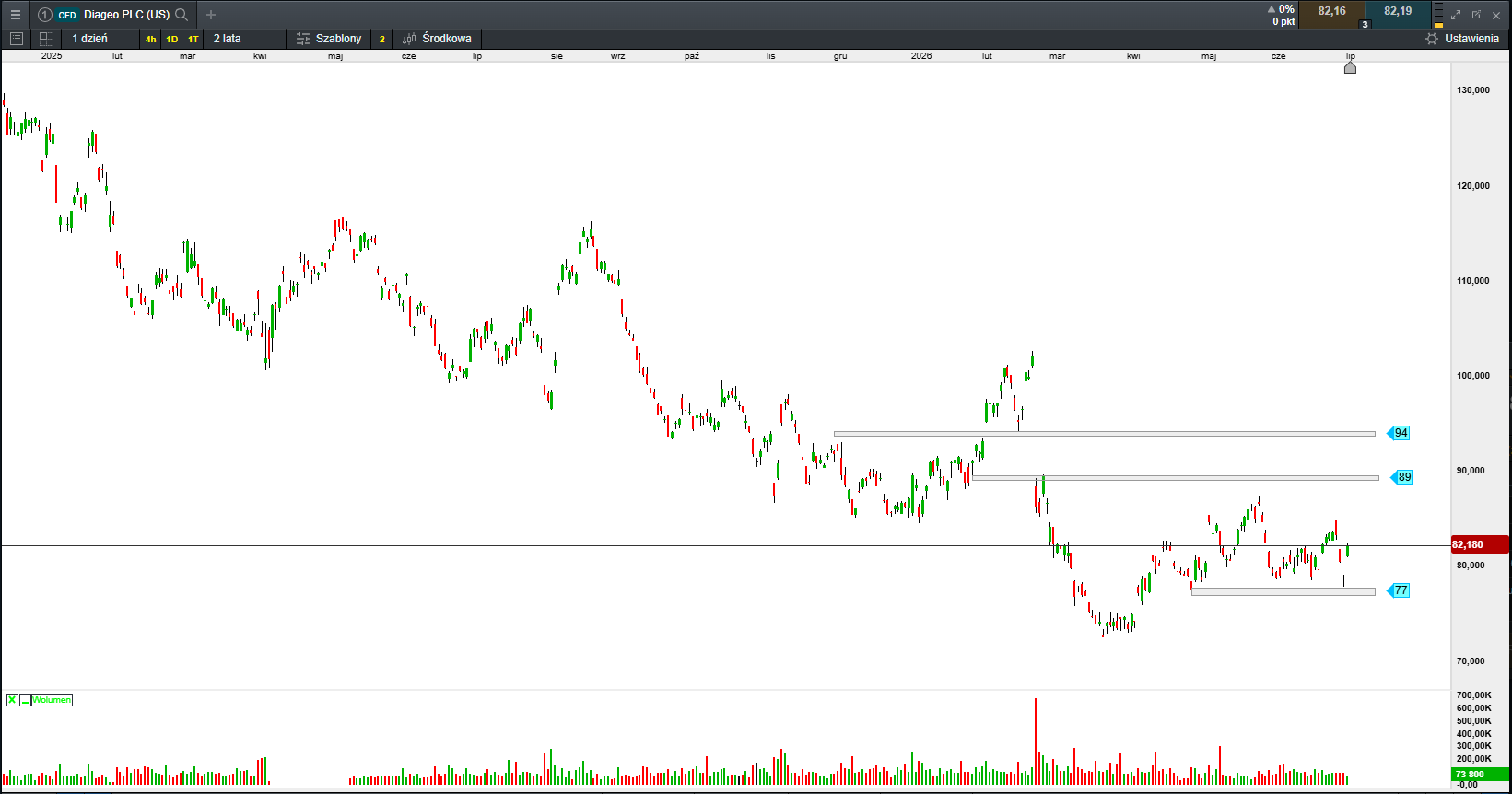
Diageo PLC, source: CMC Markets, 06.07.2026
What is weighing on alcohol stocks?
The pressure reflects several overlapping trends. Higher living costs have made consumers more selective, younger drinkers appear less attached to traditional alcohol brands, and health-focused behaviour has become more visible. Weight-loss drugs have also added a new uncertainty for the sector, as investors debate whether changing appetite and consumption patterns could affect demand for beer, wine and spirits.
Those risks matter because drinks companies have historically relied on pricing power, brand loyalty and relatively stable demand. If volumes remain under pressure for longer, investors may become less willing to pay premium valuations for businesses that were once treated as defensive compounders.
A value opportunity, or a value trap?
The counterargument is that valuations already reflect a great deal of bad news. Diageo and Pernod Ricard still own globally recognised brands, have broad distribution networks and remain exposed to long-term demand in emerging markets. If consumers stabilise and margins recover, today’s depressed share prices could begin to look more attractive.
That makes the sector difficult to judge. Low valuations alone do not guarantee a recovery, especially if weaker demand proves structural rather than cyclical. But the scale of the share-price decline means investors are likely to keep watching the sector for signs that expectations have become too pessimistic.
What investors are watching next
For now, the key questions are whether US demand can stabilise, whether premium brands can protect pricing, and whether management teams can offset weaker volumes with cost control and growth in other regions. Updates from Diageo, Pernod Ricard and other listed drinks companies may therefore be important signals for the broader consumer staples sector.
The industry is not without challenges, but it is also not without assets. The next few quarters may help determine whether the recent weakness marks the start of a longer-term reset, or whether investors are being offered an unusually cheap entry point into a sector that has fallen out of favour.